New Arrivals at the Hummingbird Feeder

rufous-hummer-2

Rufous Hummingbirds have returned, causing much angst among the resident Anna’s Hummers. This guy caught my eye with his gorget of copper, gold, and green.

rufous-hummer-3
Notice how the colors change with the angle of the light.

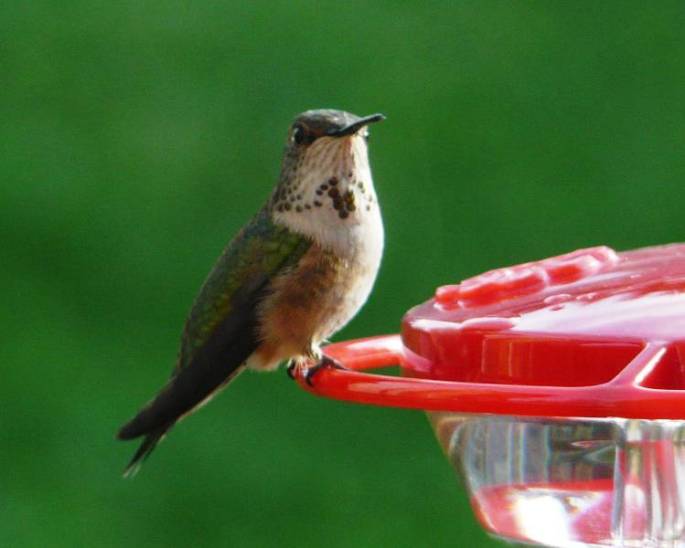
female-rufous
Here’s a female rufous, with her few irridescent dots and buffy sides.

rufous-stretch
She flashes her tail colors when the male is being too pesky.

goldfinch-on-hummer-feeder
I’m not sure what this American Goldfinch was doing, but he was checking out the hummingbird feeder for over a minute.

American Coot

american-coot

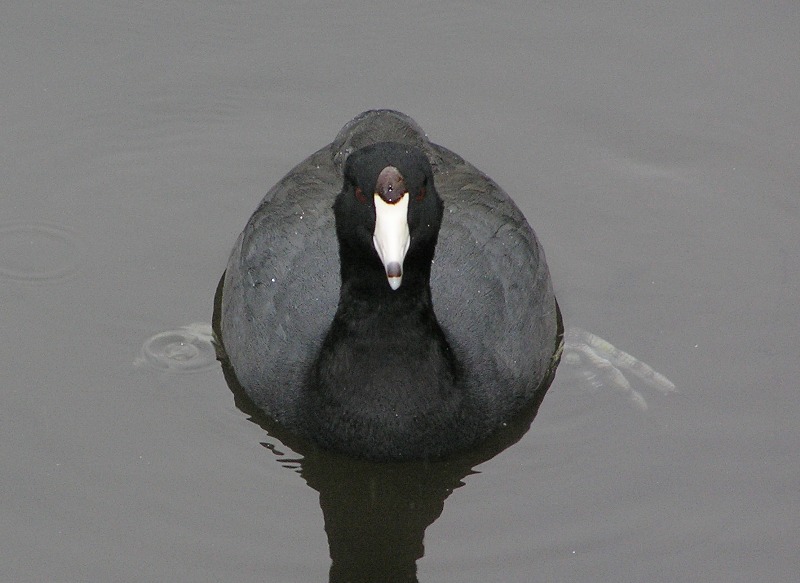
American Coots are quite common throughout much of the country, so we tend to overlook them. But they are strange little beasts, and worthy of study. They spend much of their time on the water, feeding on aquatic plants, propelling themselves with their lobed toes. Despite the fact that at least some populations undertake long migrations, you almost never see these birds in the air. When alarmed they often run along surface  of the water, flapping their wings, but they seldom actually become airborn. One observation from 1931 described a large flock of coots migrating on foot.

These birds do fly, after a long running start, but migration apparently occurs at night in small groups. I think I will make it a goal to actually notice a coot in flight. Despite the many thousands of these birds I have seen over the years, I have no recollection of a flying coot. As I rapidly approach the status of “old coot” myself, I think this is a worthy goal.

coot

Bath Time

lesser-scaup-male
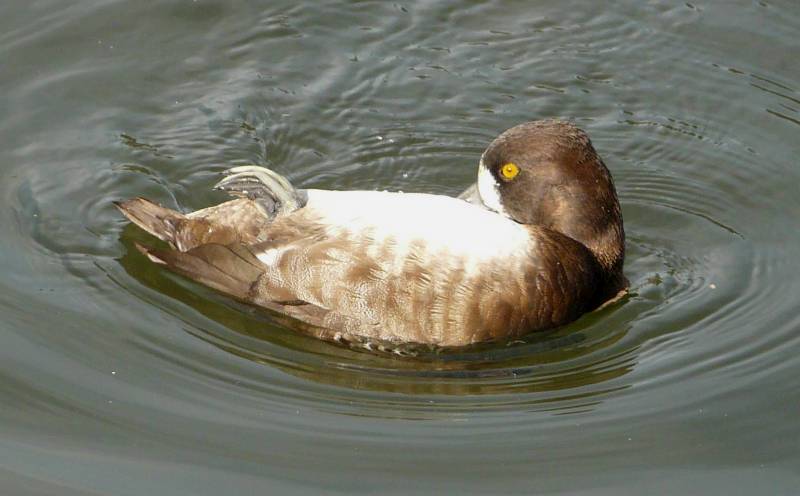
I had the opportunity to watch some Lesser Scaups preening. Like other diving ducks, scaups’ legs are set far back on their bodies. This makes it easier to propel themselves under water, but makes walking on land difficult. So their daily activities, like sleeping and preening, are performed on the water.

lesser-scaup-female-back
This female is floating on her back while preening her belly.

lesser-scaup-female-side
And now the side stroke.

Finches in the garden

The great advantage to being a slovenly gardener is the chance to see the local wildlife using your plants long after they have died. A mixed flock of resident finches passed through recently, feeding on seeds from neglected flower corpses.

american-goldfinch
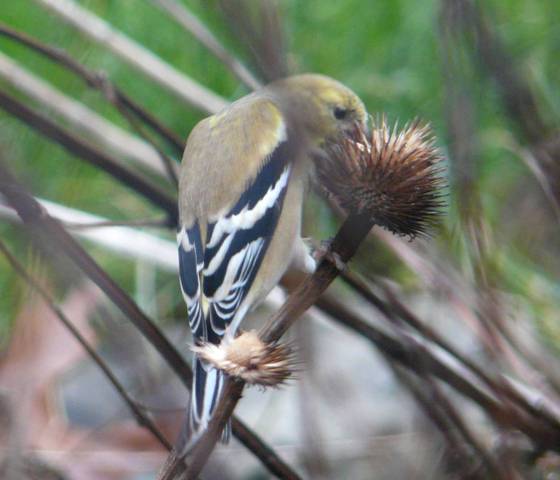
This American Goldfinch was munching on Purple Coneflower seeds.

house-finch
a seldom-studied, but diagnostic view of a male House Finch

lesser-goldfinch
Lesser Goldfinch

A Bewick’s Wren often hunts for insects in the dead leaves of the clematis, but I doubt he will ever sit still long enough for a photograph.

Bushtits

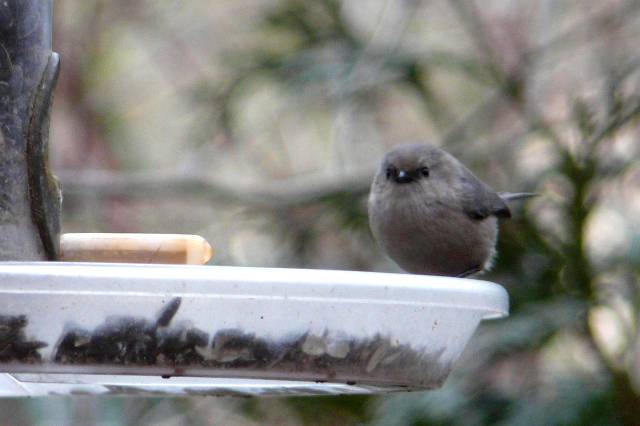
I hope to never meet someone who doesn’t like Bushtits. These little balls of fluff with long tails are always a treat to see.

bushtitback

Despite their tiny size, they are very vocal and come very close to people as they glean small insects from the foliage. It is difficult for such a small creature to maintain its body heat, so Bushtits huddle together for warmth, build enclosed insulated nests, and eat about 80% of their own weight in food every day. In addition to insects, they will eat suet or peanut butter at feeders, and will occasionally take little bits of sunflower seed that have softened in the rain.

bushtitfront
unbearably cute

And More Shorebirds

Another quick trip to Fernhill Wetlands this afternoon produced a couple of species that were not present a few days ago.


A Long-billed Dowitcher (left) and a Pectoral Sandpiper. Both birds are in juvenal plumage, indicated by the pale edges on the scapulars and wing coverts which create a scaly pattern. The Pectoral has a clump of mud on the base of his bill.


Another view of the Pectoral Sandpiper with two Long-billed Dowitchers. The crouching posture suggests that the bird is on alert and ready to flush. That is a good clue for the birder to back off.


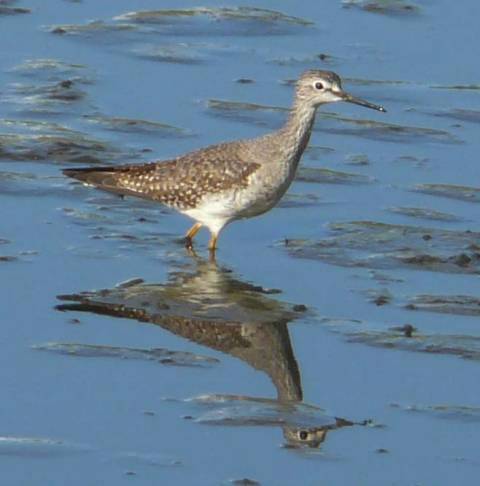
A Lesser Yellowlegs.   


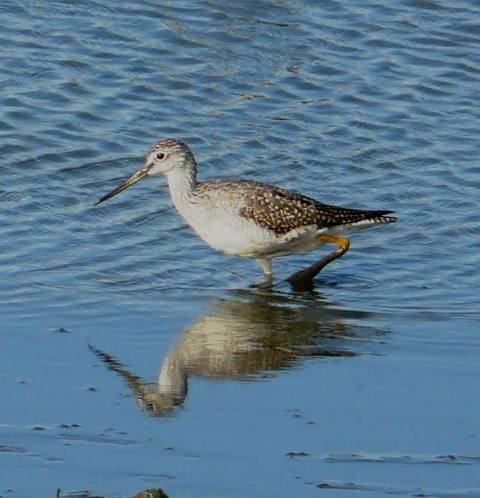
Greater Yellowlegs on the left, Lesser Yellowlegs on the right

Common Murre

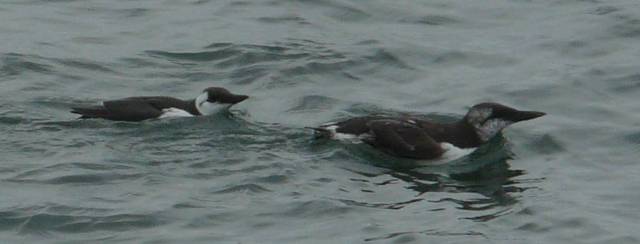
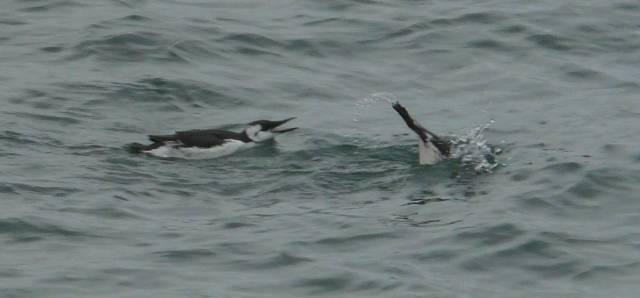
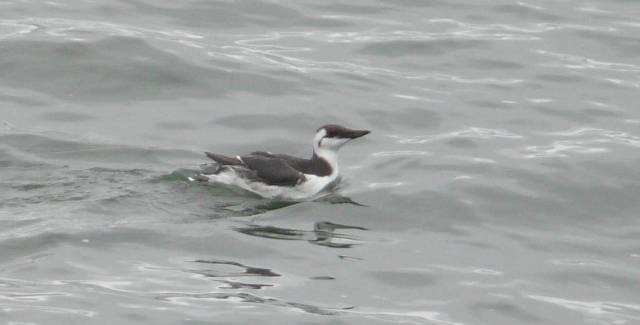
I watched two Common Murres, a male with a nearly-grown chick,  at the south jetty of the Columbia River. Common Murres are common nesters on offshore rocks and cliffs along the Oregon coast. When the chicks are still very small, they leap into the sea and spend the rest of the summer following Dad around as they continue to grow.

The parent/child pair are very vocal. The young murre calls with a high peeping noise, while this adult sounded amazingly similar to a Mallard.


young Common Murre following male parent


The adult starts his dive for food. Murres use their wings to fly under water, so the wings unfold as the dive begins.


Dad disappears as the chick calls. (what did we do before cameras had “burst mode”?)


The young murre waits for the parent to return with a fish. This chick was large enough to dive on his own, and spent almost as much time under water as the parent.

Hummers

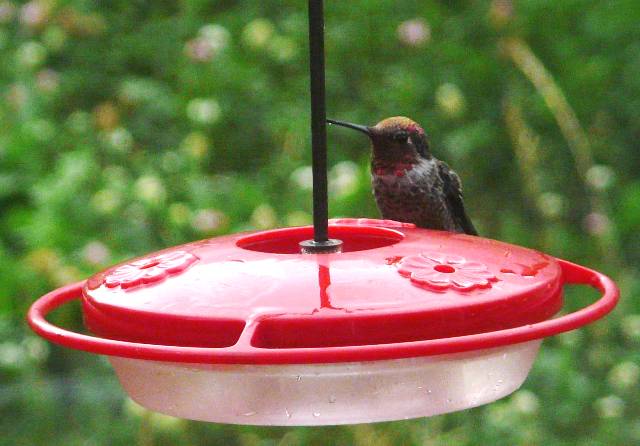
I haven’t seen many Anna’s Hummingbirds at the feeder lately, even though they are on the property year round. Yesterday I found this male in the early morning, thus the dark grainy photos.

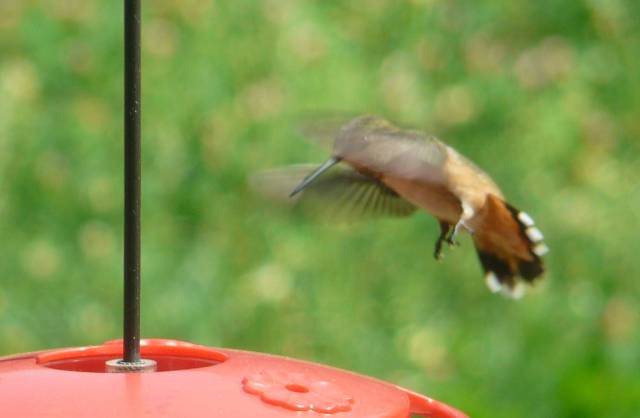
The Anna’s need to use the feeder early in the morning to avoid these little guys:

Rufous Hummingbirds are passing through. While they are noticeably smaller than the Anna’s, they are much more aggressive in claiming the garden as their own. I have read about two solutions for warring hummers; one is to put another feeder out of sight of the first, the idea being that while the dominant hummer is guarding one feeder, other birds can feed on the other. The other plan is to put several feeders in close proximity, in hopes that the dominant bird can’t guard them all at once and will share. I haven’t tried either of these, primarily because I don’t want to maintain two feeders.


I will probably let them work it out on their own. The Rufous Hummingbirds will soon be on their way to sunny Mexico, while the Anna’s will stay and add a little color to the gray winter ahead.

Best Bird Attractant Ever

With all due respect to Pete Dunne, I have never been a big fan of pishing. I am not very successful at bringing birds in with the technique, and I find it rather annoying in the field when other birders do it. But I still try it, having been taught for several decades that it is the thing to do.

So it was recently as I birded Blue Hill in Maine. I heard some bird activity near a little rock bluff, and started pishing to draw birds down from the rim into better lighting. At first I heard Red-breasted Nuthatches and Black-capped Chickadees, joined by Golden-crowned Kinglets and Dark-eyed Juncos. More and more birds joined in as the flock started moving to the edge of the bluff.
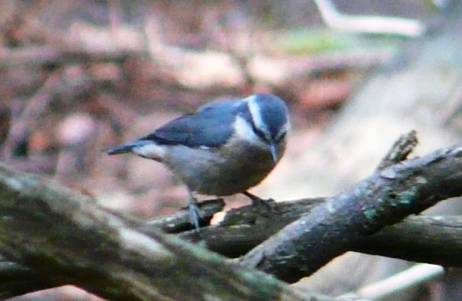

The pishing seemed to be working. Birds started dropping down over the bluff.
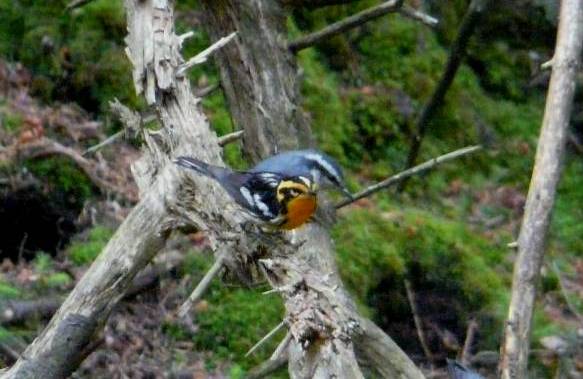
A Blackburnian Warbler joined the flock, as did several Yellow-rumped Warblers
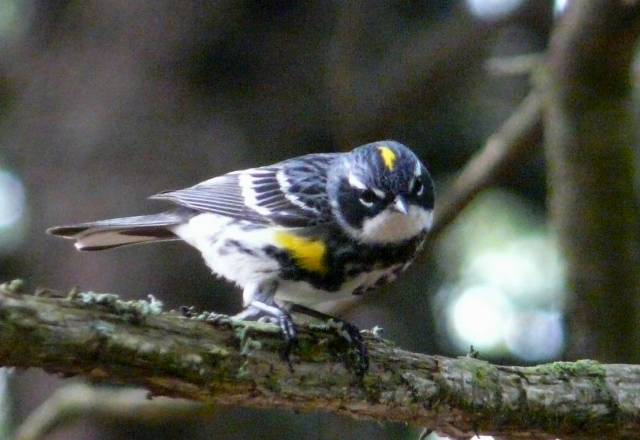
Perhaps I had finally mastered the art of pishing. No. What really had this flock of birds worked up was nothing I was doing. It was something far more interesting to them, and myself.

It was an Eastern Milk Snake, a beautiful specimen about three feet in length (pretty large for this species). The birds were following the snake through the woods to keep an eye on it. Being at the right place at the right time allowed me to enjoy the snake and her entourage. My little pishing noises were of no consequence. So once again I am reminded to watch, blend in with the surroundings, and enjoy what happens by.
When Ruffed Grouse Attack

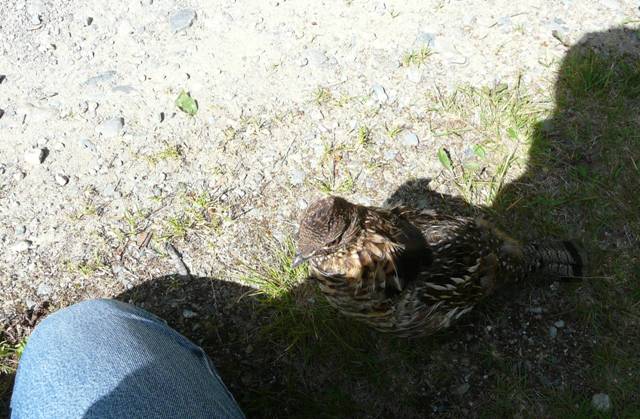
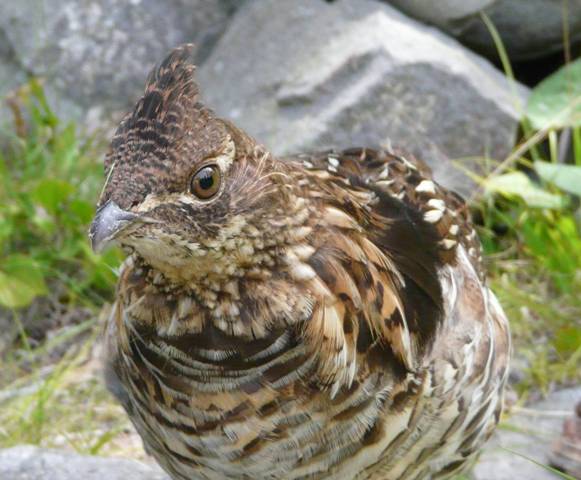
I had an interesting encounter with a Ruffed Grouse today. The bird came out of the woods, feeding and paying no attention to me. I stood still and watched, grateful for such a close view.

The grouse came closer, stopped feeding, and starting watching me. The bird walked around me repeatedly, giving a soft clucking noise.

I knelt down on the trail to get closer to the bird’s level. He kept circling. It seemed he was trying to intimidate me, but aside from one little rush at my foot, he didn’t launch any physical attack.

I eventually got up and continued down the trail. The grouse continued to circle me as I walked. He followed me as I turned onto another trail, finally stopping when I started climbing out of the aspens and into a spruce habitat. I was hoping for a Spruce Grouse to give a similar performance, but no such luck.