Helping evolution along


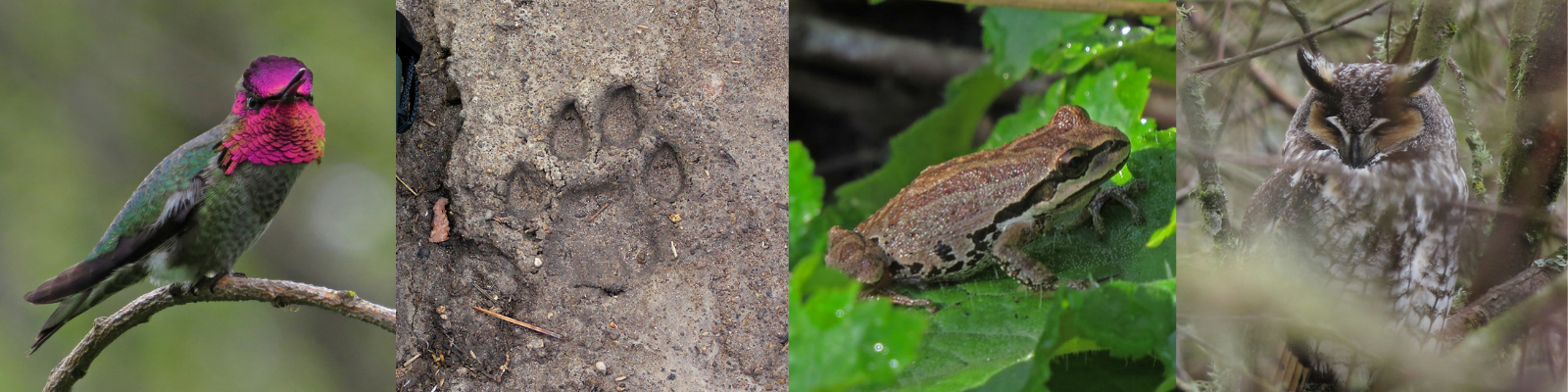
Anna’s Hummingbird was first reported in Oregon in 1944. The first specimen wasn’t collected until 1966. But today, this species is a common year-round resident in western Oregon. They winter as far north as coastal British Columbia, and have even successfully wintered in central Oregon, where they get actual winter weather.

What has caused this rapid range expansion to the north? Climate change is having a measurable effect on some species, but Anna’s Hummingbird has undoubtably been helped along by the presence of bird feeders and exotic winter-blooming plants. While most of a hummingbird’s nutrition comes from the insects he eats, a reliable source of calories provided by a feeder of sugar solution can enable a bird to survive episodes of severe winter weather that would prove fatal without this supplemental food source. A higher winter survival rate provides more birds to breed in the spring, thus establishing the species in new areas.

Bird feeding is credited with helping other species expand their ranges. Northern Cardinal is a prime example in this country. In England, bird feeding is reportedly changing the evolution of one species. The European Blackcap historically migrated to Spain for the winter. With the increasing popularity of bird feeding, this species has stopped migrating south, opting instead to winter in the UK. In just 50 years, the bird has developed shorter wings (longer wings are useful in migration) and a narrower bill (better suited to eating out of bird feeders). These British birds are well on their way to becoming a new species. Read the story here.
Where all my sunflower seed goes

Along with the usual small songbirds that visit my bird feeder, I sometimes host larger birds that do their best to deplete the feeder as quickly as possible.


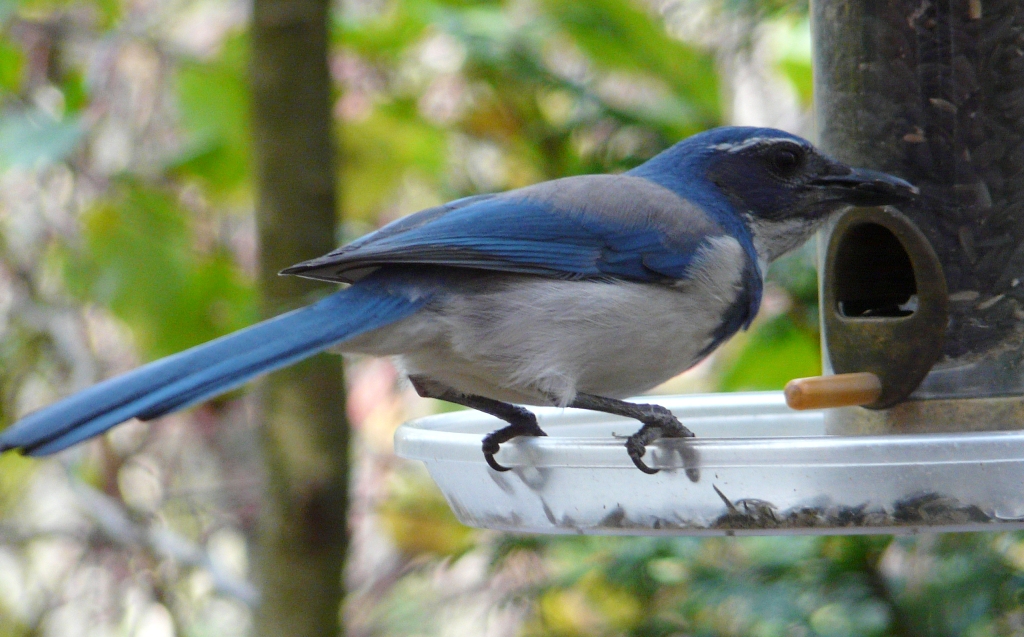
Western Scrub-Jays will fill their crops, then fly off to hide the seeds somewhere.


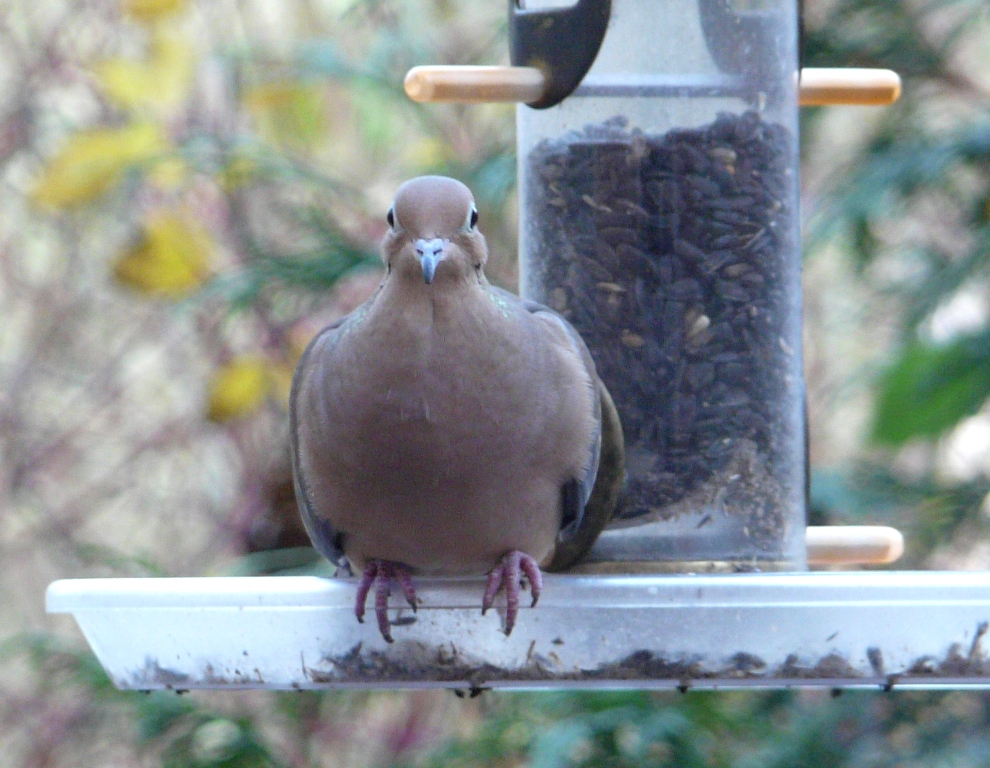
This Mourning Dove camped out on the feeder for the better part of a morning. Their thin bills are not designed to crack open seeds, so they swallow their food whole.


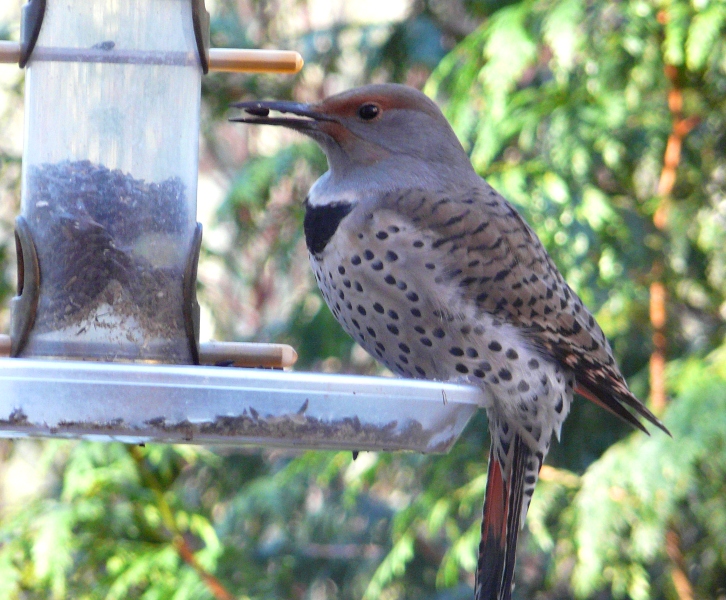
Northern Flickers don’t crack seeds open either, so they pull all the seeds out of the feeder until they find one that is already open.

Great Horned Owl

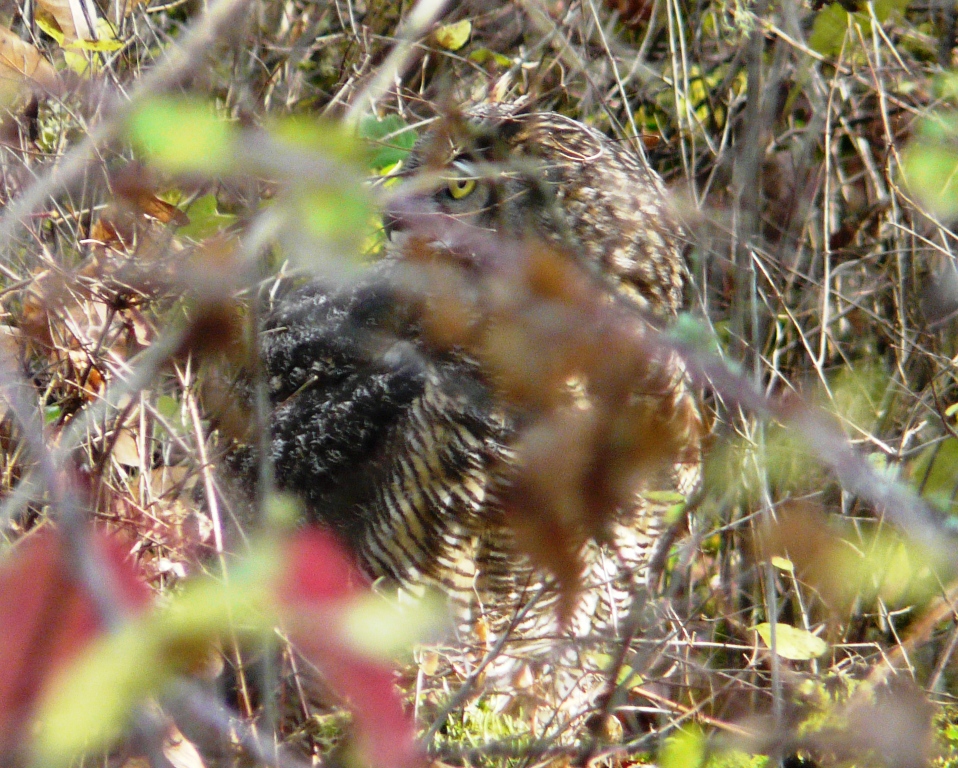
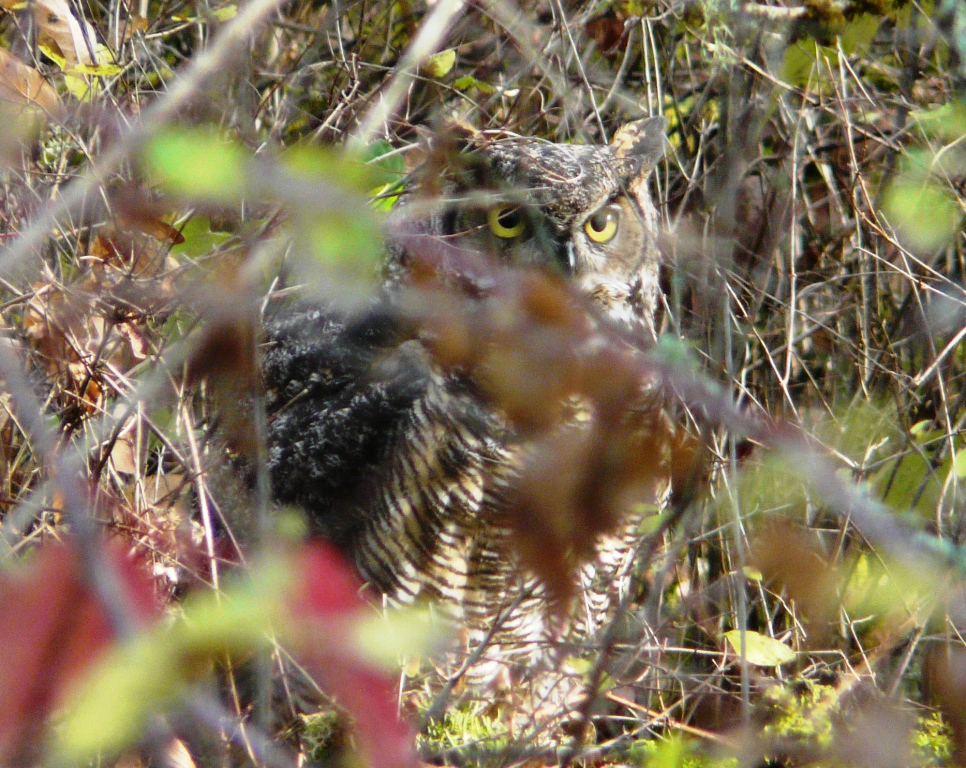
While doing a point count at the Oak Island unit on Sauvie Island (Birding Oregon p. 56), I heard something large rustling in the brush and saw this beasty.

She blended in with her surroundings very well, but those big yellow eyes stand out.


I have seen Great Horned Owls hunting on foot before, but after watching this bird for a while I guessed that she was injured. I considered trying to take her in for medical attention, but the idea of capturing a large predator bare-handed is seldom a good one. She watched me watching her for several minutes before trotting nimbly down a little path through the brush.


Photographing a bird within brushy cover is challenging with my little auto-focus camera. The camera wants to focus on the closest objects, the leaves and sticks, leaving the bird blurry in the background. I had to find a tree trunk that was about the same distance away as the owl, focus on that, and then aim at the owl. This works well with a big stationary target like a Great Horned Owl, but is more challenging with warblers.

Turkey Vultures

Today is International Vulture Awareness Day. Many species of vulture throughout the world are gravely imperiled. We are blessed in this country with healthy populations of both Turkey and Black Vultures.

turkey vulure roost
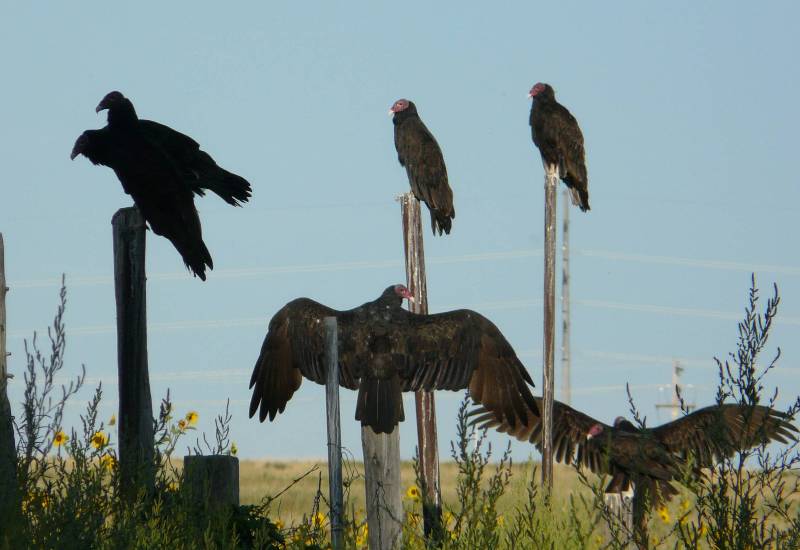
Birders should really appreciate Turkey Vultures, as they are so accommodating.  They roost in plain sight.

turkey vulture posts
They take their time getting up in the morning, so there is no need for us to get up at the crack of dawn to see them. These birds are catching a few rays while they wait for the sun to warm things up and provide updrafts to keep the birds aloft.

turkey vulture line-up
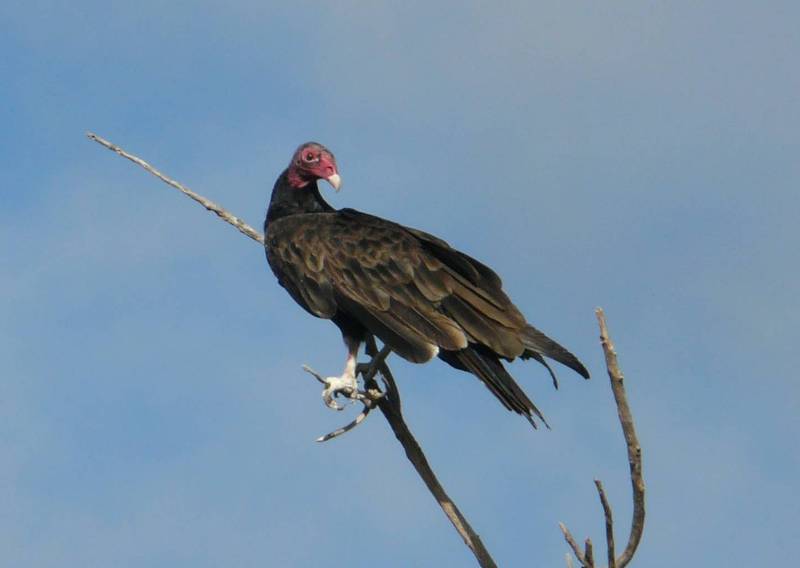
When they aren’t airborne, they perch out in the open for all to see. Those pesky warblers are seldom so generous.

turkey vulture turned
Birding has enough challenges. Don’t neglect to appreciate the easy birds, and the important roles they play.

Mississippi Kite

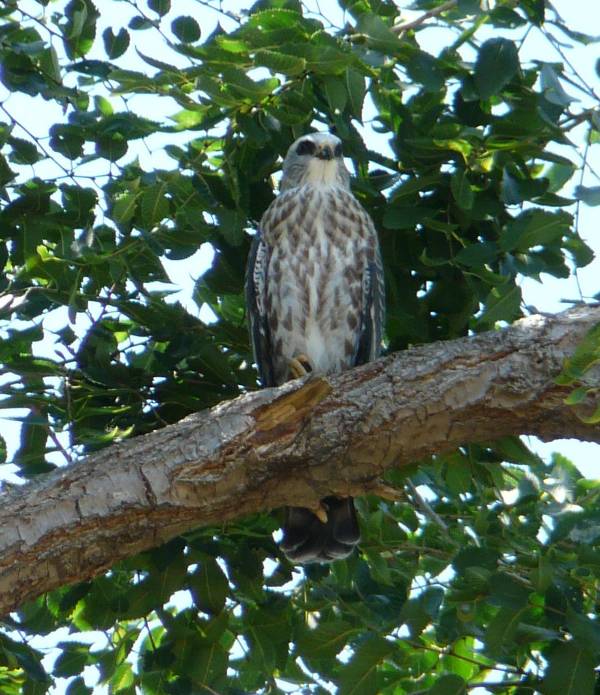
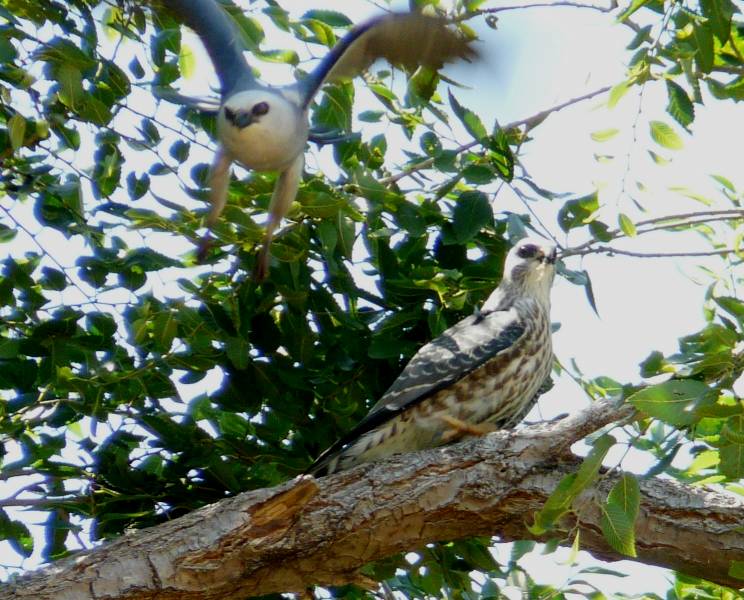
One of the highlights of my recent visit to Kansas was the opportunity to see Mississippi Kites. This raptor is common in towns, primarily because that’s where all the trees are. They feed on large insects, such as cicadas and dragonflies, and spend much of their time in the air, making them nearly impossible to photograph with a point-and-shoot camera.

ms kite
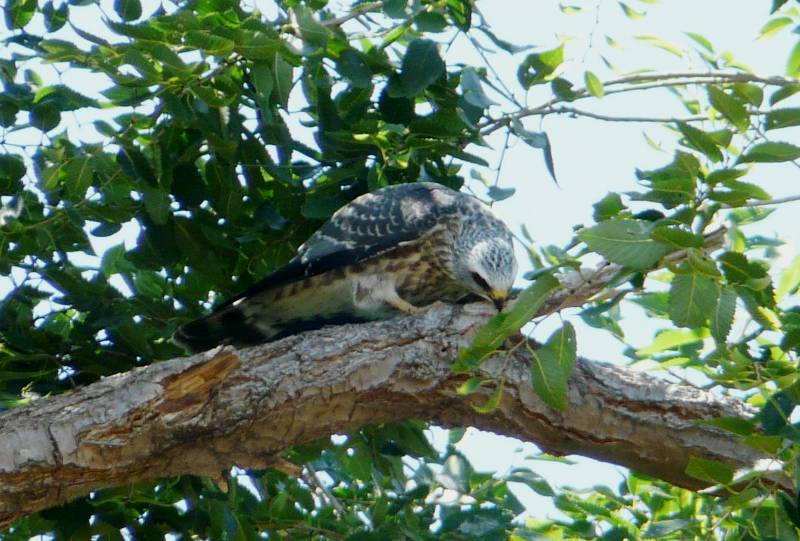
This juvenile spent much of the day in a tree by the house where I was staying. Young kites have an attractive pattern, with streaked breast, scaly upperparts, and banded tail, but the adults are a stunning pearly gray. You’ll just have to trust me on that.

ms kite calling
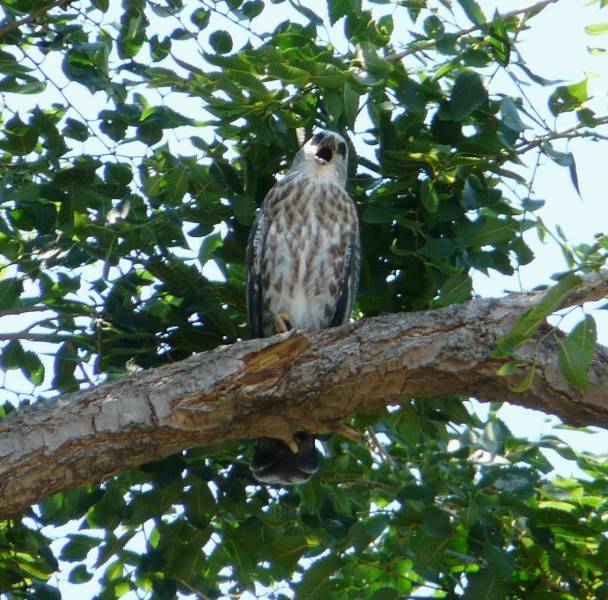
When hungry (all the time), the young kites make their long piercing PEE-PEEeeeeeee calls.

ms kite juv and adult
Eventually, a parent comes by to drop off a large insect and then quickly takes off again to continue hunting.

ms kite cleaning bill
After downing the insect, the young kite wipes her bill on the limb and waits for her next mouthful to be delivered.

Brown-headed Cowbird

bh cowbird 2

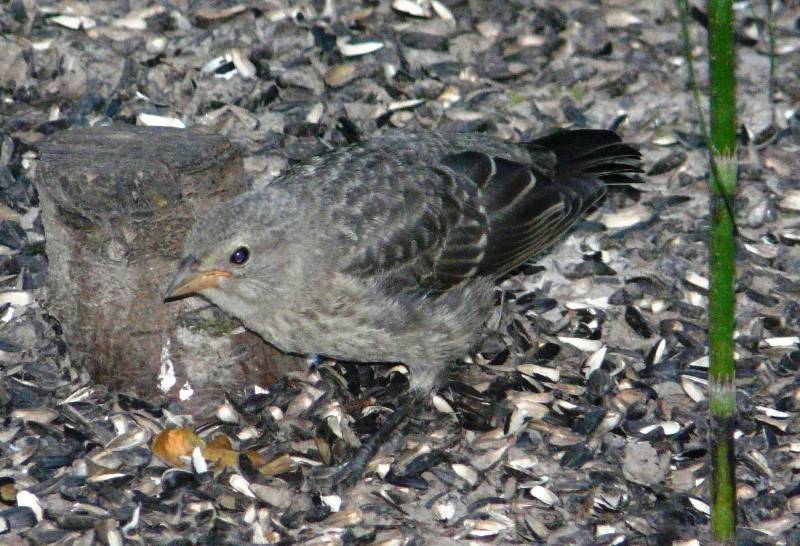
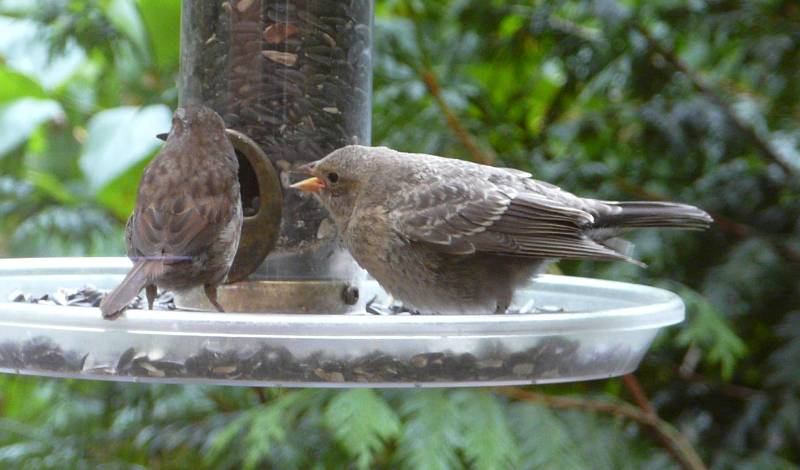
Two Brown-headed Cowbird fledglings have been hanging out at the feeder lately. This species is a parasitic nester, laying eggs in the nests of other species. Historically, Brown-headed Cowbirds were common in the Great Plains, where flocks would follow wandering herds of American Bison. Since the bison herds didn’t stay in one place long enough for cowbirds to nest, it makes sense that these birds would “adopt” their offspring out to other birds. As forests in the east and west were cleared, creating edge habitat, Brown-headed Cowbirds greatly expanded their range, which now covers most of North America. This has led to the decline of many eastern songbirds, as young cowbirds displace the young of the host species.

song sparrow - bh cowbird
The two birds coming to my feeder were being fed by a Song Sparrow, one of the more common hosts of Brown-headed Cowbirds. Cowbirds have been known to lay eggs in the nests of over 200 different species, including Blue-winged Teal, Ferruginous Hawk, and Ruby-throated Hummingbird. These species do not successfully raise young cowbirds, but enough eggs end up with compatible hosts to create a strong cowbird population. (Female Brown-headed Cowbirds can lay up to 40 eggs in a year.)

bh cowbird on feeder
This youngster is feeding himself. After leaving their host families, young cowbirds find others of their kind and form flocks.

Purple Martins

purple martin

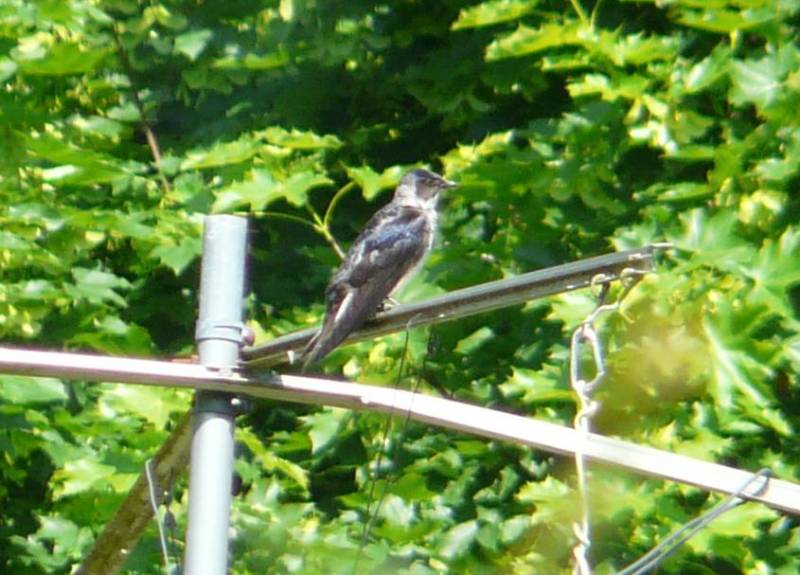
I always enjoy checking out the Purple Martin houses behind a home on Sauvie Island.  These large swallows are one of the more popular yard birds in the eastern U.S. , but the species is much less common in the West. This site on  Sauvie Island is one of the few places in the Portland area to find them.

martin nest
Here a female is putting nesting material into a martin house. The “natural” nesting habitat for Purple Martins is a cavity, usually an old woodpecker hole. But for the past two centuries, most of the population has chosen to nest in man-made structures.