Fernhill Wetlands and Jackson Bottom

We are two weeks into a nasty heat wave in the Portland area. Sunrise is the only time of day when you can bird in any comfort and hope to find any birds active and singing. So I got up early and did a bird survey at Fernhill, then made a quick stop at Jackson Bottom on the way home.

am. goldfinchSome of the flowers have gone to seed, providing forage for both American (above) and Lesser (below) Goldfinches.

lesser goldfinch
great blueThe refurbished wetlands at Fernhill have lots of tree trunks installed vertically to provide perches for birds like this Great Blue Heron.

green heronGreen Heron

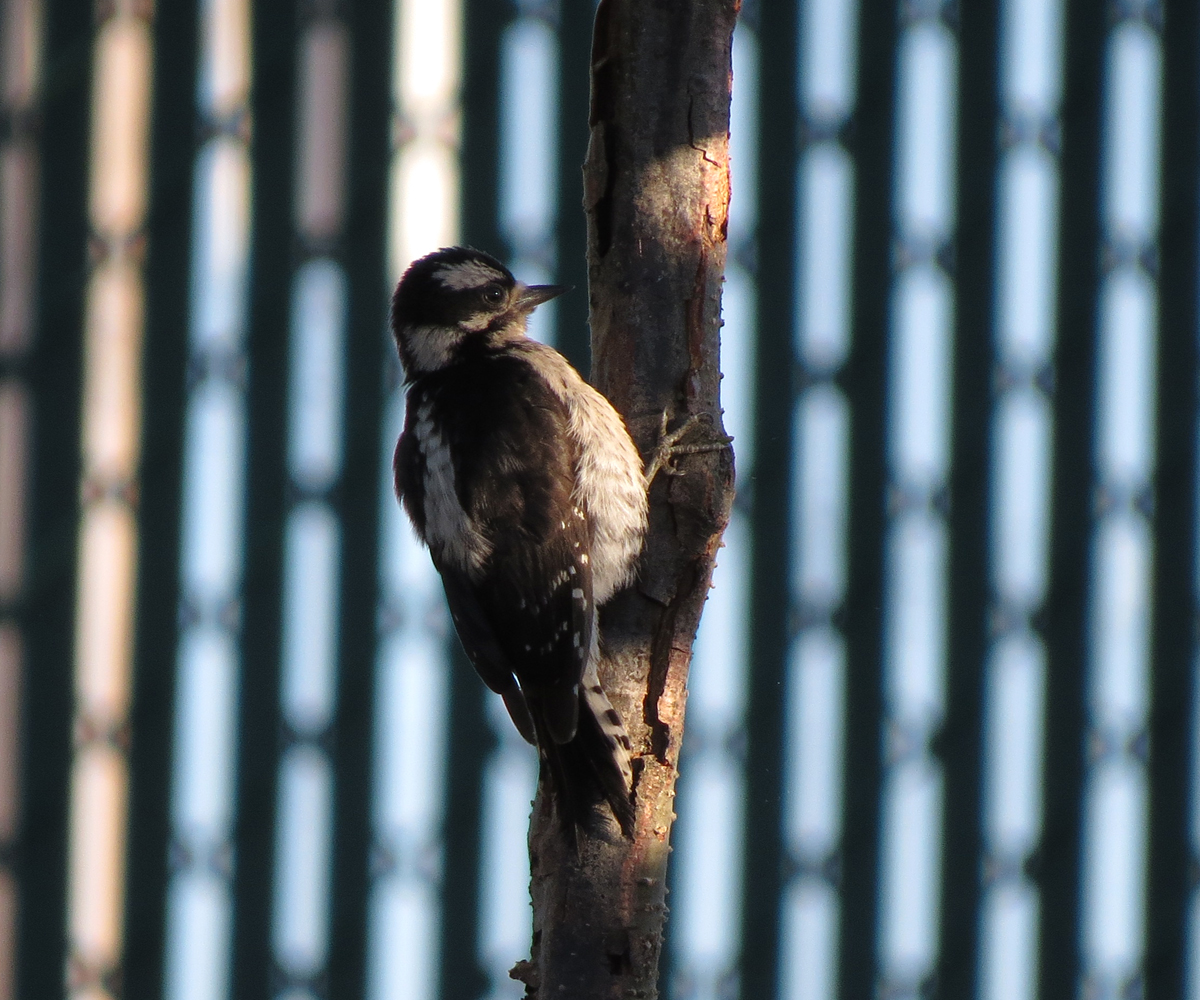
downyThis Downy Woodpecker was checking out some of the new plantings around the water garden at Fernhill.

killdeera young Killdeer, at that awkward teenager stage
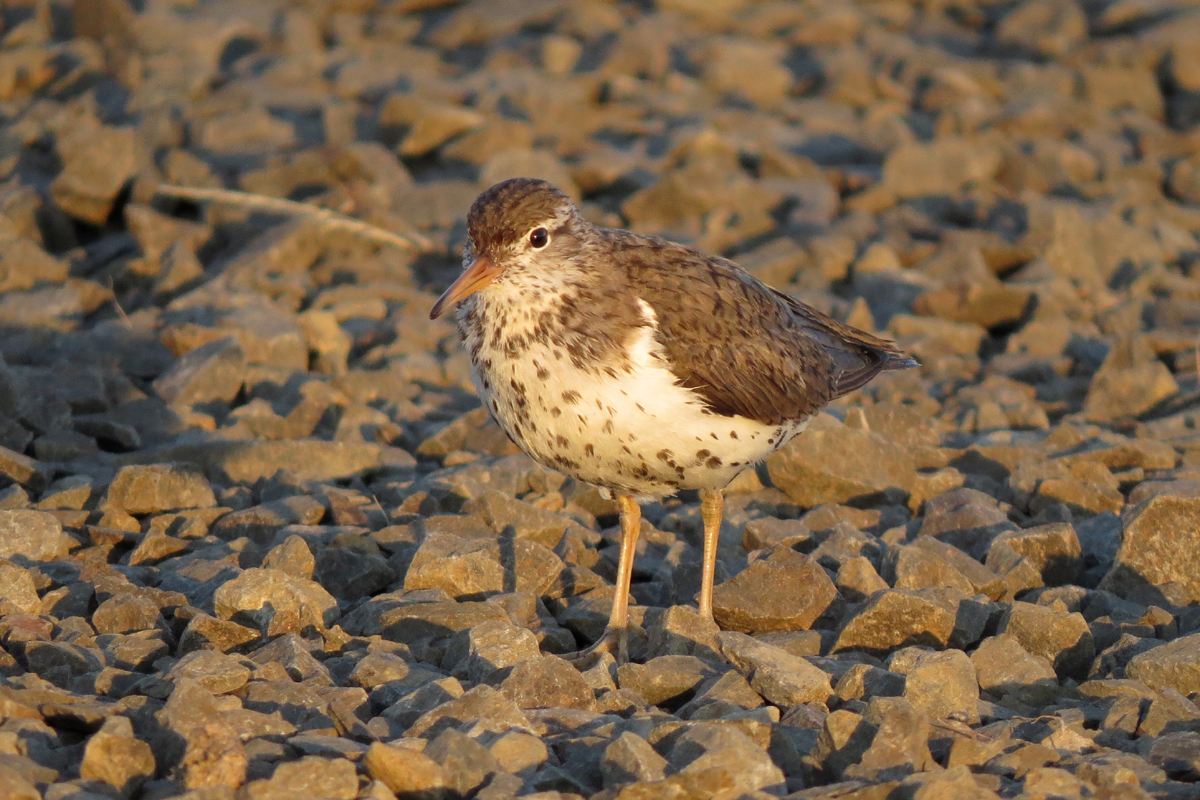
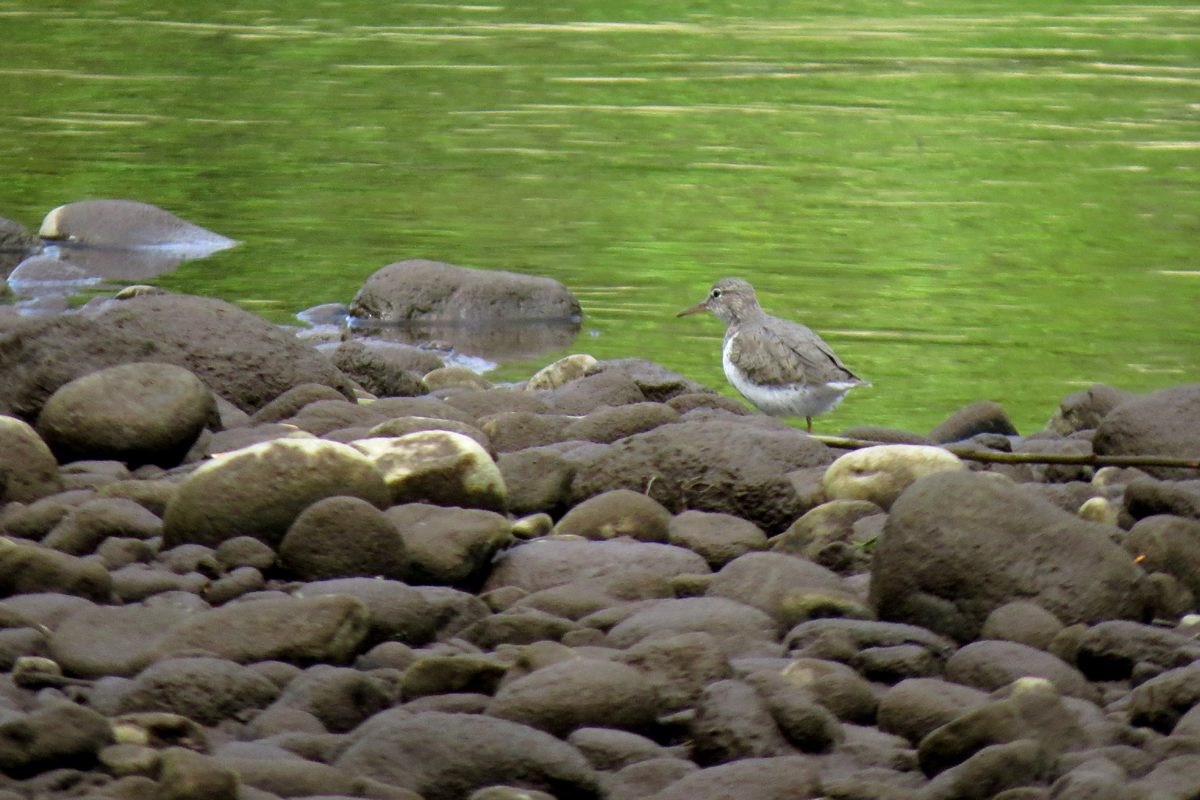
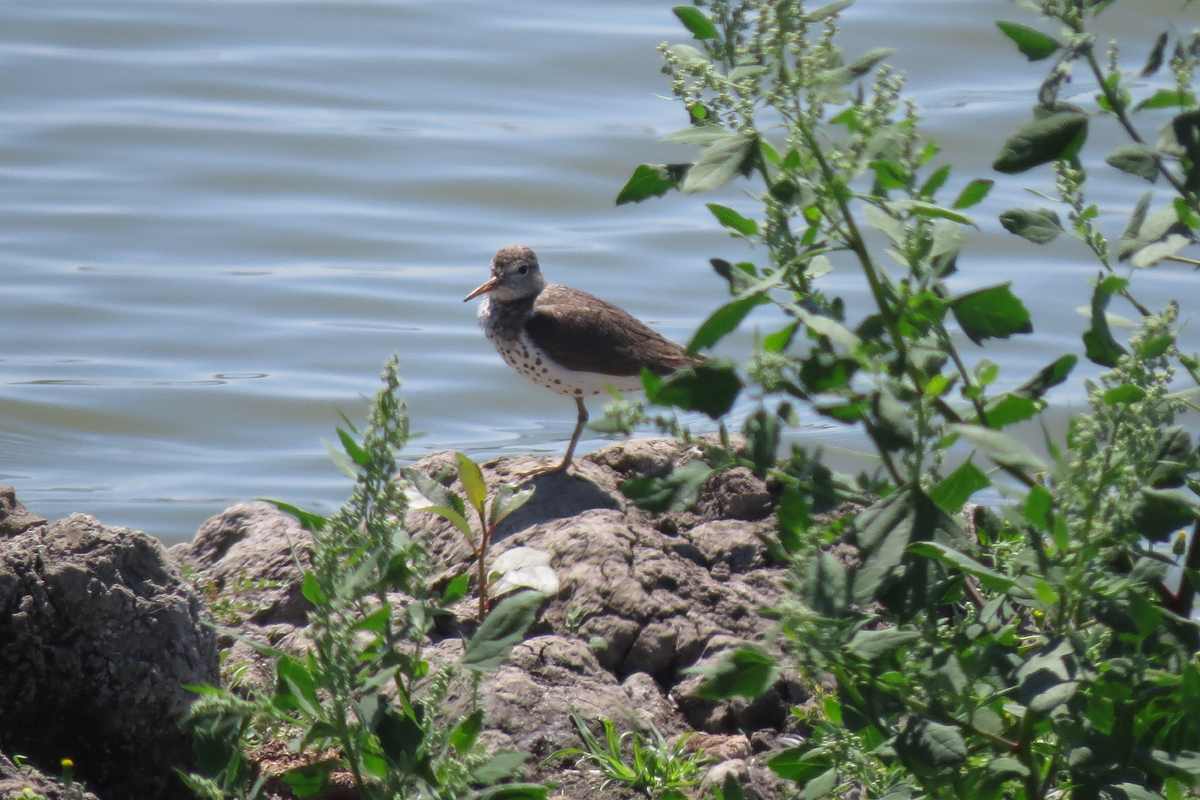
spotted sandpiper leftSpotted Sandpipers are the other shorebird that nests at Fernhill and Jackson.
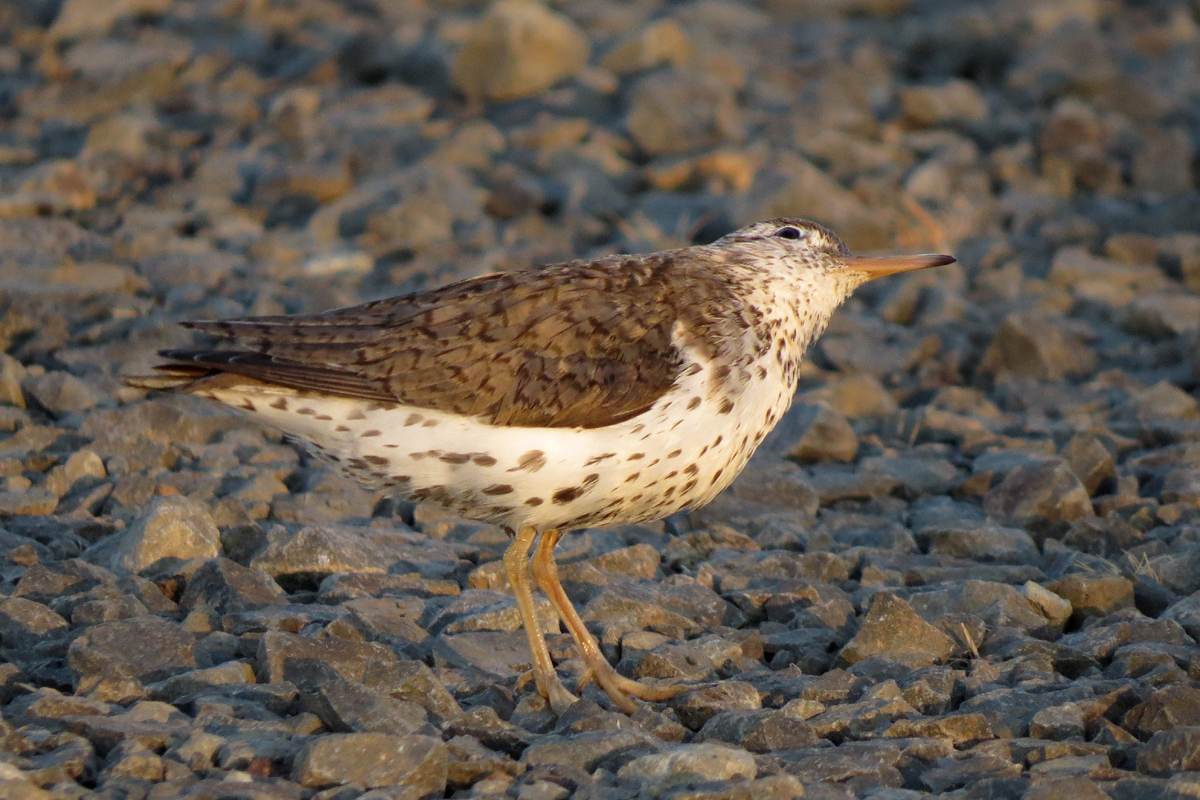
spotted sandpiper upChecking the sky for falcons

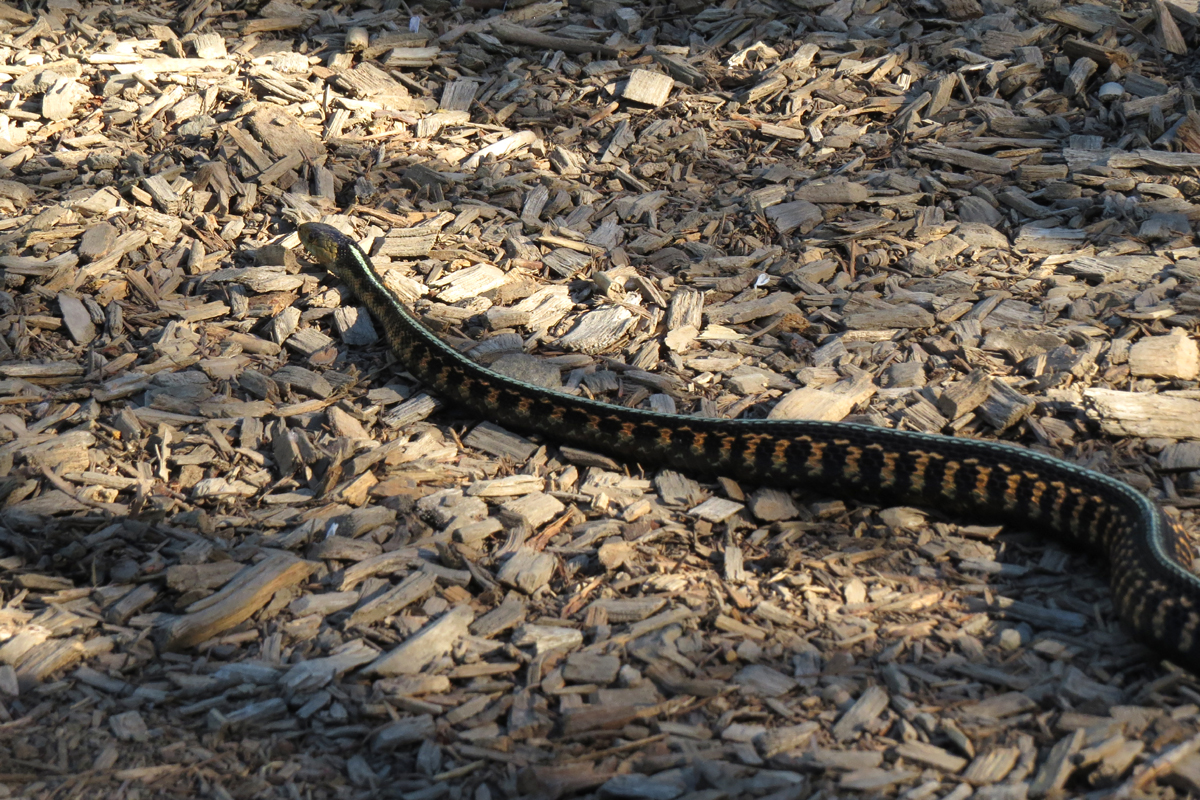
garterThis Common Garter Snake was very thick in the middle. I assume she is gravid. Garters give birth starting in late July. Broods are typically around a dozen, but broods of over 80 young have been reported.
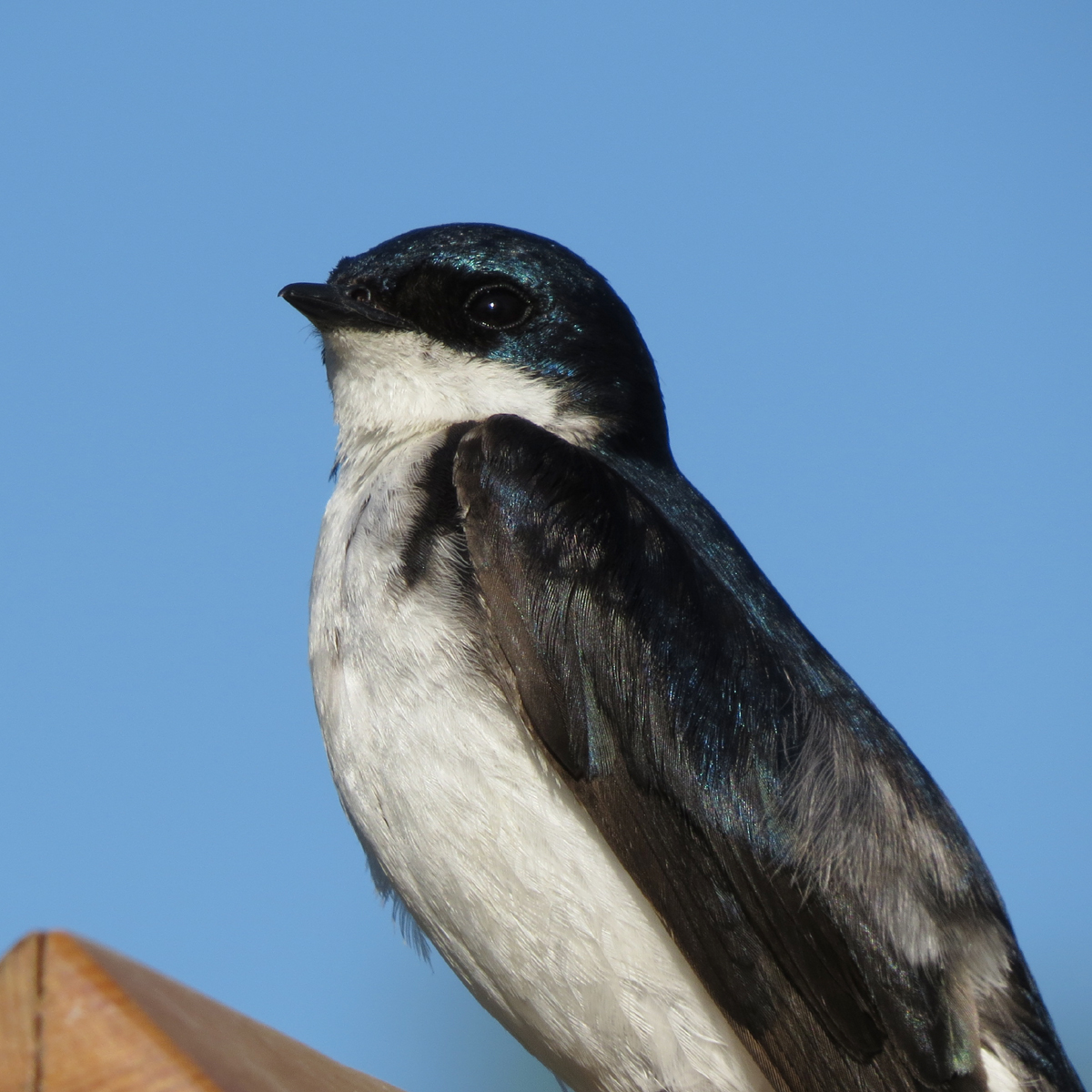
tree swallowmale Tree Swallow, being all sparkly
Sandy River Delta

Nala and I spent the morning at the Sandy River Delta east of Portland. Bird activity is definitely picking up, although many of the summer residents haven’t arrived yet.

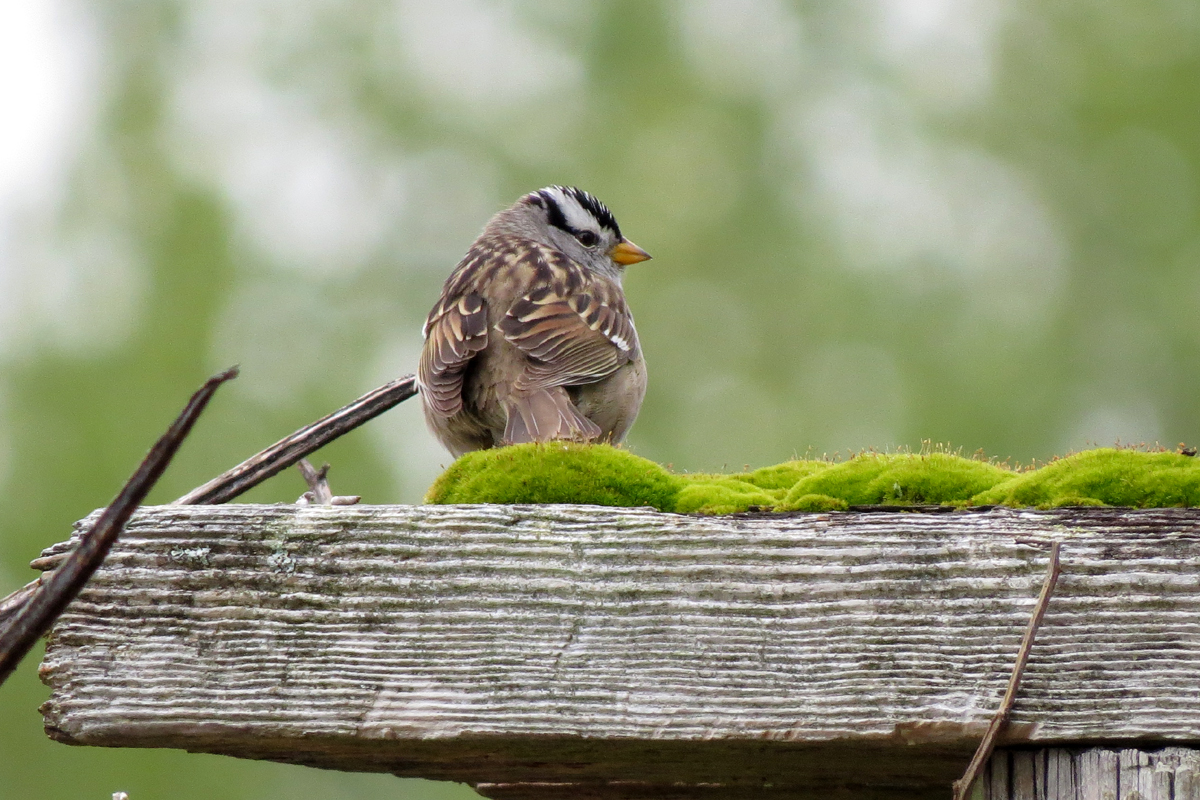
white-crownedWhite-crowned Sparrows were singing

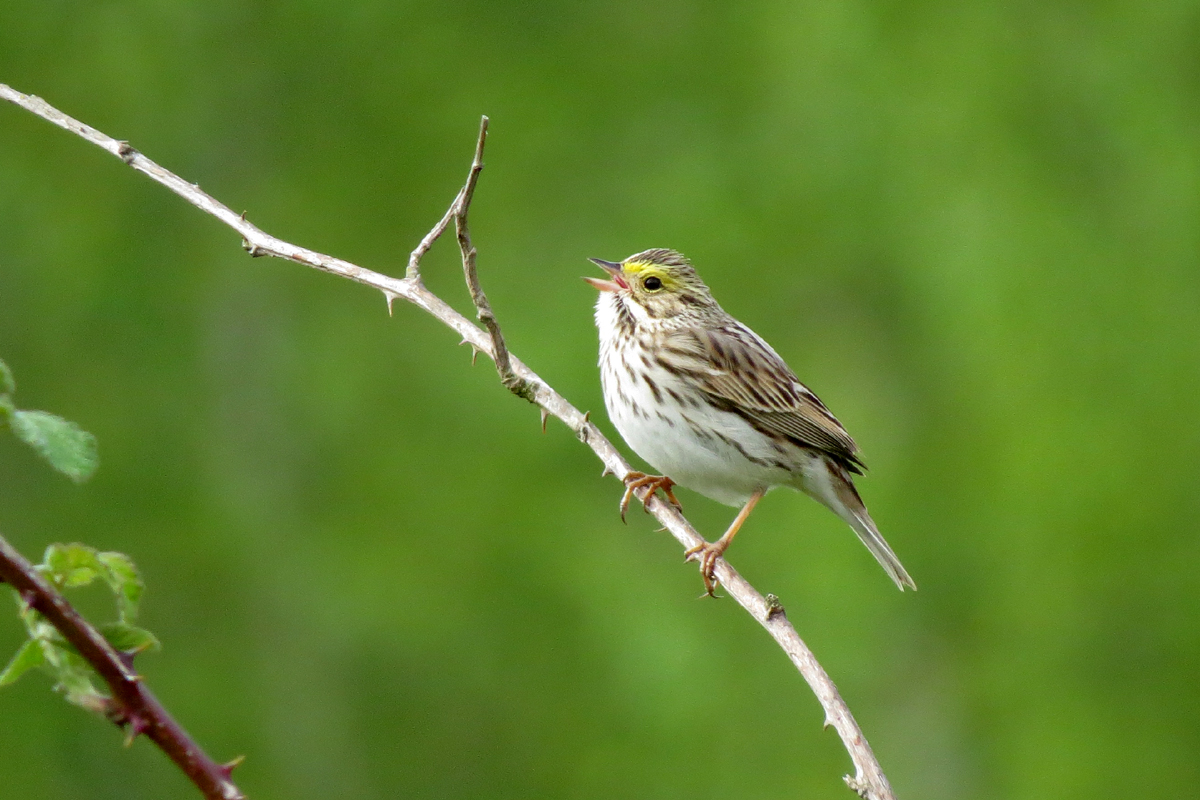
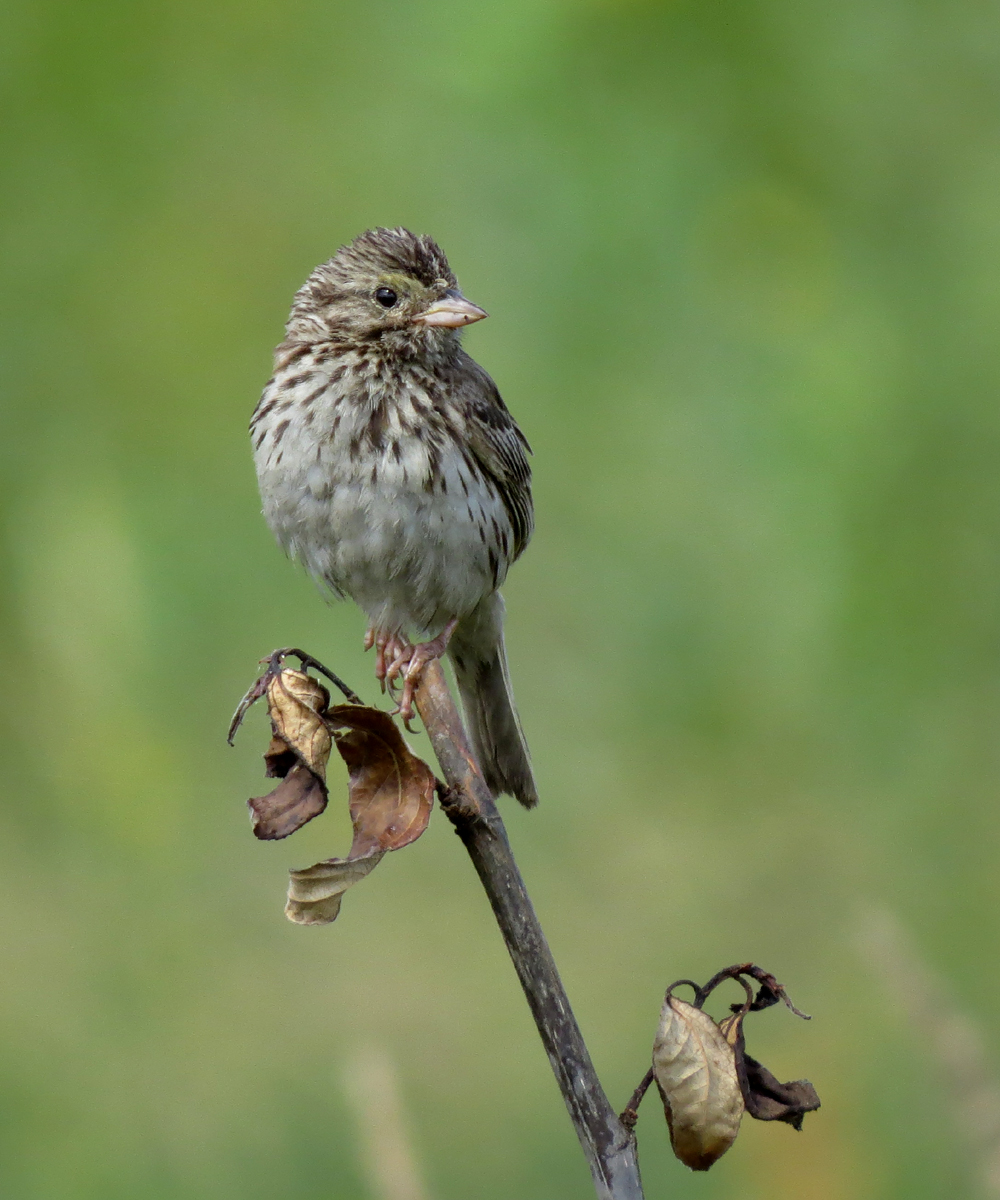
savannah sparrow 2as were Savannah Sparrows.

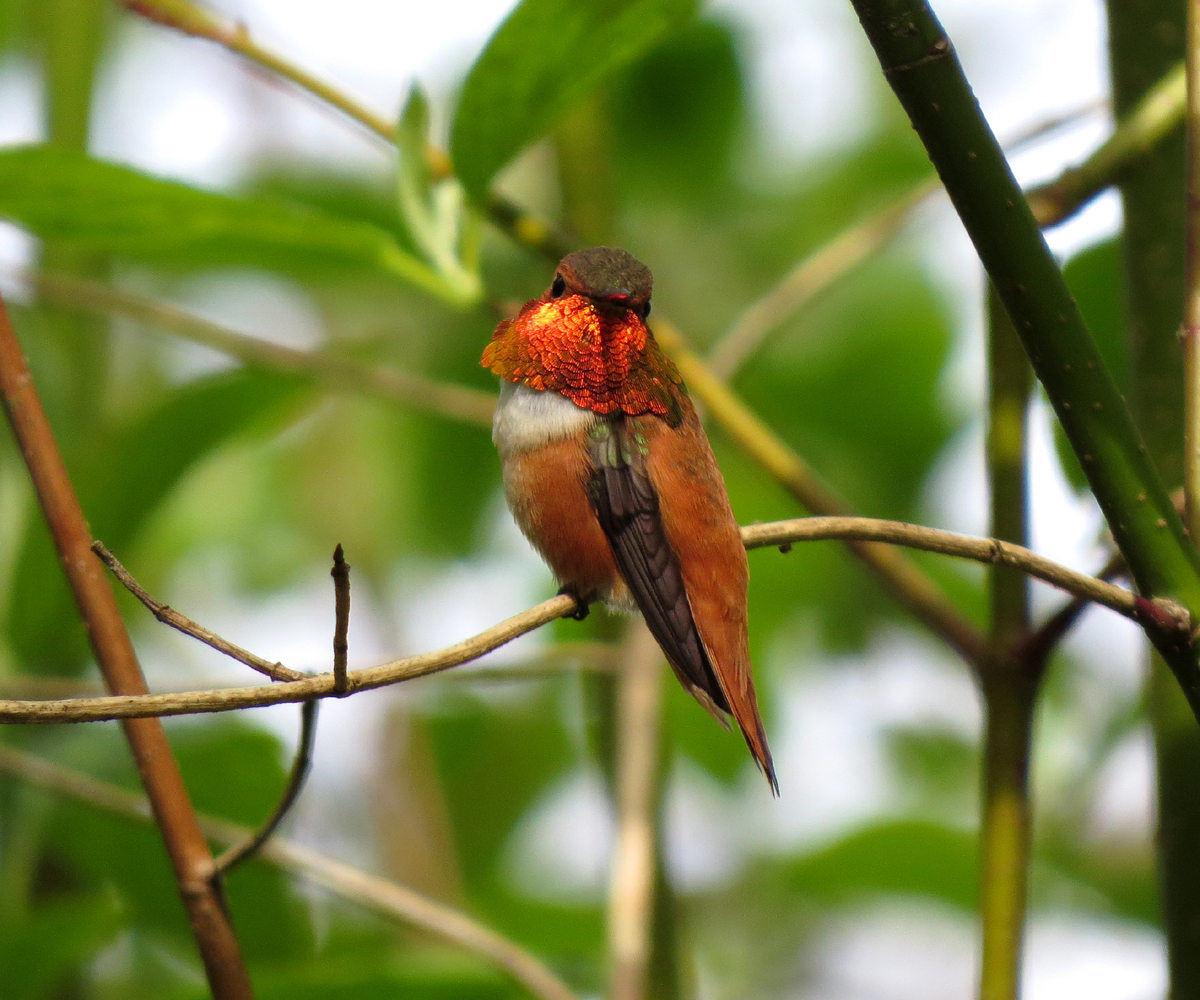
rufous 3Rufous Hummingbirds were zipping around everywhere. All the birds I could get a look at were males.
rufous 2
rufous scratchingscratching an itch

yellowthroatHere is a typical view of a Common Yellowthroat.

wood ducksThe recently reopened channel hosted a lot of birds, including this pair of Wood Ducks and a sleepy Mallard.

spotted sandpiperSpotted Sandpiper, not yet spotted

great blueGreat Blue Heron in a tree

common merganserCommon Merganser, proving once again that I have no idea how to control the white balance on my camera.

nalaOf course, Nala will tell you the main reason to visit this site is to go swimming. Here she is in the Sandy River, while the mastiff on shore waits to try to steal her ball.

Tualatin River NWR

eagle nestI made a quick visit to Tualatin River NWR in the afternoon heat. One of the main trails is closed off until this young Bald Eagle decides to leave the nest. Despite the flock of European Starlings cheering him on, he didn’t show any sign of leaving.

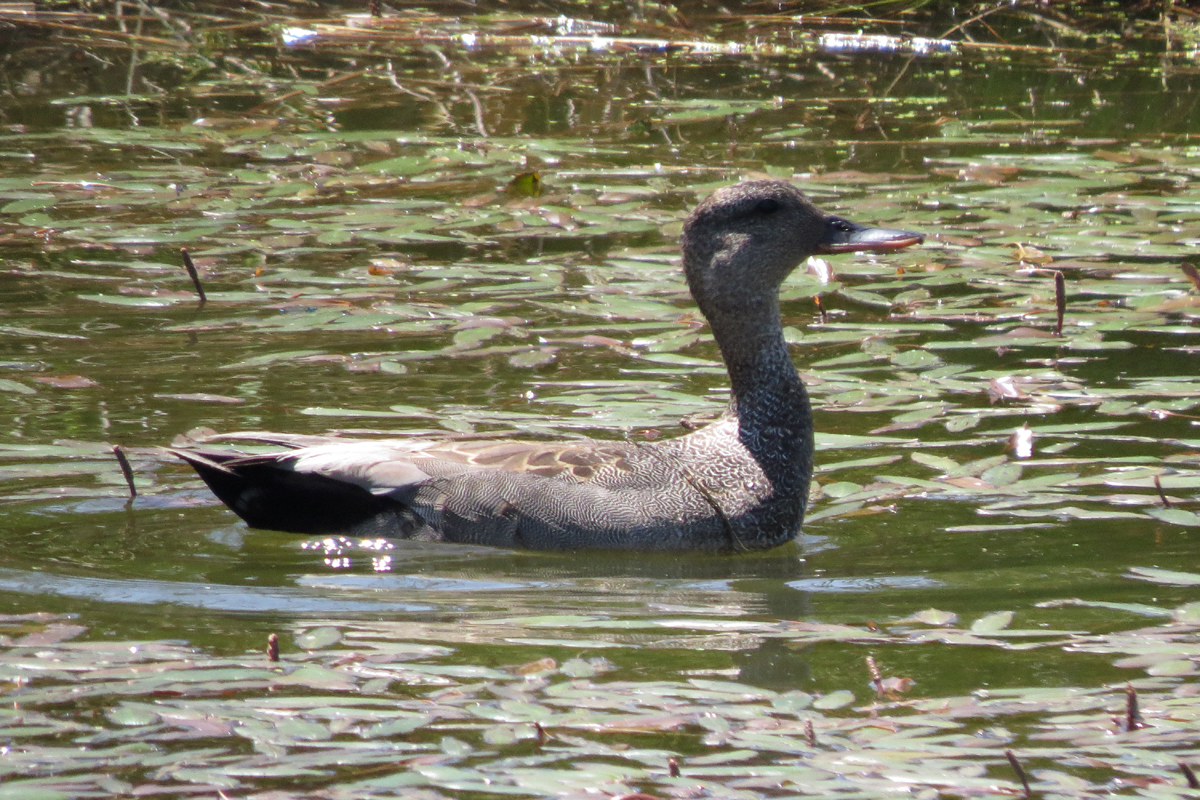
gadwallI saw several pairs of Gadwall, but no ducklings yet. This male was putting on a show for his lady friend.

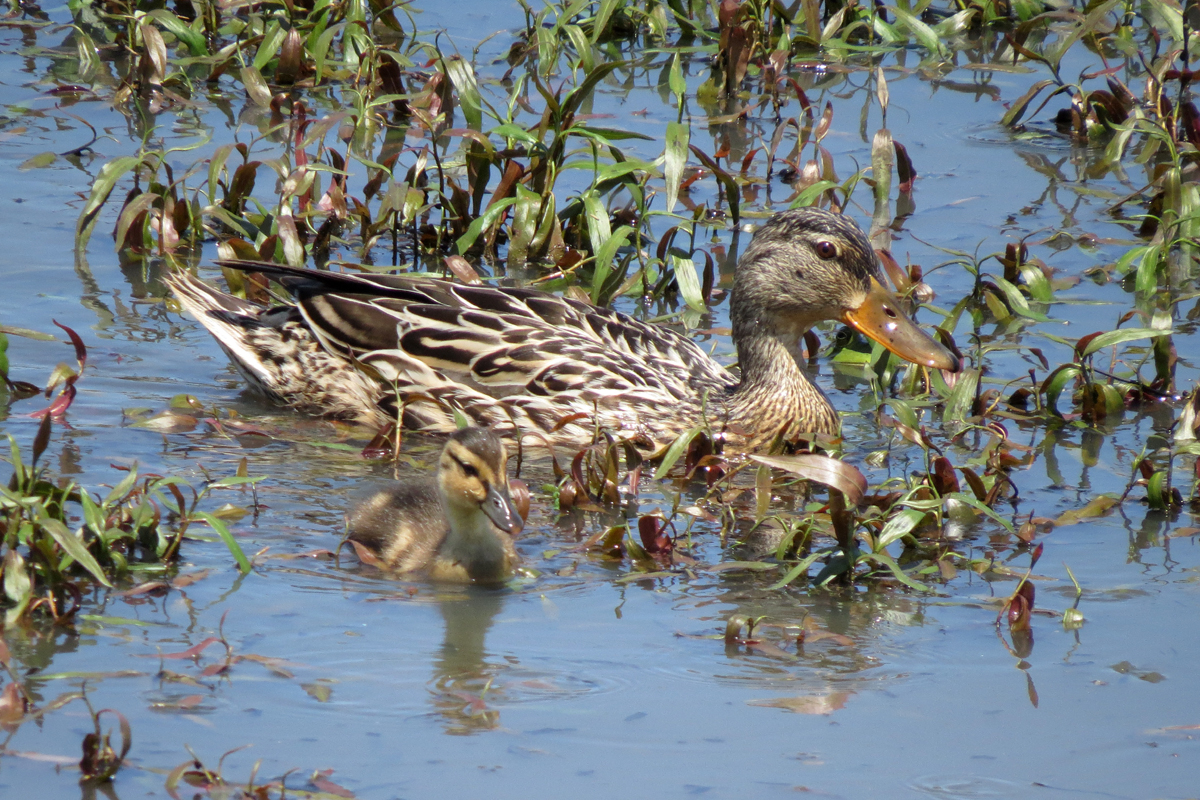
mallard momMallards have been out with broods for weeks now.
duckling
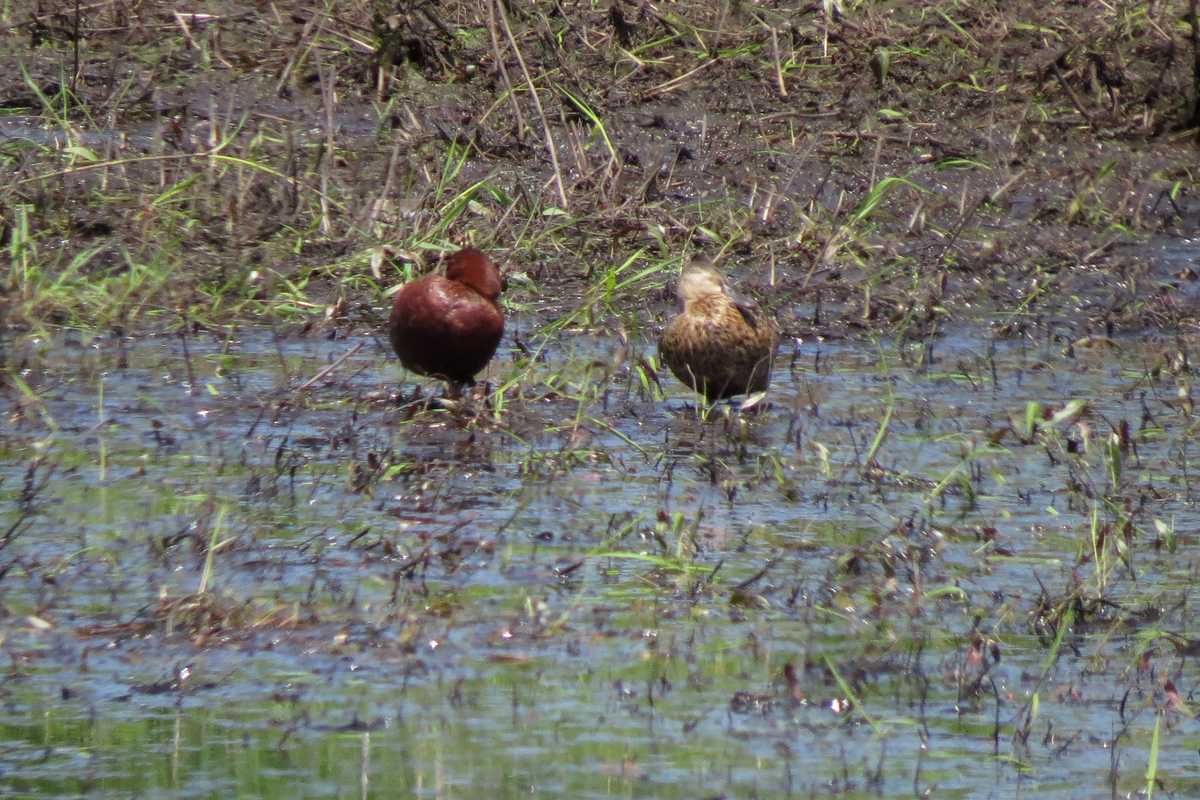
cinnamon tealCinnamon Teal siesta

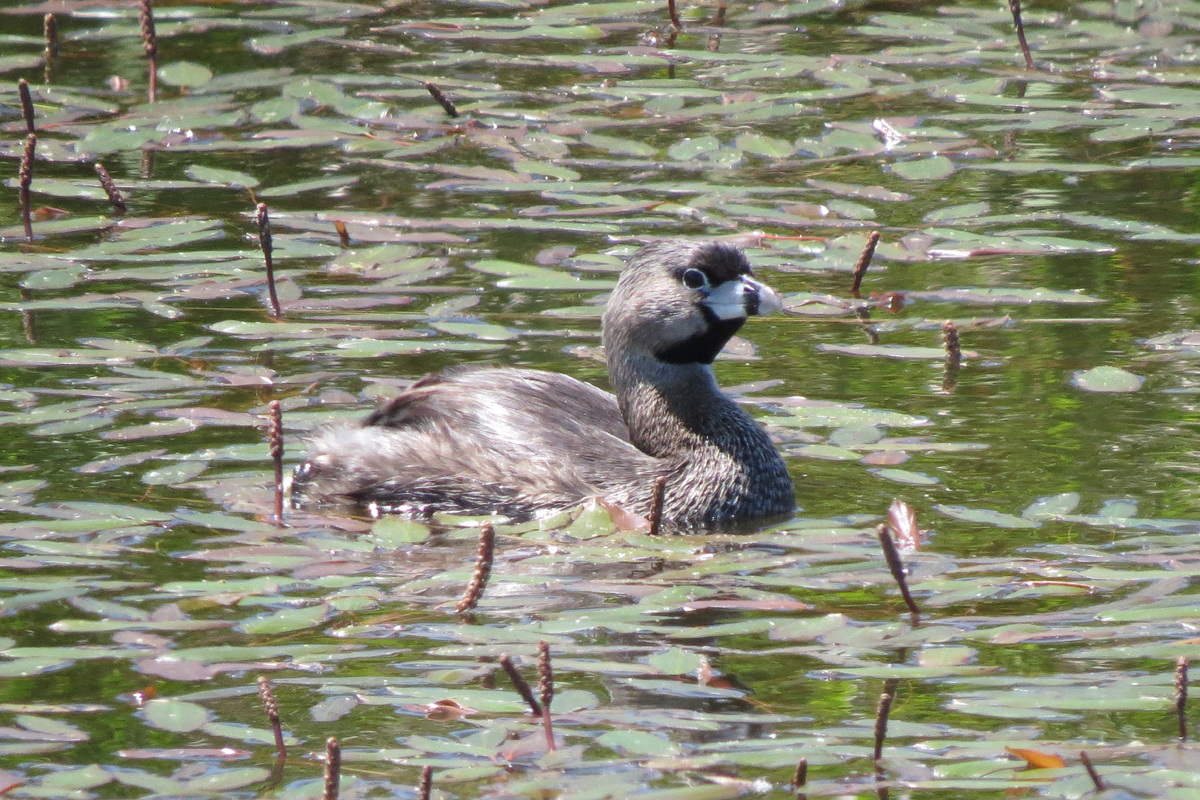
pb grebePied-billed Grebe showing off his black throat

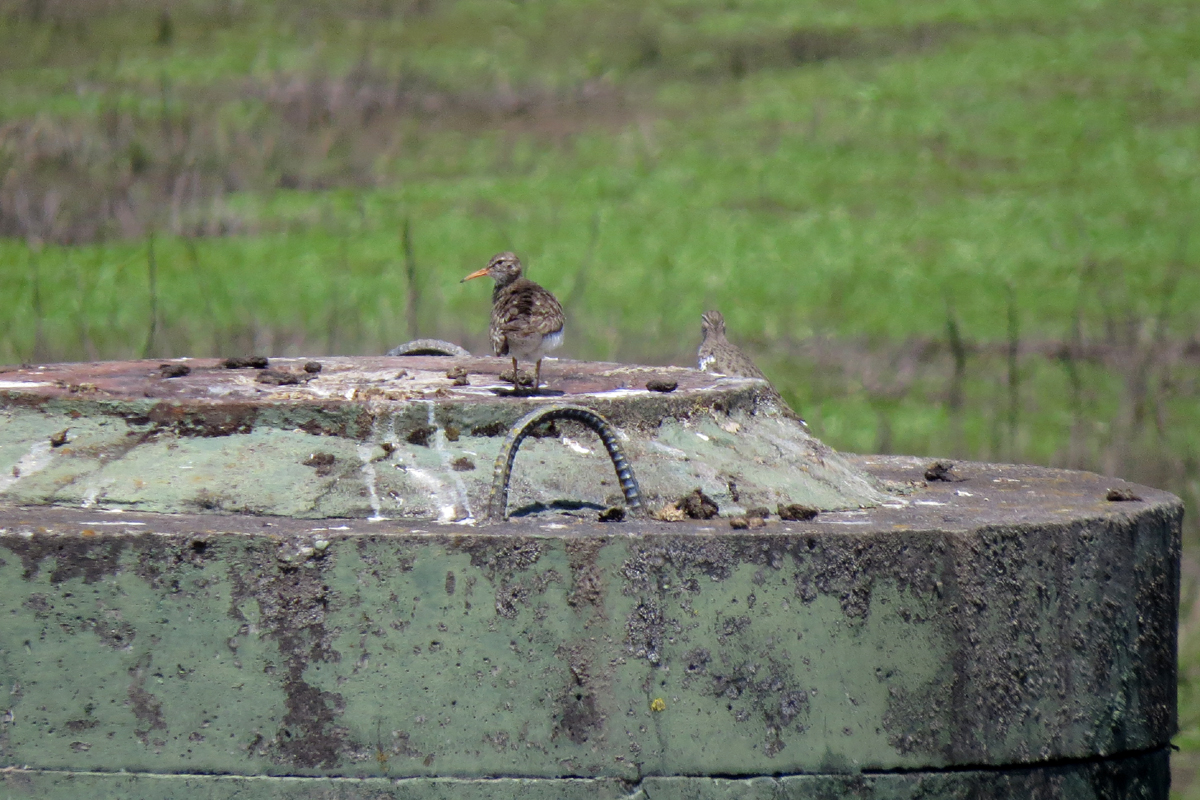
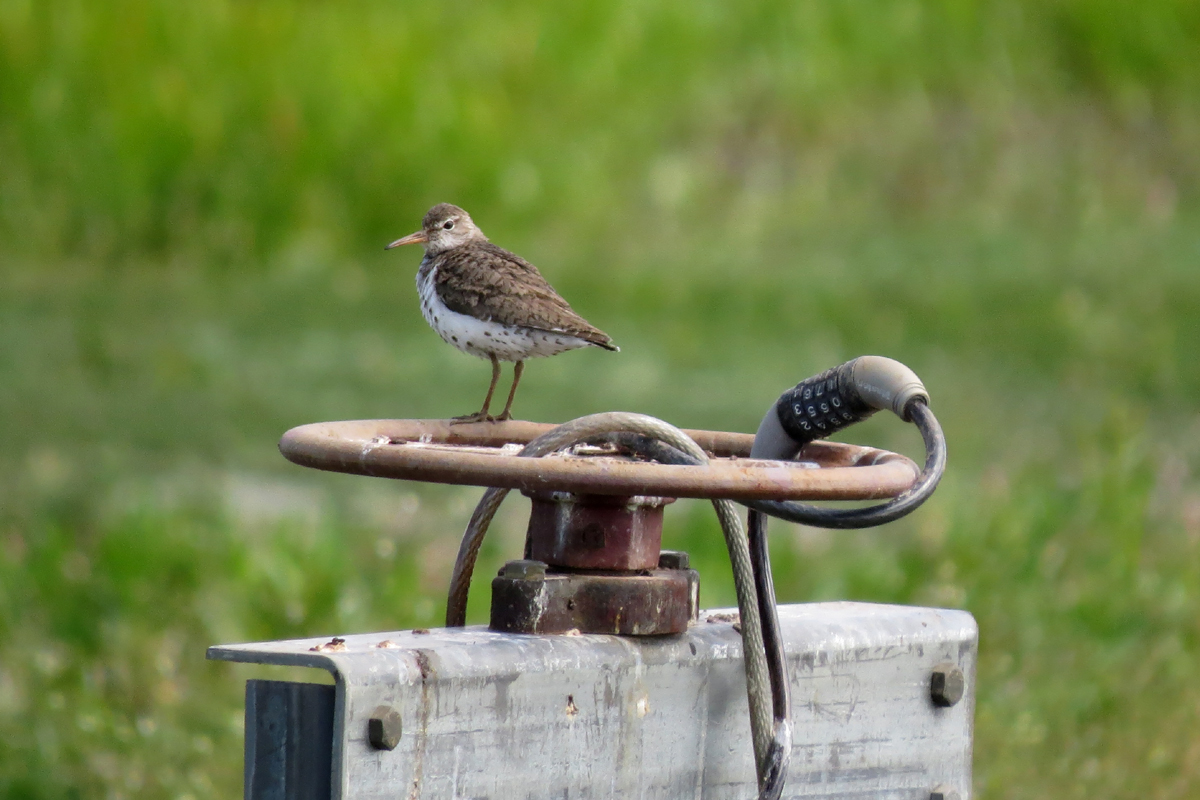
spotted sandpipersI often find Spotted Sandpipers perched on man-made structures.

bullfrog Despite the time of day, American Bullfrogs were actively singing and defending territories. This introduced species is so common in the Willamette Valley. I would think they would be a favored prey item (Great Blue Heron, Mink, River Otter, etc.) but I seldom find any evidence of predation. Bullfrogs are unfortunately very good at preying on native frogs and turtles.

Water Babies, Tualatin River NWR

juvenile spotted walkingThere are lots of youngsters in the wetlands these days. We haven’t had any rain in July, so water levels are dropping, concentrating wetland animals into smaller areas. This is a Spotted Sandpiper in that awkward adolescent stage.

spotted in culvertThe same Spotted Sandpiper, peeking out of a culvert

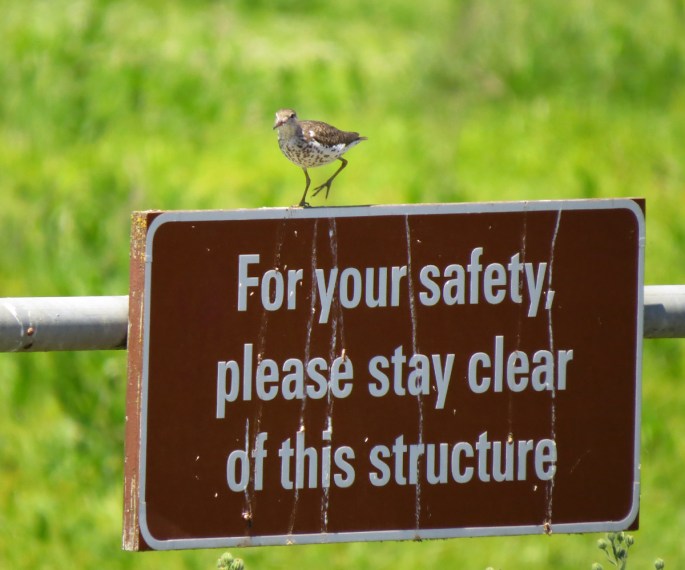
spotted 1This adult Spotted Sandpiper may be the parent of the juvenile pictured above. Like many birders, she assumes the sign does not apply to her.
spotted 2
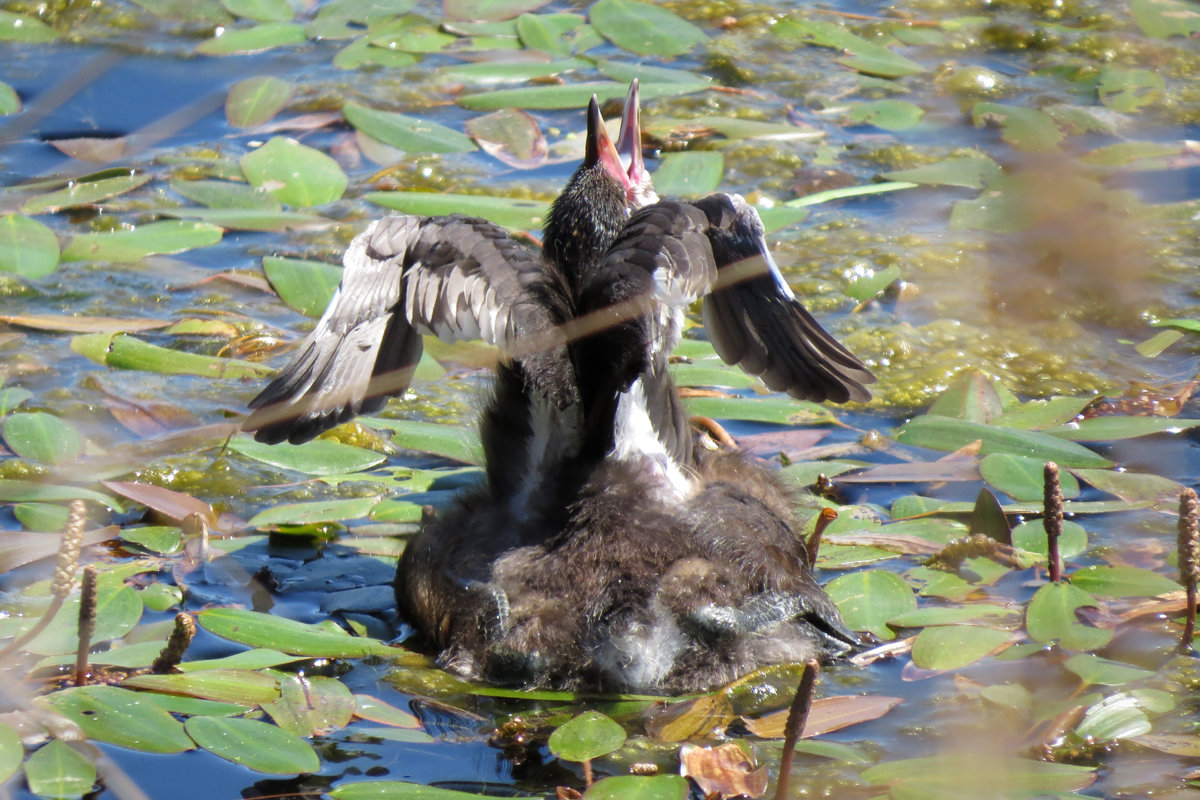
pb grebe scratchingThis young Pied-billed Grebe was grooming and stretching in the canal.
stretching pb grebe
pb grebe left

tadpolesThere are lots of tadpoles in the canal.
bullfrogUnfortunately, they belong to the invasive American Bullfrog.

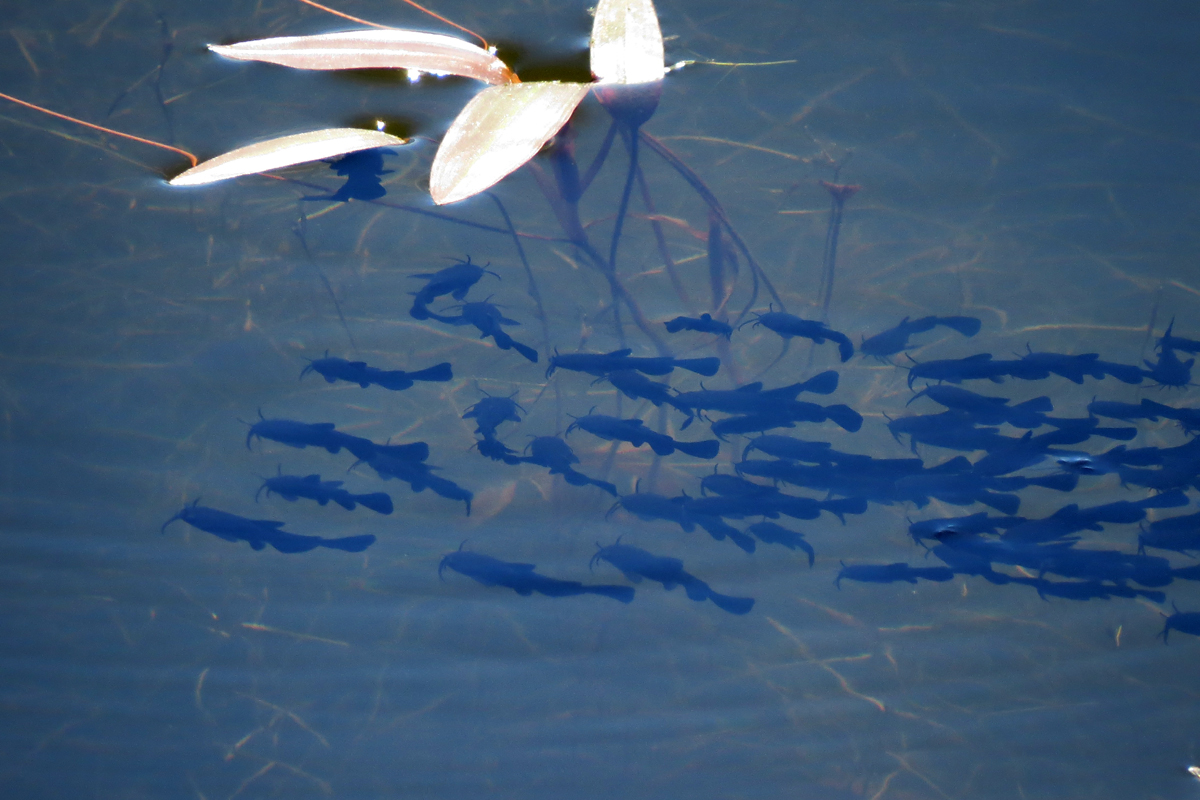
bullheadsEvery puddle has a school of baby bullheads this time of year.
bullheads 2

nutria eatingAnother invasive species, but darned cute, is this young Nutria nibbling on aquatic vegetation.
nutria eating 3

Shorebird Class

My Shorebirds of the Willamette Valley class had their first field trip on Saturday. We found nine species of shorebirds, a nice collection of the expected species. We missed the Semipalmated Sandpiper that had been reported earlier in the week. All the migrants we saw were adults. The juveniles should be arriving soon, hopefully in time for our next field trip. Since I was leading the trip, I didn’t have much opportunity to seek out photos, but here are a few back-lit images.

leastLeast Sandpiper was the most common species of the day.

lesser yellowlegsWe found one Lesser Yellowlegs at Jackson Bottom and one at Fernhill Wetlands. The one at Jackson very cooperatively posed next to some Greater Yellowlegs for direct comparison.

western and semipalmThis Semipalmated Plover, to the right of the Western Sandpiper, was the only one of the day. He nestled down into the mud, perhaps to cool off.

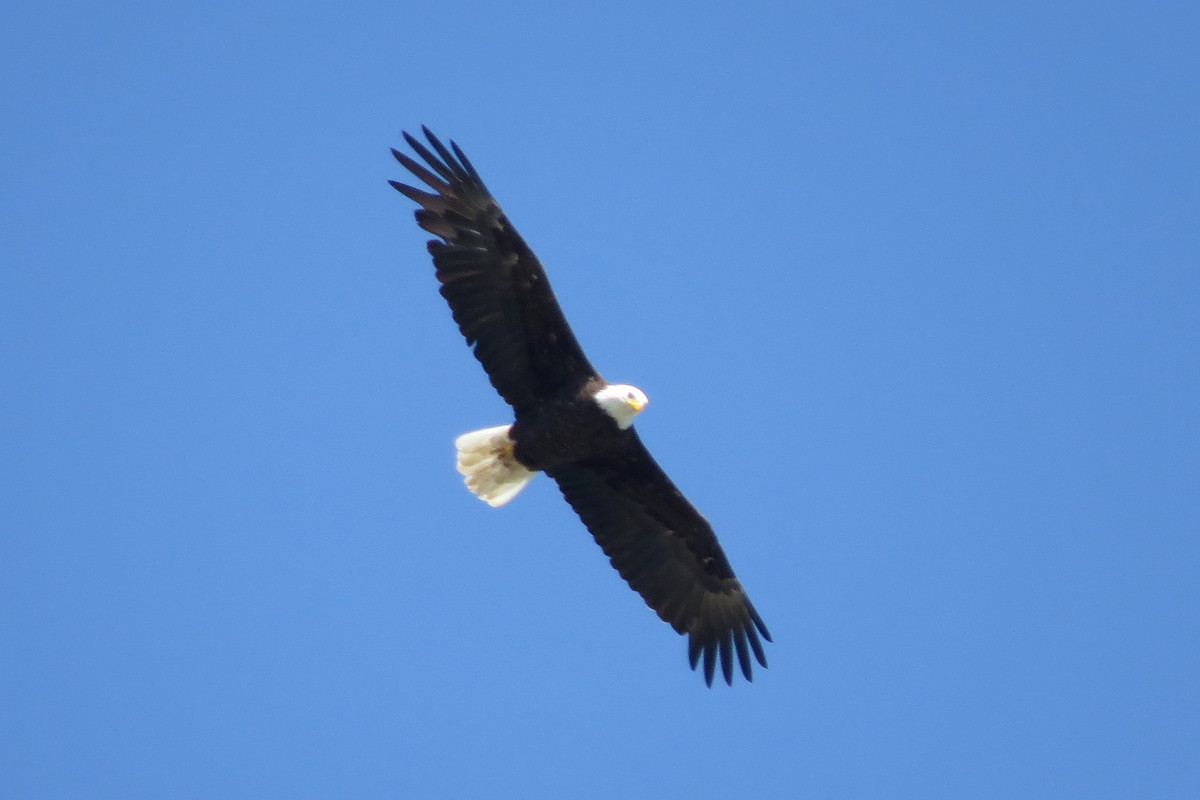
bald eagleA blurry Bald Eagle at Fernhill Wetlands didn’t pose much of a threat to the shorebirds, but did make the waterfowl nervous.

westernWestern Sandpiper at Fernhill Wetlands

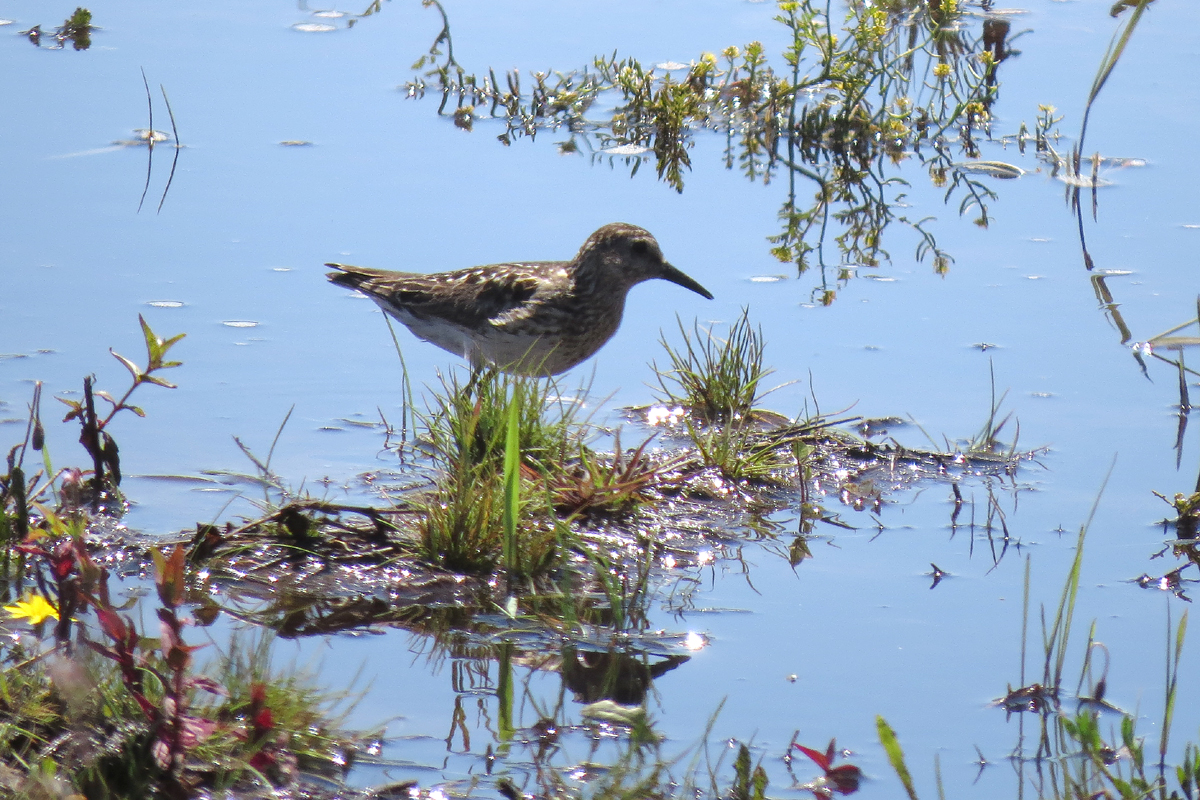
spottedLots of Spotted Sandpipers remain at both Jackson Bottoms and Fernhill.

Jackson Bottom, 11 July 2013

savannahI walked around Jackson Bottom in Hillsboro this morning. As you would expect at this time of year, there were lots of young birds around.  This young Savannah Sparrow posed nicely. His parents have not taught him to skulk in the weeds yet.

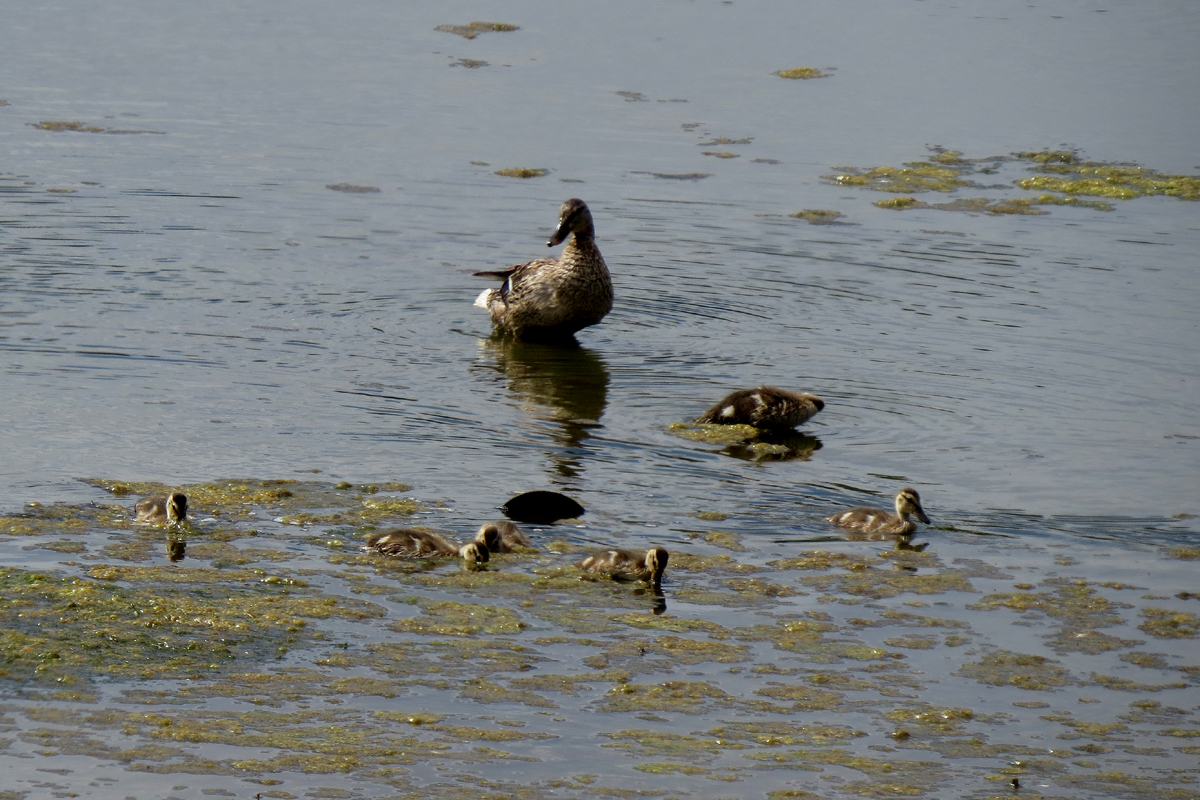
blue-winged and cinnamon tealThe best bird of the day was this male Blue-winged Teal (right foreground), always hard to find in the Willamette Valley. He flew in with a small flock of Cinnamon Teal.
blue-winged teal

mallard familyFamilies of young Mallards were everywhere.

canada goose familyThese Canada Geese are mostly grown, but retain a bit of their cute fuzziness.

spotty left 1I was surprised by the lack of migrant shorebirds. The resident Spotted Sandpipers were well represented.

nutriaLots of Nutria were out this morning. Yes, introduced species often wreak havoc on native ecosystems, AND, Nutria look like adorable little bears.

Maine, June 23-29, 2013

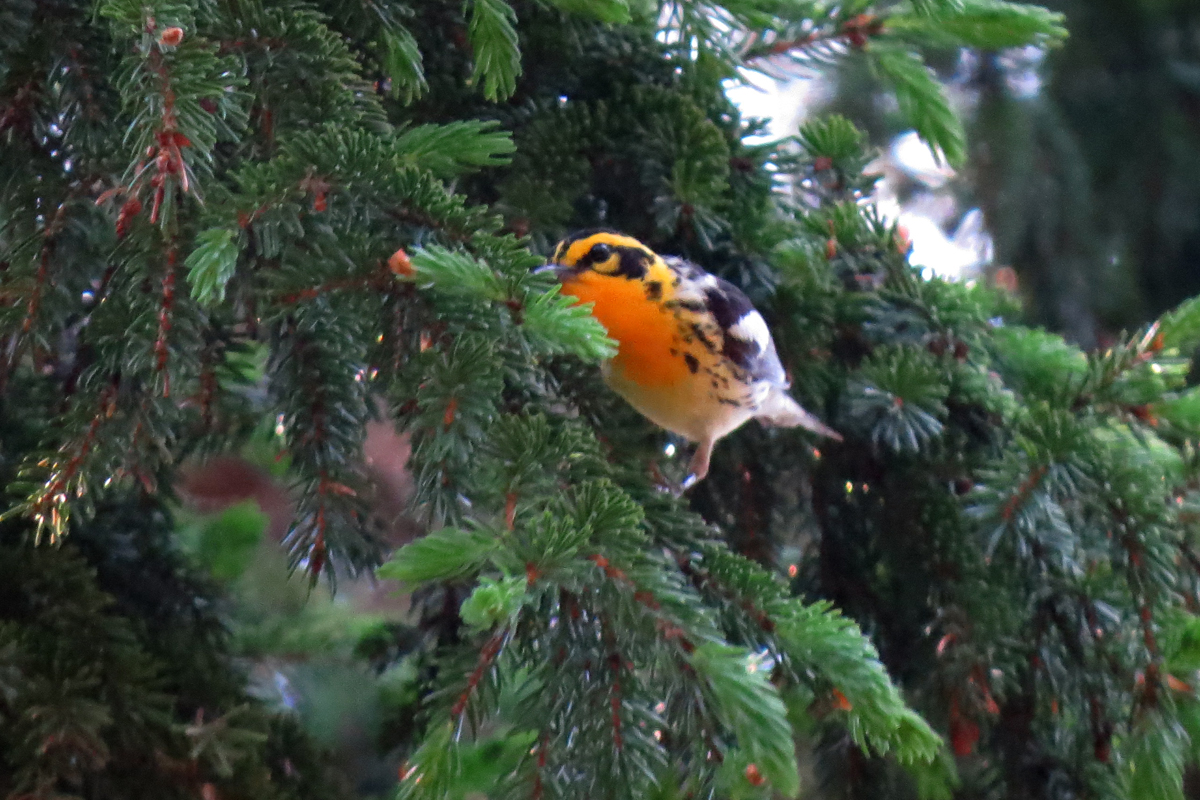
blackburnian warbler 2I spent last week in Maine, around Bangor and the central coast. The weather went from hot and muggy to cold and rainy, which might have to contributed to the overall poor birding compared to previous visits. I did see two lifers, one on the first day (Saltmarsh Sharp-tailed Sparrow) and one on the last (Great Cormorant). It is always nice to see some eastern warblers, like this Blackburnian.

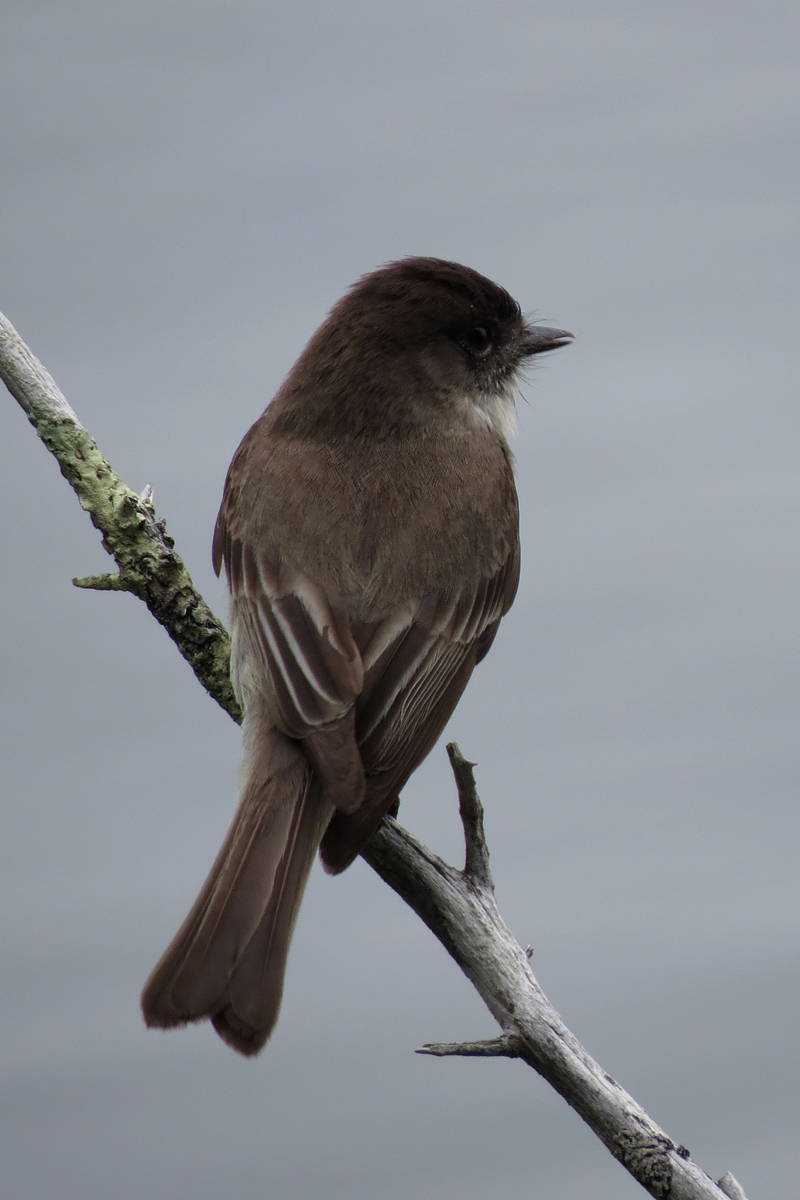
eastern phoebeEastern Phoebe, Mount Desert Island

great black-backed gullsGreat Black-backed Gulls, Schoodic Point

great black-backed gullGreat Black-backed Gulls in this area are rather shy, perhaps because biologists have been “discouraging” them from hunting on the offshore tern nesting colonies. The gulls do not allow a close approach and quickly take off if you point a camera at them.

herring gullThe Herring Gulls are happy to pose for mug shots.

great shearwaterGreat Shearwater, Gulf of Maine

great cormorant 1Great Cormorant, Schoodic Point, way out there, in the rain, but he still counts.

bullfrogAmerican Bullfrogs are an invasive species here in Oregon, so it was nice to see them in their natural range.

petit manan nwr MaineThis dragonfly species was common in wooded areas, where they blended in with the tree trunks.

petite manan nwr, METhis more colorful species was at the edge of a meadow.

spotted sandpiperSpotted Sandpiper, Petit Manan NWR

spotted and willet smallSpotted Sandpiper and Eastern Willet, Petit Manan NWR

willet 2aEastern Willet, looking a little sleepy
willet 3a

Fernhill Wetlands 8/3/12

I scouted Fernhill Wetlands for the Willamette Valley portion of my shorebird class. After a cool summer, we have finally gotten some triple-digit temperatures, making birding a little challenging. But there is a lot of mud and the shorebirds are moving in, joining the typical and not-so-typical summer residents.

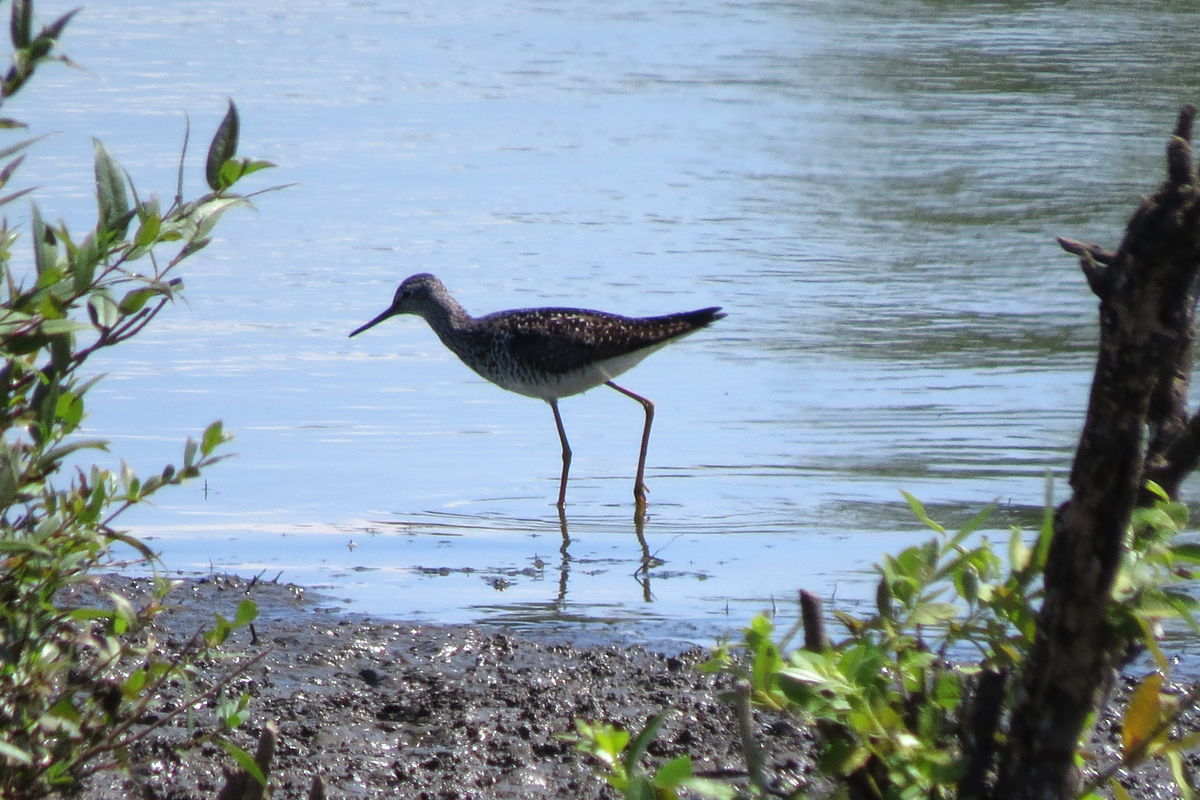
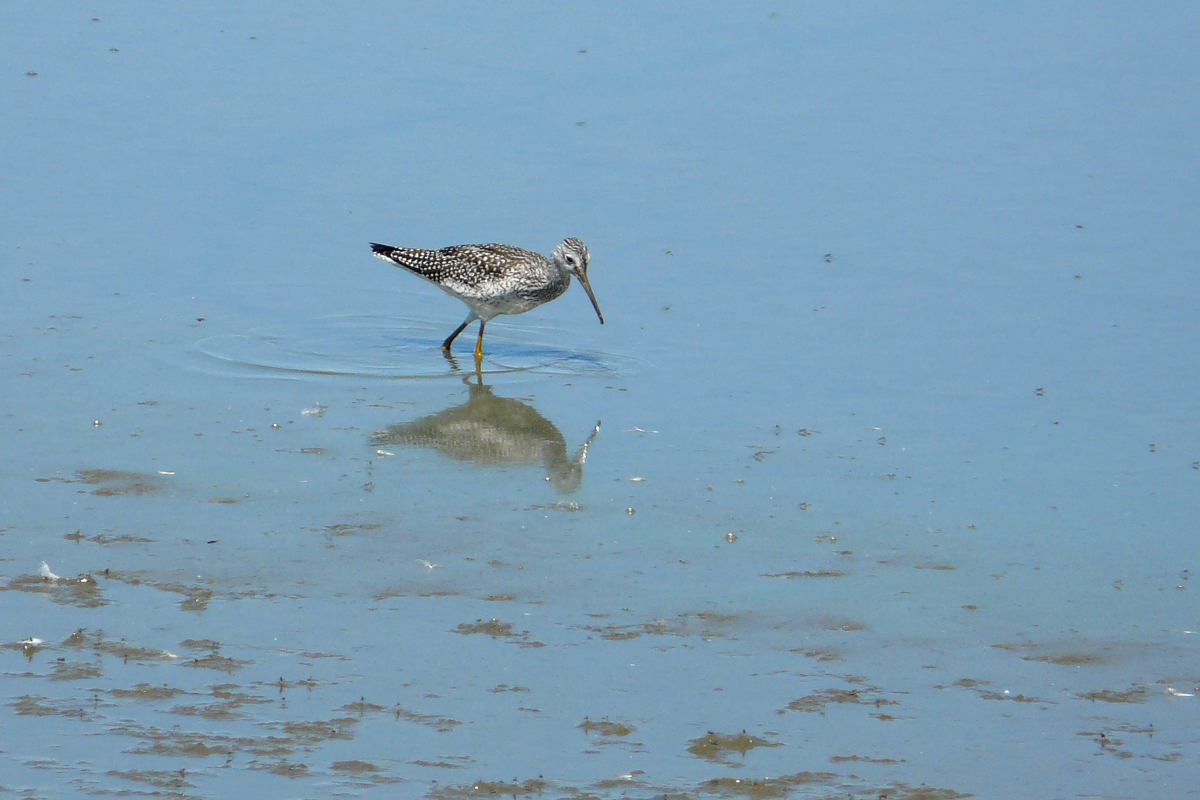
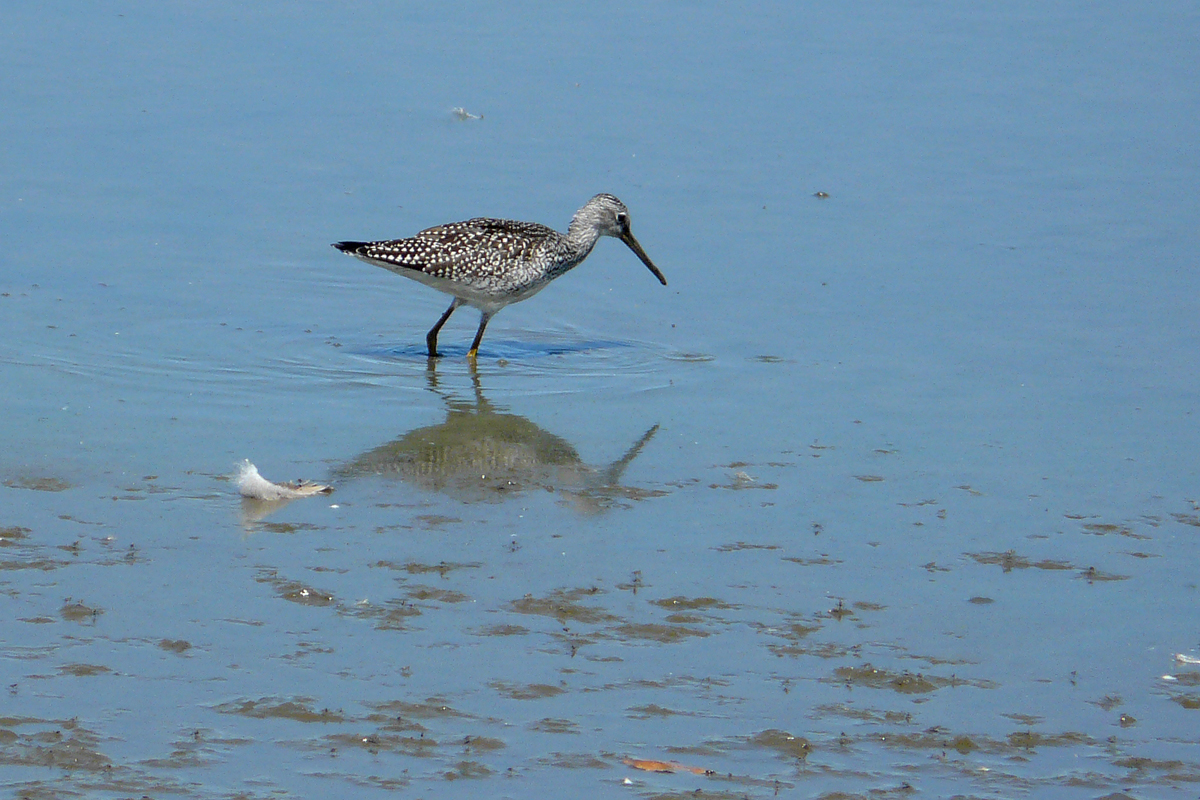
Greater Yellowlegs are common right now, taking advantage of the shallow water in most of the area’s wetlands.

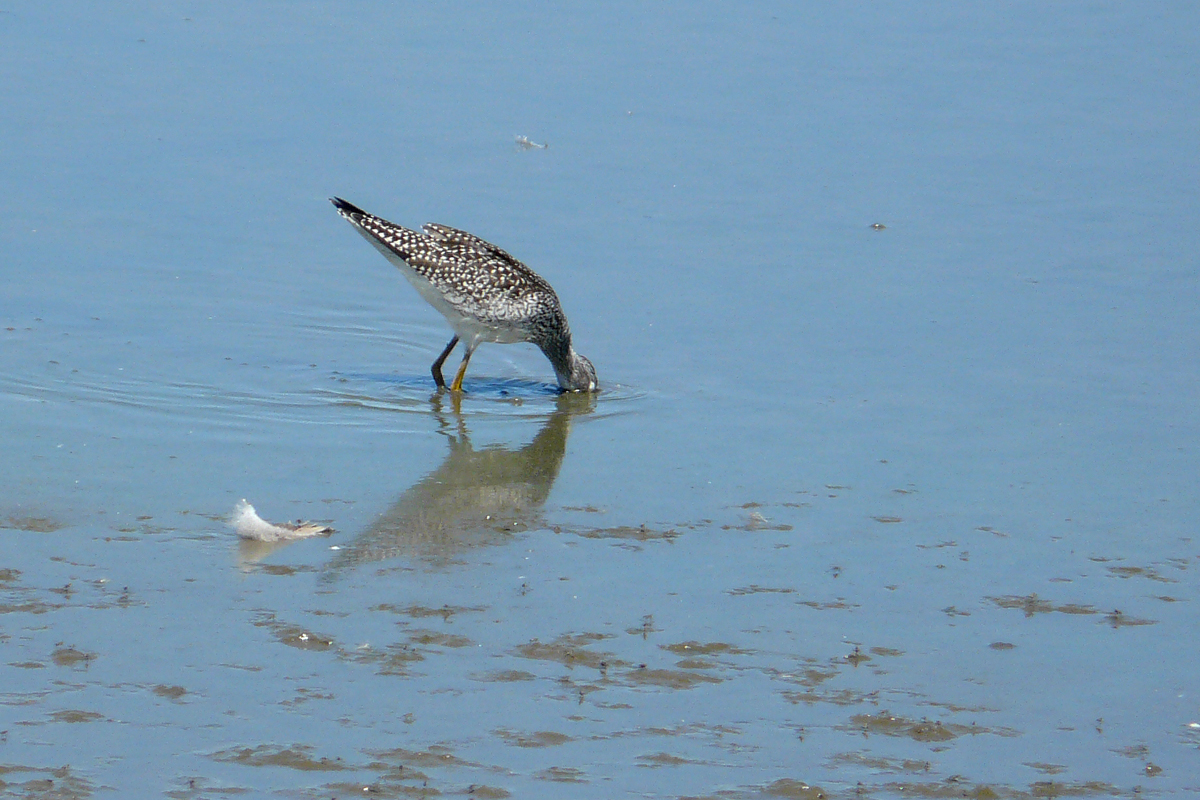
Lunchtime

I don’t think he caught anything on that dive.

Least Sandpiper

another Least

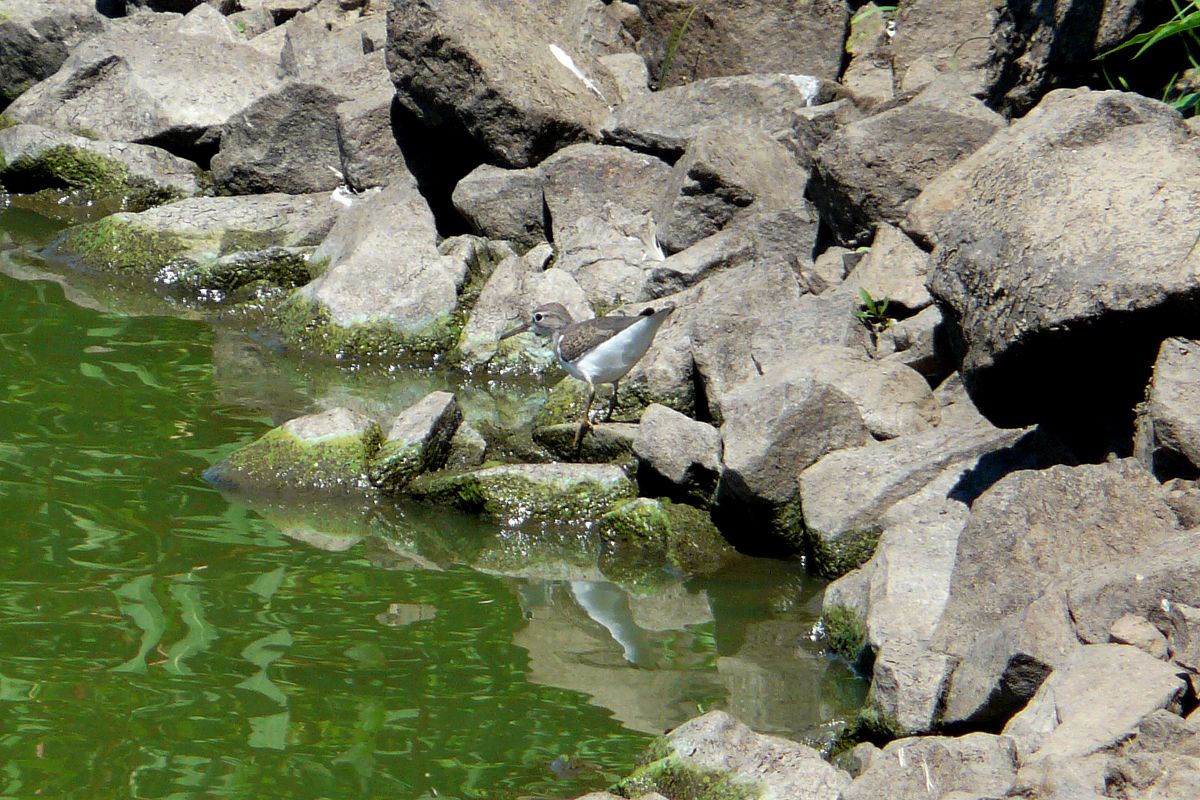
Spotted Sandpipers are often found along the rocky shoreline of Fernhill Lake.

This is a young Spotted Sandpiper, distinguished by the barring on the wing coverts (and the lack of spots).

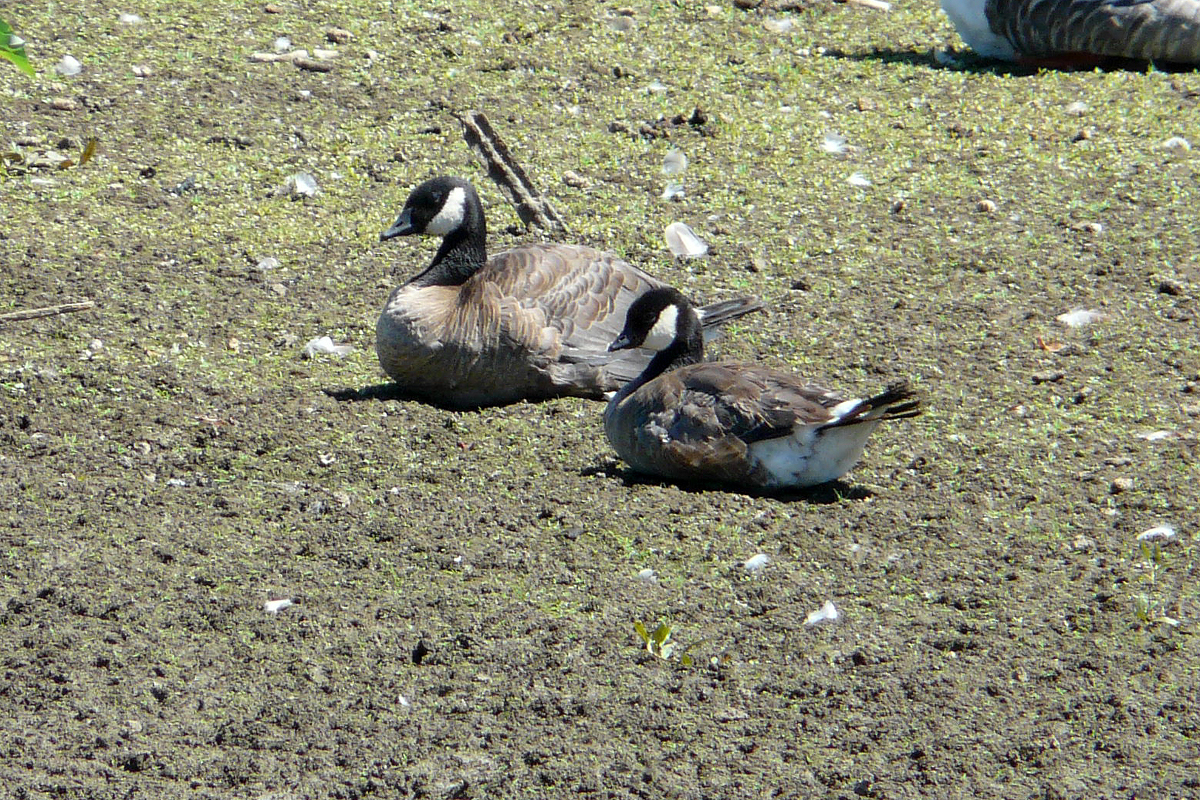
Cackling Geese, which winter here in the tens of thousands, are a rare sight in summer. The exposed white rumps on these birds are an indication that the birds are molting their primaries, so they have obviously spent the summer here.

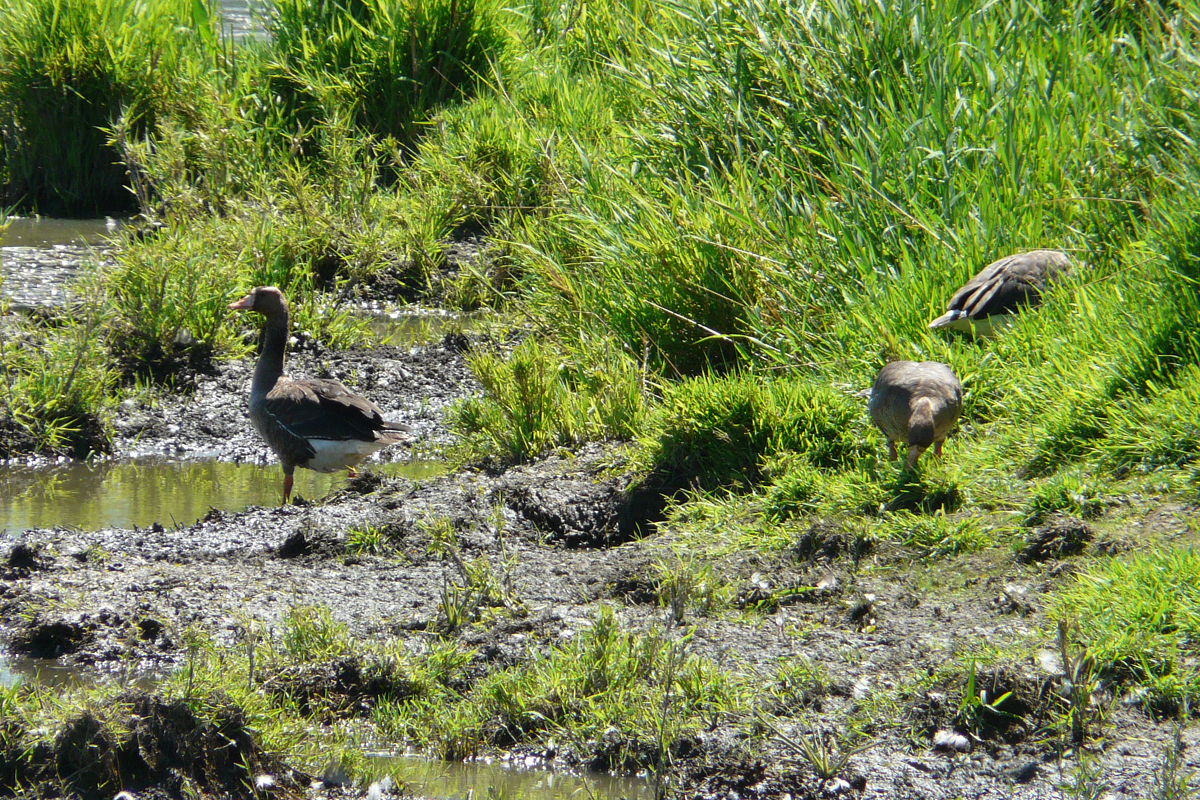
These three Greater White-fronted Geese are also several months too early.

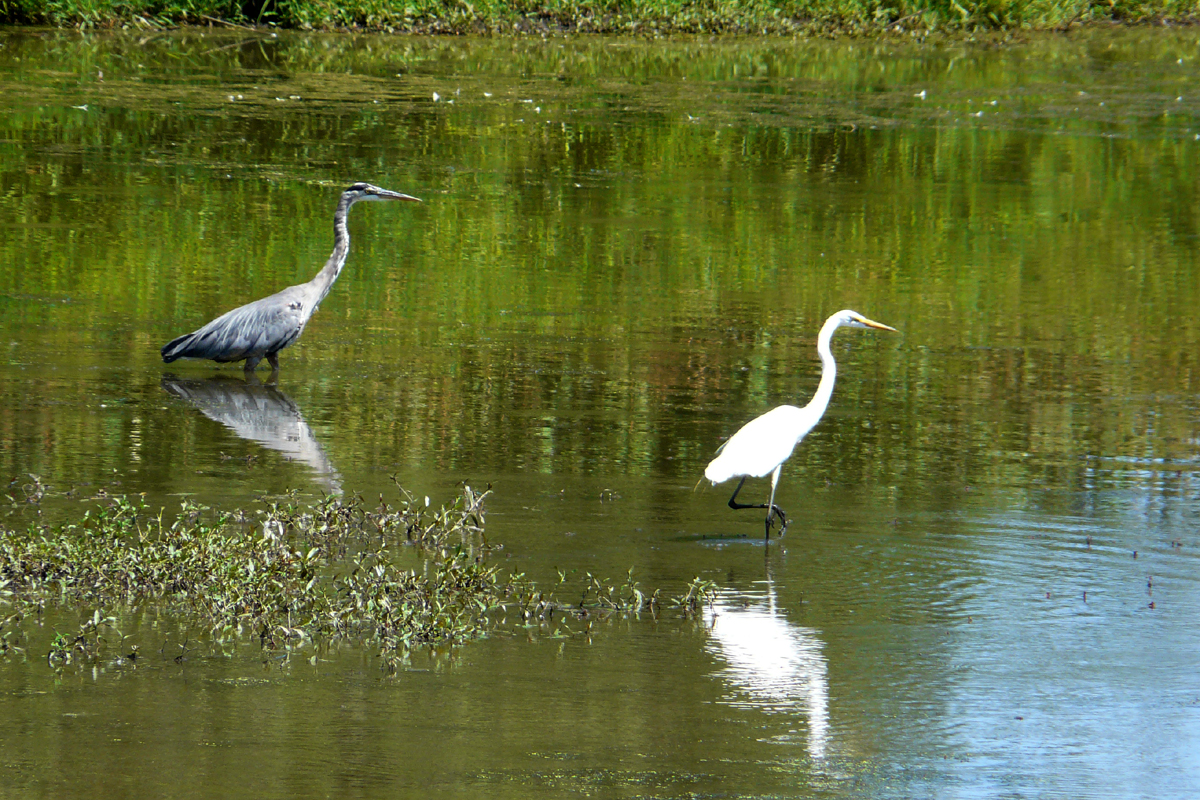
Great Blue Heron and Great Egret

Green Heron

August is the time for baby Bullheads. Several schools were visible in the murky water.

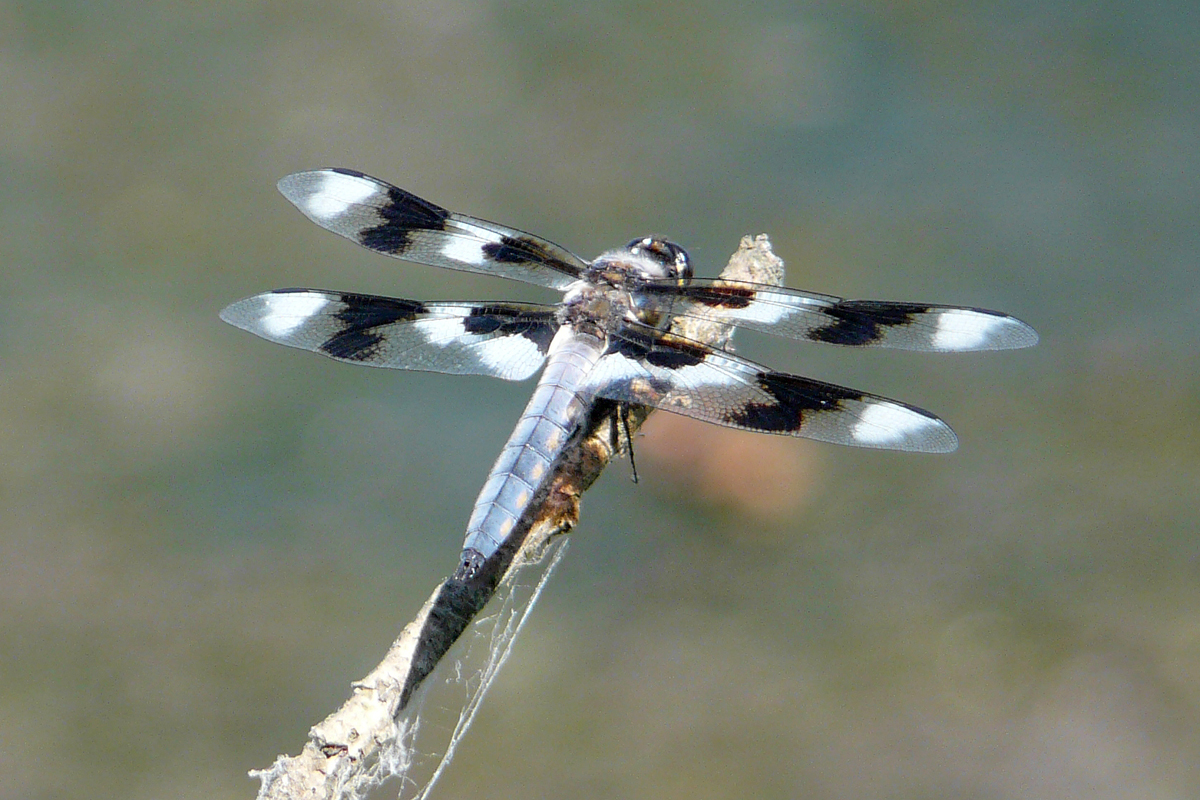
Eight-spotted Skimmer, one of the few dragonflies that I can identify

Cimarron National Grassland, Kansas

In the very southwest corner of Kansas lies the Cimarron National Grassland. This area, along with the nearby town of Elkhart,  is a favorite birding destination for Kansas birders. Several western species reach the eastern edge of their ranges here, and lost eastern migrants are attracted to the patches of trees in a sea of sand-sage prairie and cropland.

cimmaron river
Cottonwoods along the usually dry Cimarron River provide a wooded migration corridor from eastern Colorado through southwestern Kansas.

clay-colored sparrow
Middle Springs is one of several oases on the grassland that provide trees and water to migrants like this Clay-colored Sparrow.

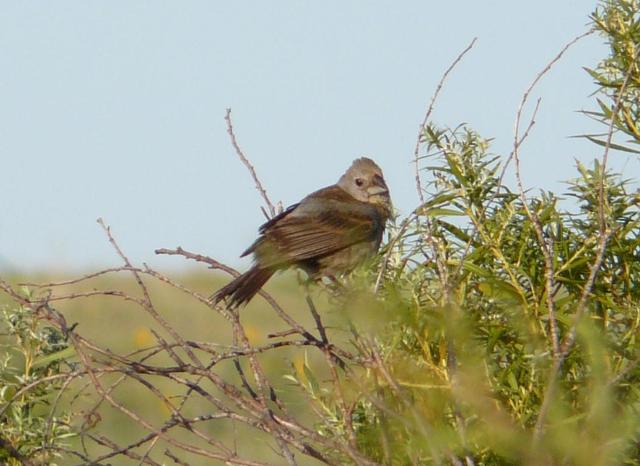
blue grosbeak female
female Blue Grosbeak

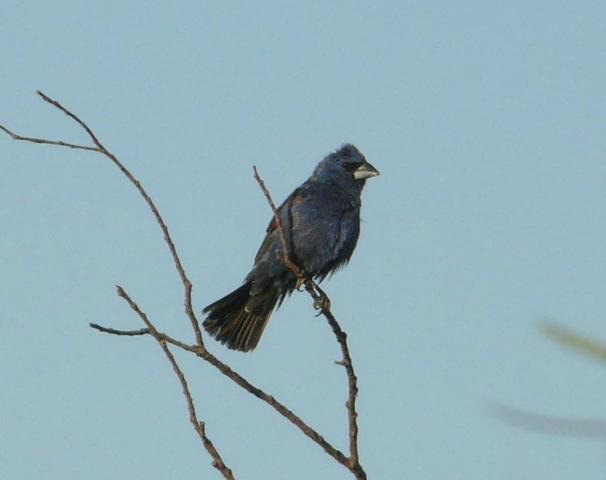
blue grosbeak male
male Blue Grosbeak

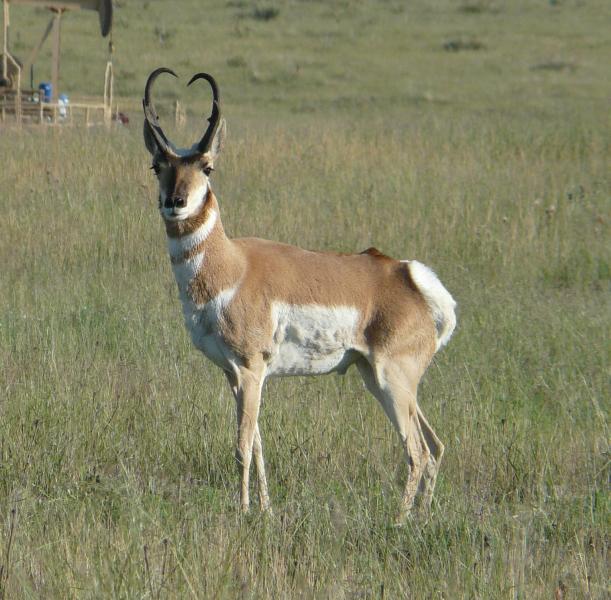
pronghorn
The fastest land animal in North America, Pronghorn evolved to outrun American Cheetahs, which became extinct somewhere between 10,000 and 20,000 years ago.

pronghorn back
The white backsides of Pronghorn are visible from great distances.

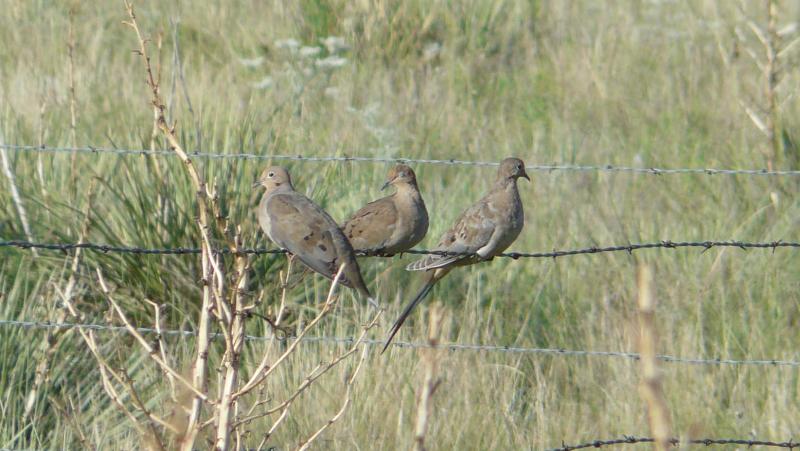
mourning doves
Mourning Doves were by far the most common species seen on this day, with Eurasian Collared-Doves coming in a close second.

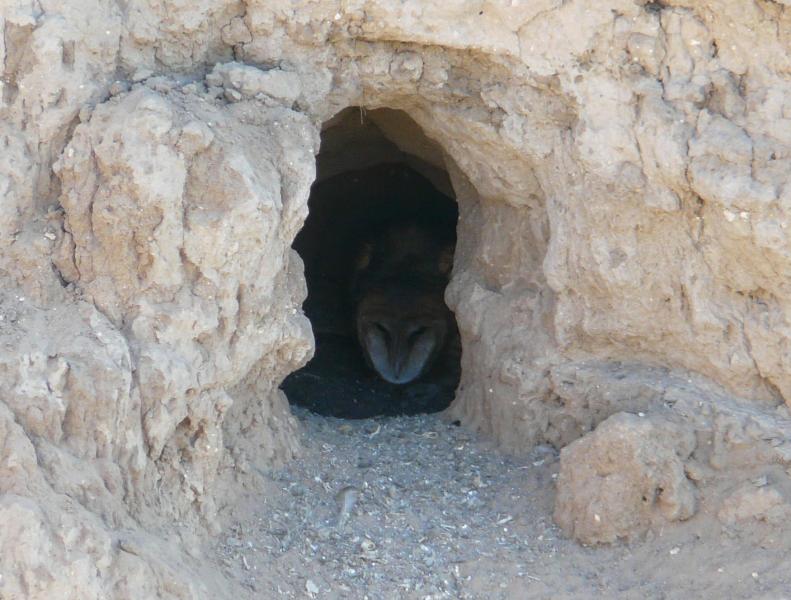
barn owl
This Barn Owl was in a little cavern in a bluff overlooking the Cimarron River corridor. Note the little bones and other debris in front of the entrance.

bluff
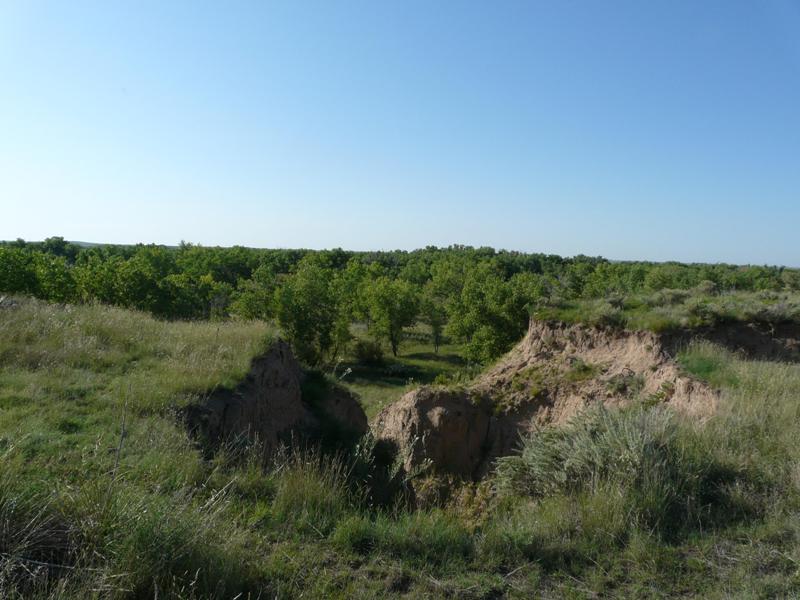
This is the bluff where the Barn Owl had her cavity.

curve-billed thrasher
Curve-billed Thrasher

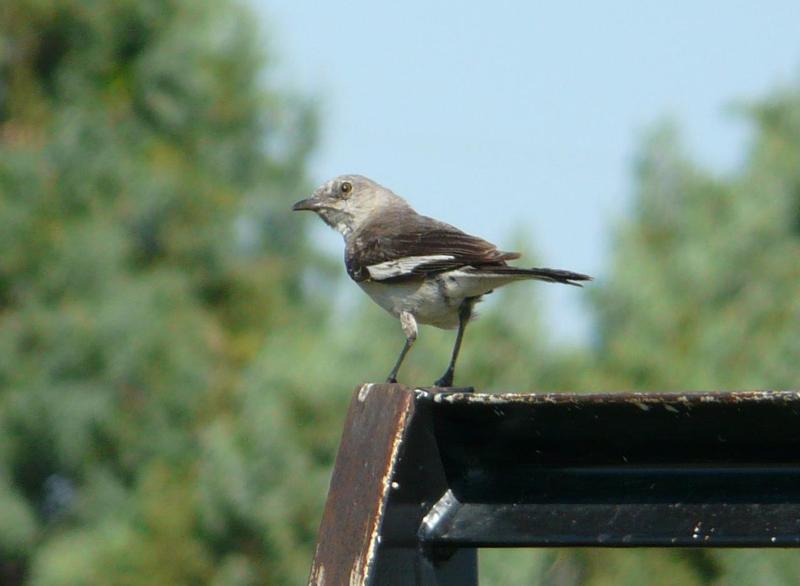
northern mockingbird
Northern Mockingbird

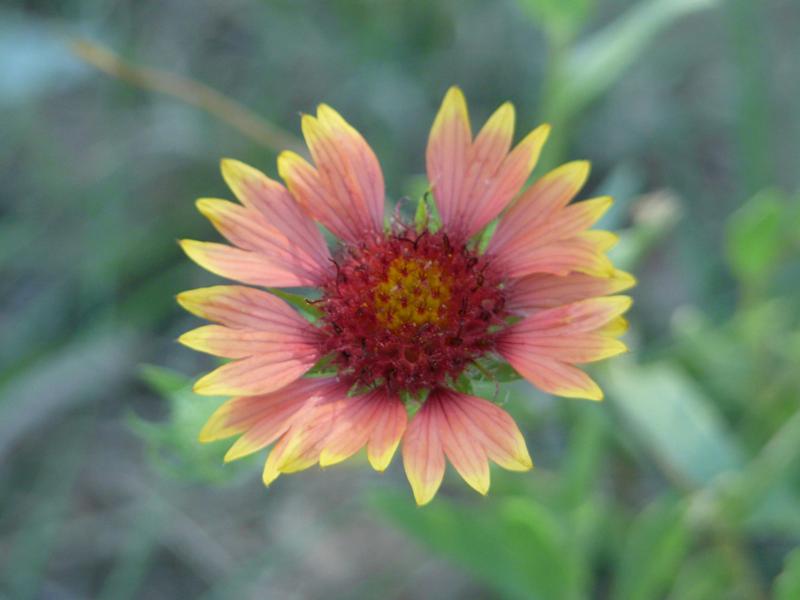
indian blanket
Gaillardia pulchella

sunflower
As one would expect in the Sunflower State, these were everywhere.

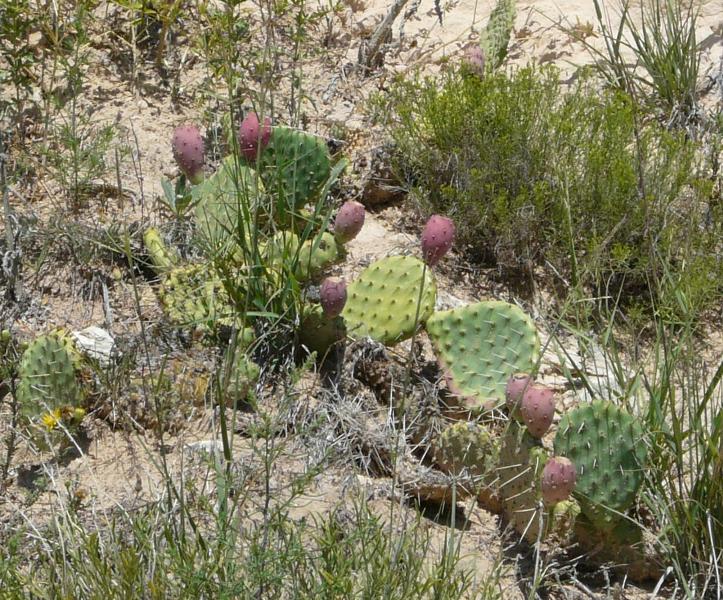
prickly pear
The abundant Prickly Pear cactus makes walking a challenge in many areas.

american avocet
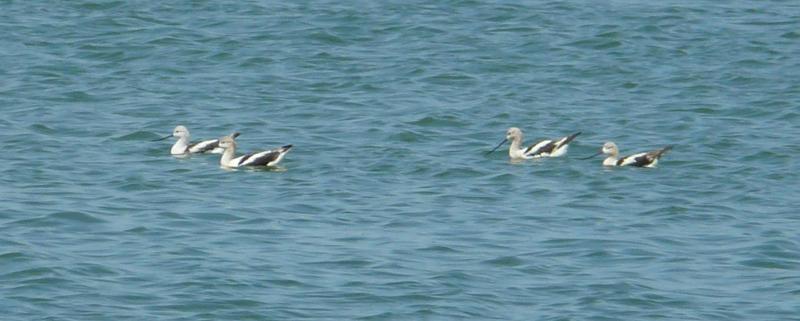
The Elkhart sewage ponds are the only permanent bodies of water for many miles around, so they attract good numbers of migrant shorebirds and waterfowl. These American Avocets were swimming in the middle of one of the pools.
spotted sandpiper
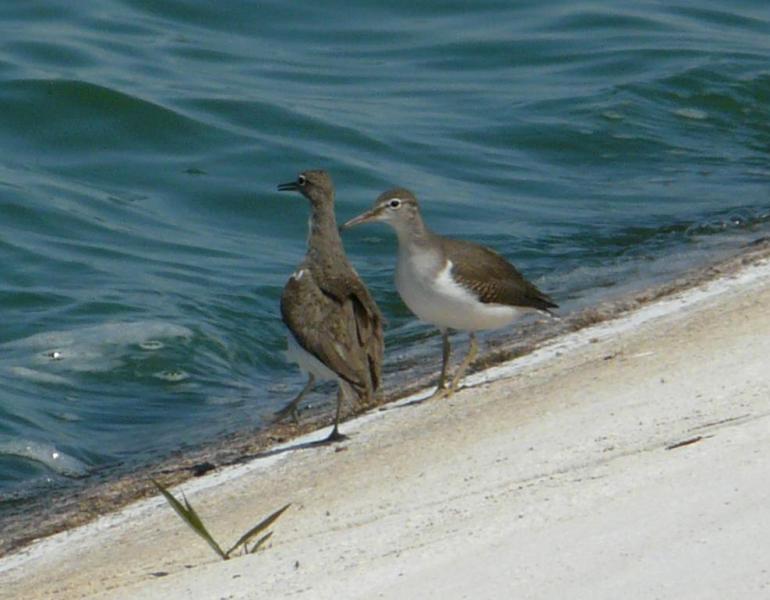
Spotted Sandpipers

semipalmated sandpiper
Semipalmated Sandpiper

burrowing owl
Burrowing Owls are one of many species that rely on prairie dog towns for shelter or food. I found several Black-tailed Prairie Dog towns on this day, each containing an owl or two, but the dogs kept out of camera range.