I have run across some photogenic rodents this year. While they don’t qualify as “charismatic mega-fauna,” some of them are quite stunning.

This is either a Yellow-pine Chipmunk or a Least Chipmunk. Apparently, you can only differentiate the two by measuring their skulls. I am leaning toward Yellow-pine on this one, as some sources say that Yellow-Pine Chipmunk tends to be more colorful than Least, and this individual was found in a grove of Yellow (Ponderosa) Pines.

As you can see, this individual has a lot more gray, with just a touch of rufous on the sides. The habitat was open sage steppe, so maybe Least Chipmunk?

It is slightly out of focus, but I love this image of a Belding’s Ground Squirrel peeking over a rock.

Here is a better view of a Belding’s Ground Squirrel.
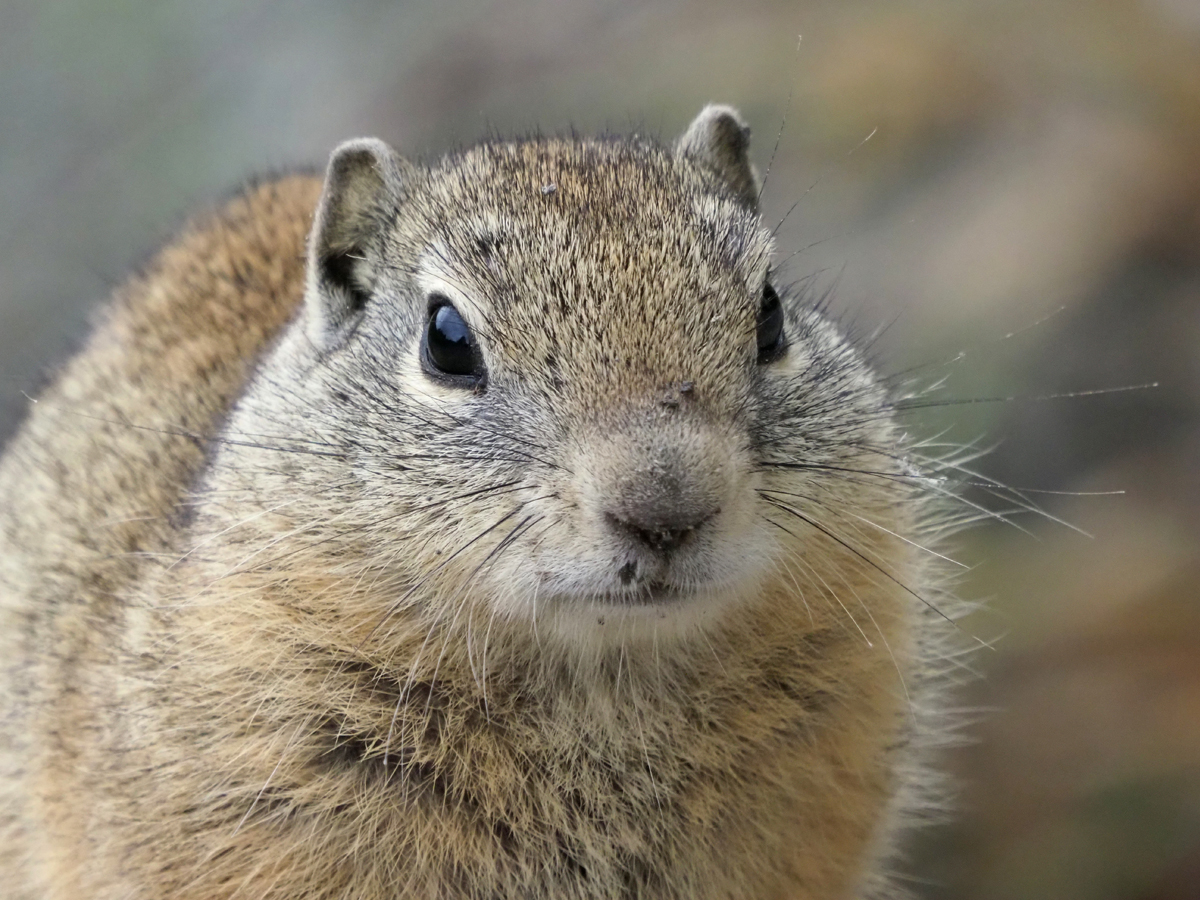
Belding’s Ground Squirrel portrait

Golden-mantled Ground Squirrel in the morning sun

Yellow-bellied Marmot, high up on Mount Hood

Back on the west side of the state, this Douglas’s Squirrel make a brief appearance in the back yard.
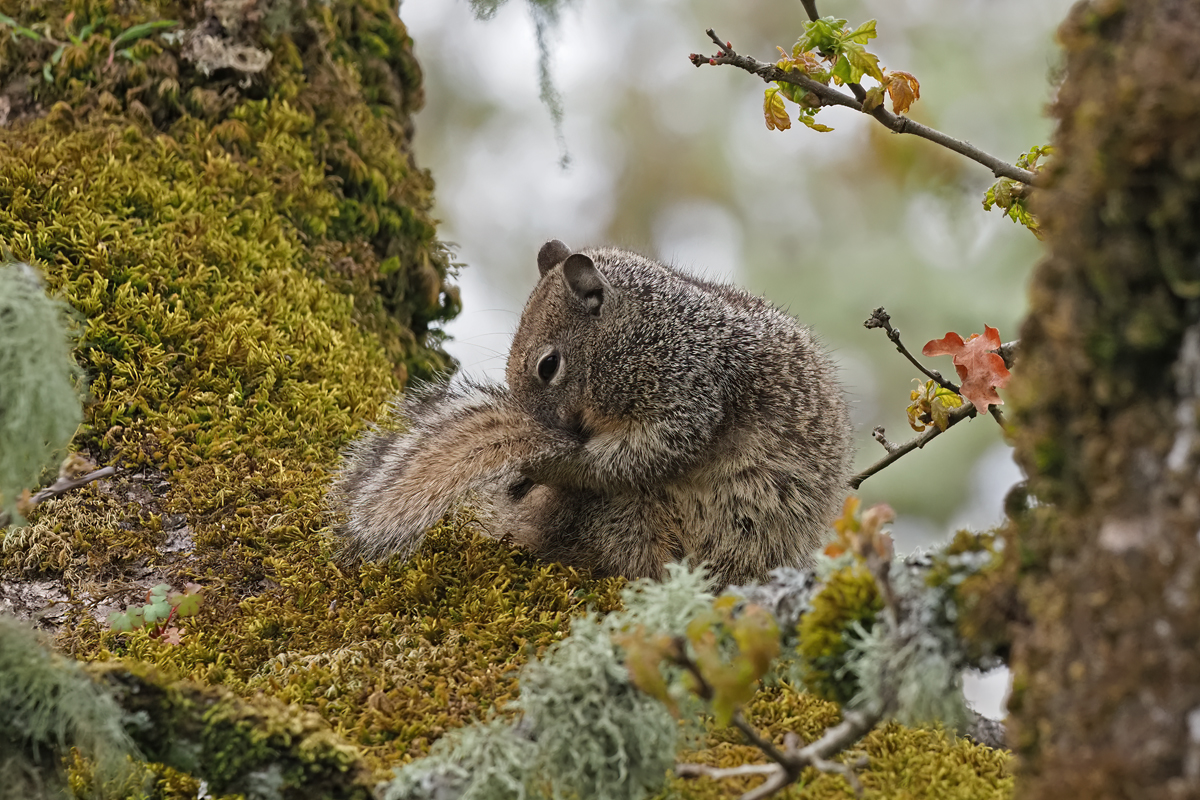
Here is a California Ground Squirrel up in an Oregon White Oak. So, two of the three words in his name are incorrect in this case.

Yes, I know that rabbits are not rodents, but I can’t resist a cute bunny, in this case, a Mountain Cottontail.
Back to birds next time, unless something more interesting comes up.
Happy Summer
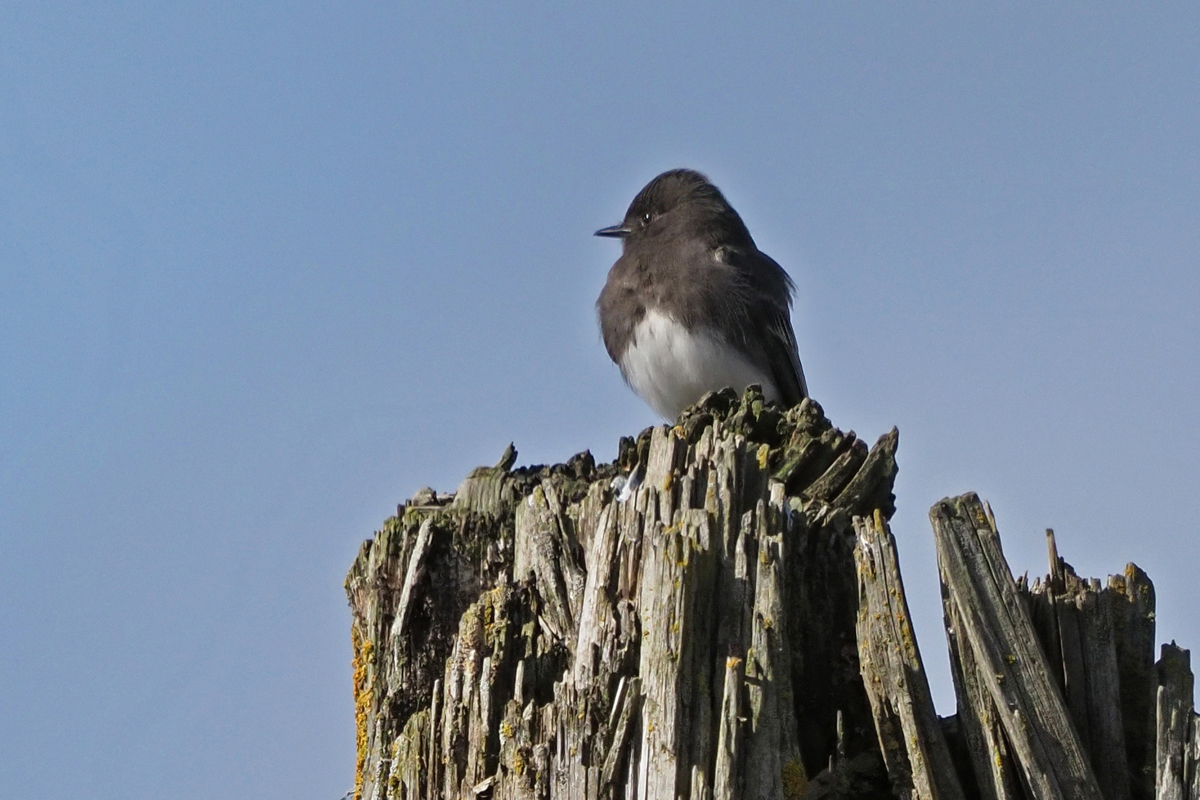




 Tree Swallows are usually the first swallow species to arrive in spring. When the weather is still cold, they hunt for insects close to the water’s surface.
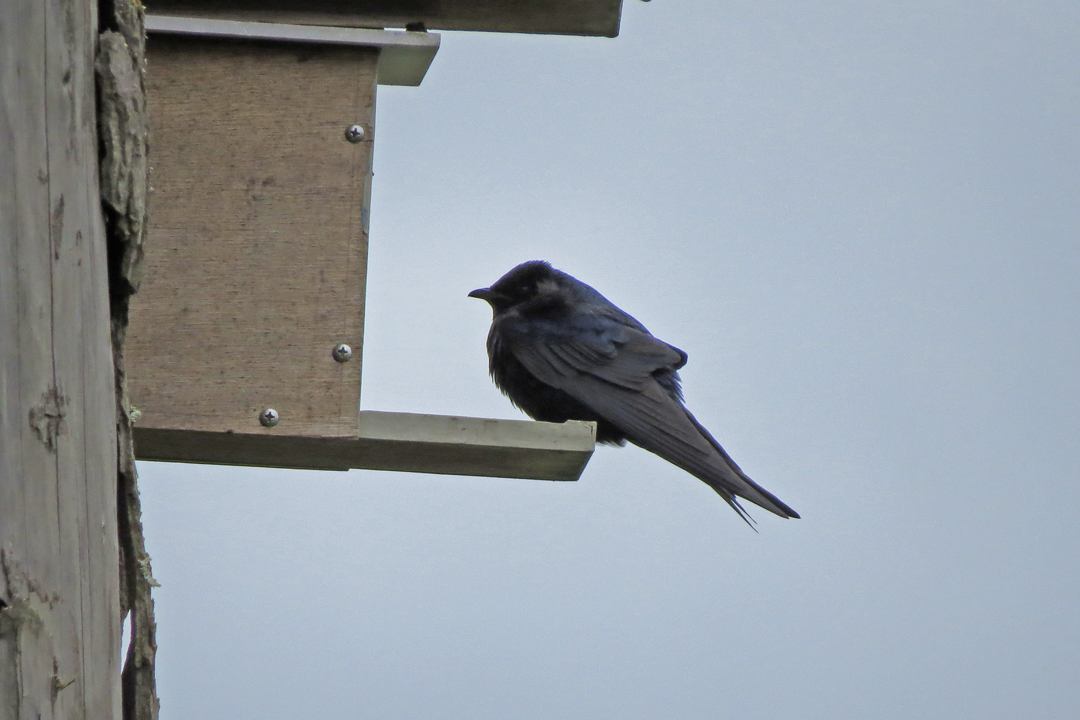
 Some Tree Swallows were already laying claim to the many nest boxes at this site.
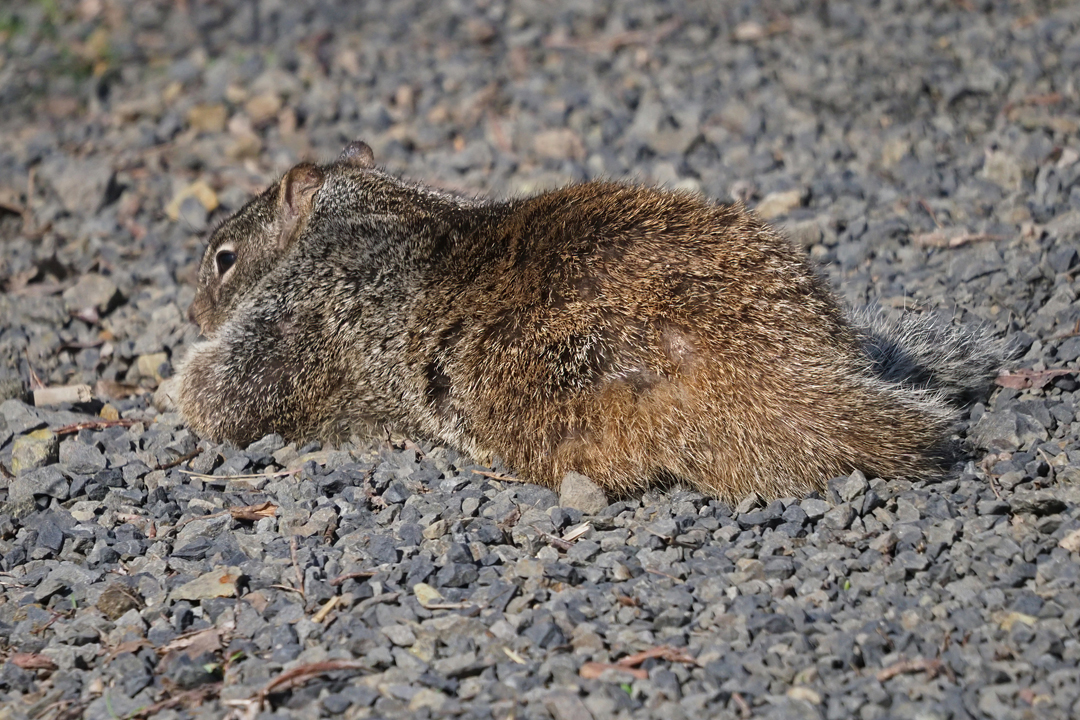
 This California Ground Squirrel was singing (screaming) from a log perch.
 The sunshine brought out a good number of snakes, despite the cold temperature. These are Northwestern Garters.
 This is a typical Common (Red-spotted) Garter.
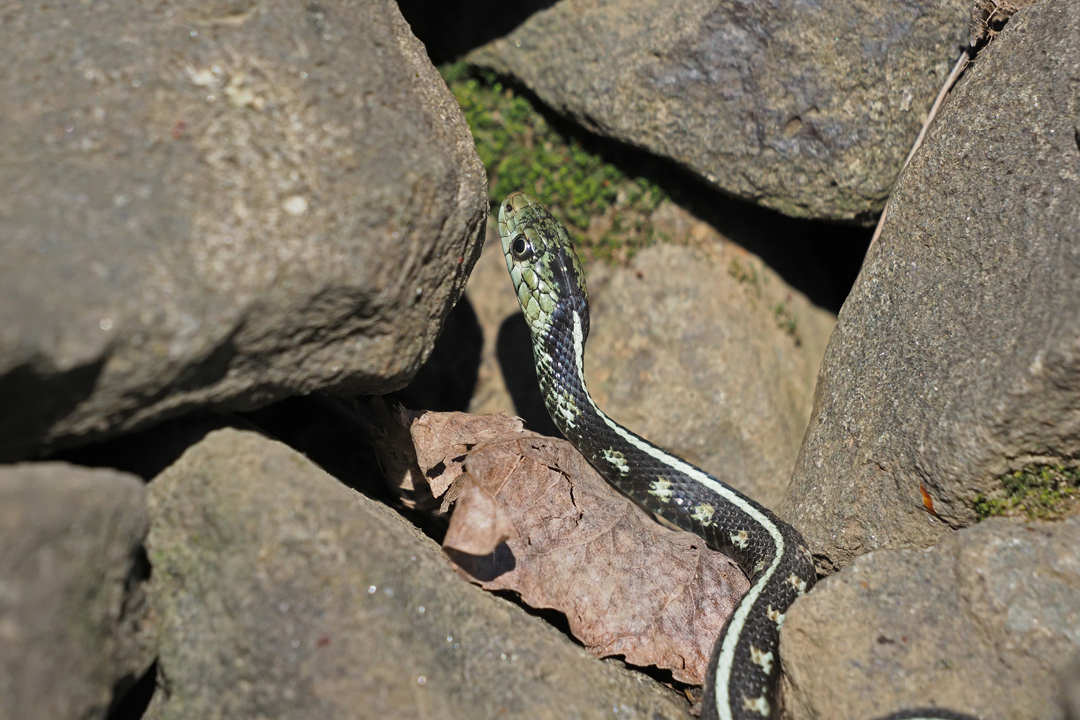 This Common Garter is lacking the red pigment shown by most members of this subspecies.
 This Long-toed Salamander was hanging out under a big piece of bark.
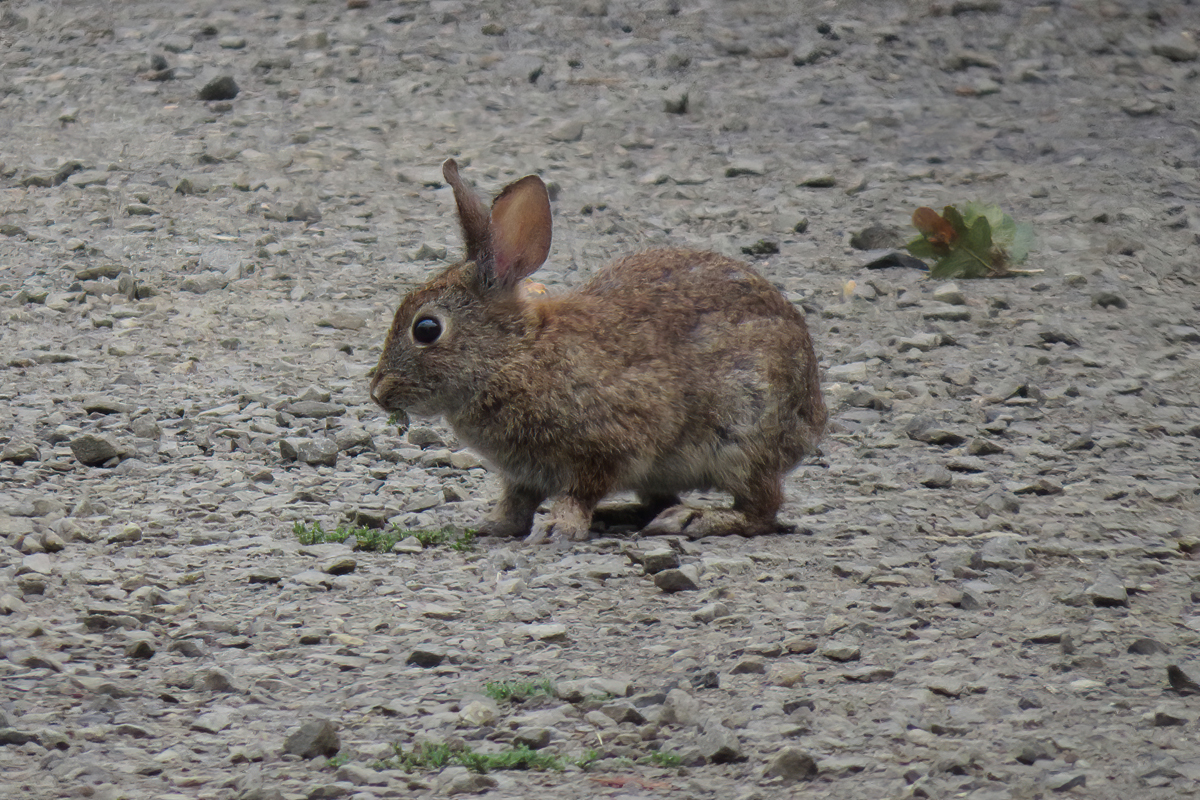 Brush Rabbit, Fernhill Wetlands
 The top image shows a massive male American Bullfrog found at Dober Reservoir. Note the injury around his right eye. The bottom image is of a newly emerged female. At this stage, she was about the size of the males head, but females typically grow larger than males of this species.
 Orange Sulphur, found at Jackson Bottom. Unfortunately, this species perches with their wings closed, so you can’t see the vibrant colors on the top.
 This Mylitta Crescent at Fernhill Wetlands was much more cooperative.
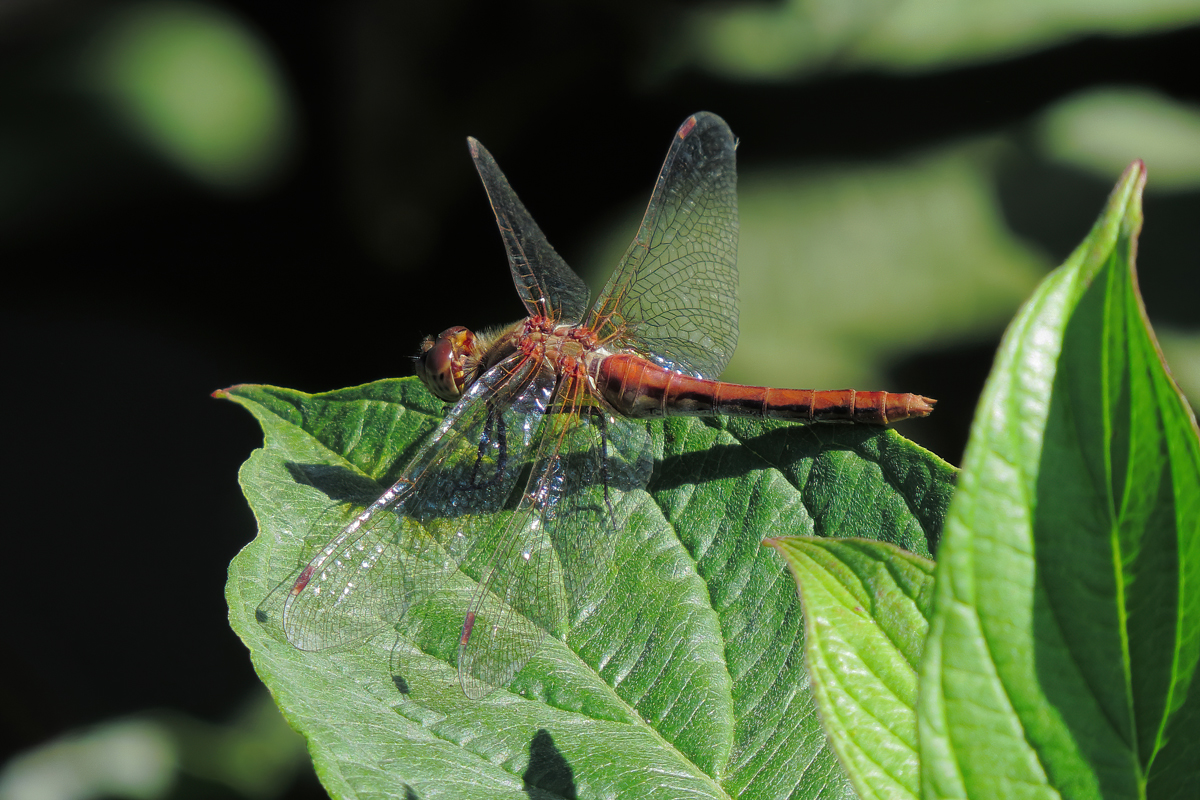 I don’t know the dragonflies, but I am told this individual from Fernhill Wetlands is a Striped Meadowhawk.
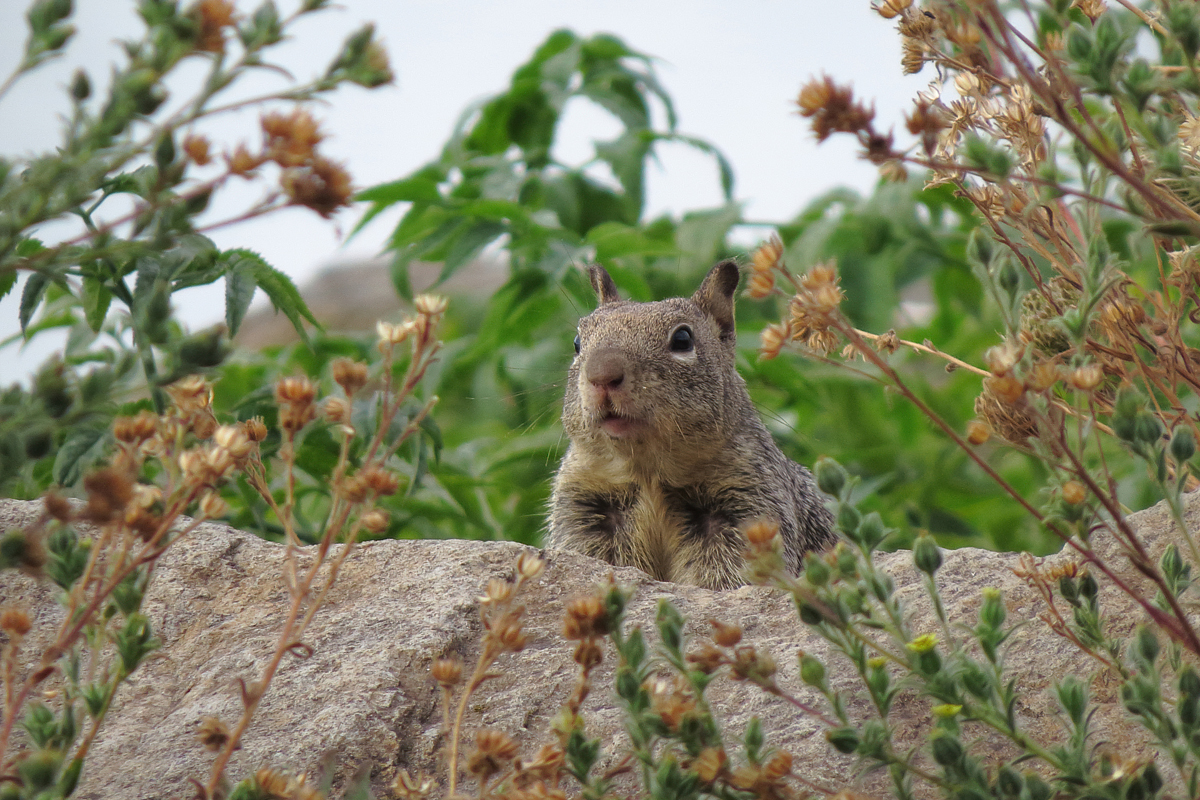 California Ground Squirrels, one of my favorite rodents, have become more common at Fernhill Wetlands since the reconstruction a few years ago.
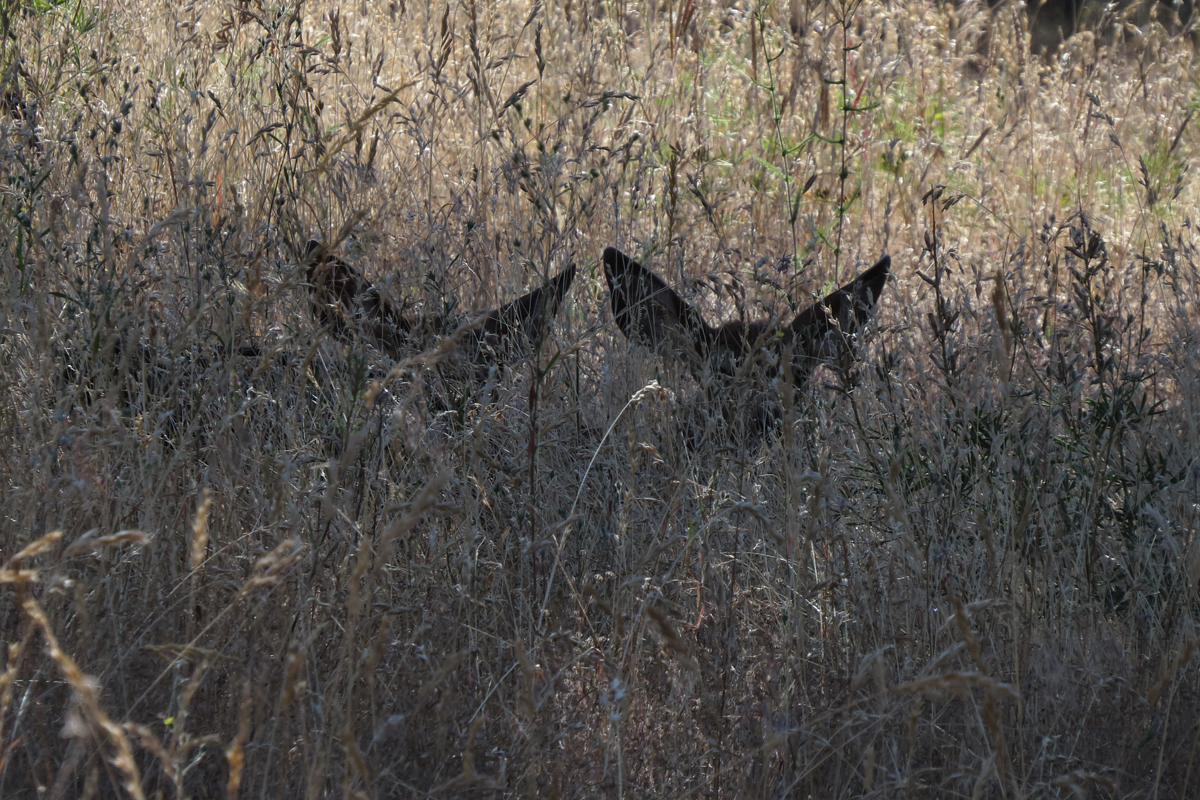
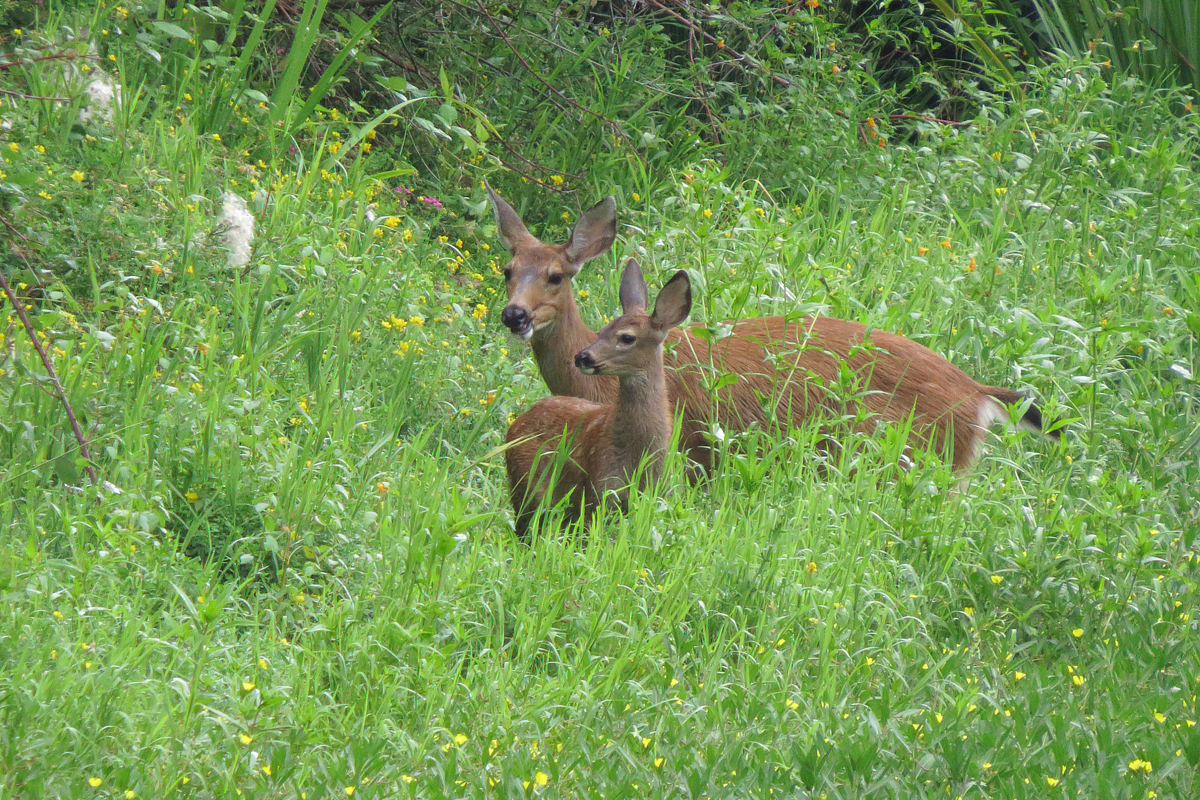 This Black-tailed Deer and her fawn were enjoying the lush vegetation at Smith and Bybee Wetlands.
 A quick tour of Fernhill Wetlands showed bird activity picking up, with the appearance of newly arrived migrants and nest building by the local breeders. This Tree Swallow was staking out a cavity.
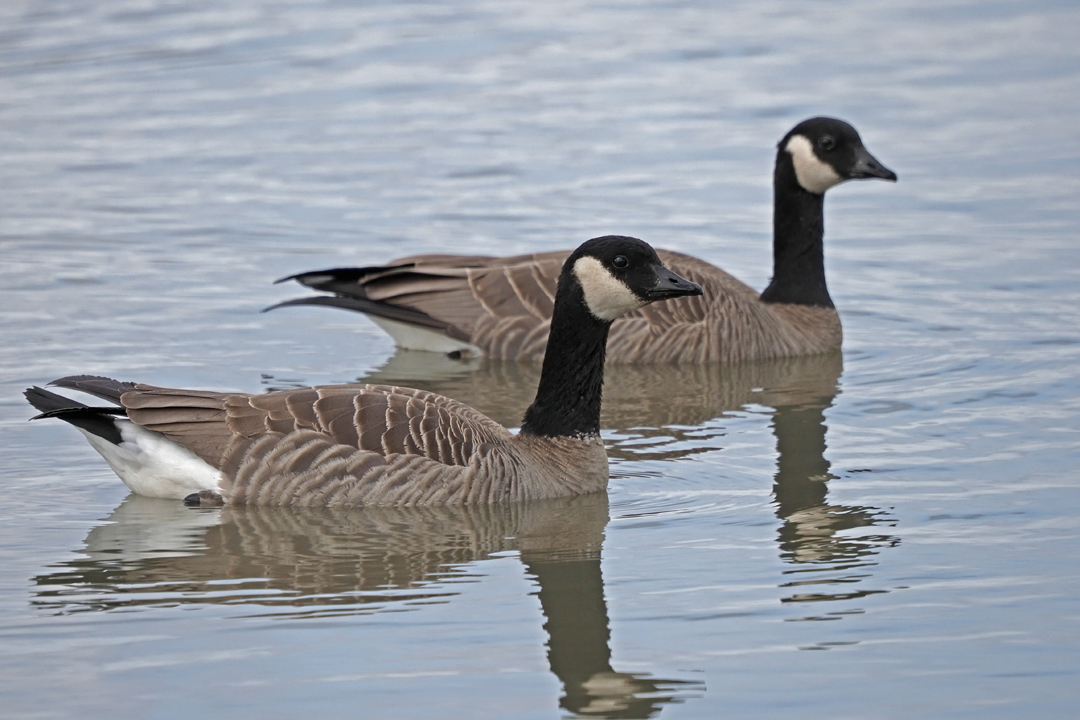
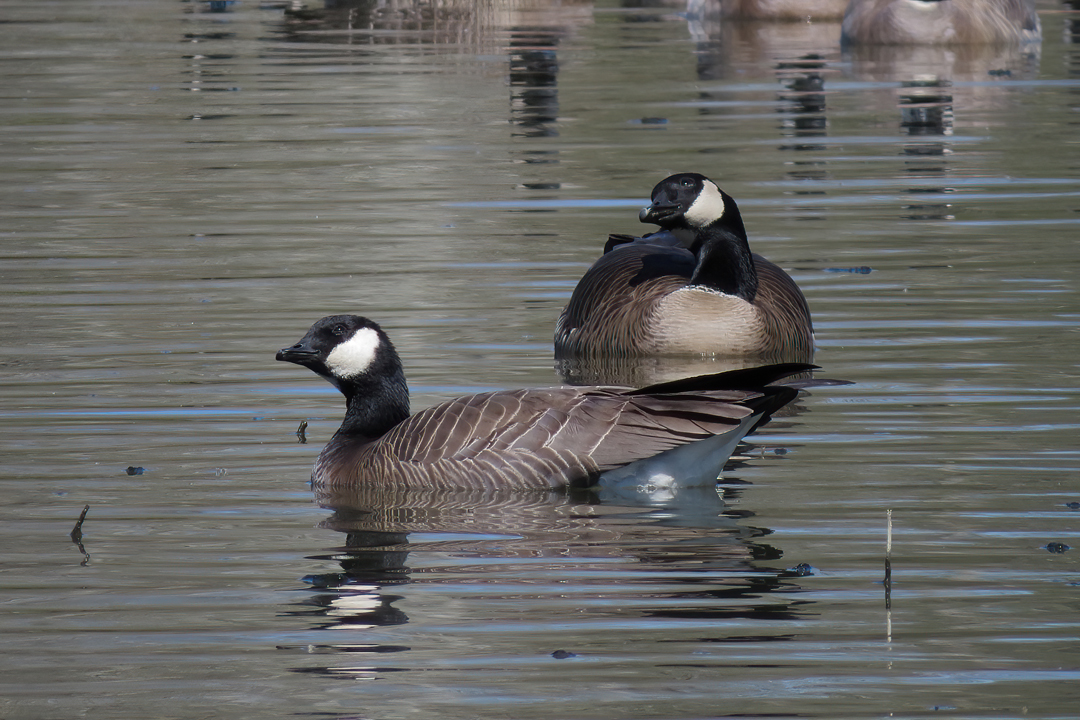 There are still some Cackling Geese around, although they should be heading north any day now. Here is a nice side-by-side view of a Ridgeway’s Cackling Goose and a Taverner’s Cackling Goose.
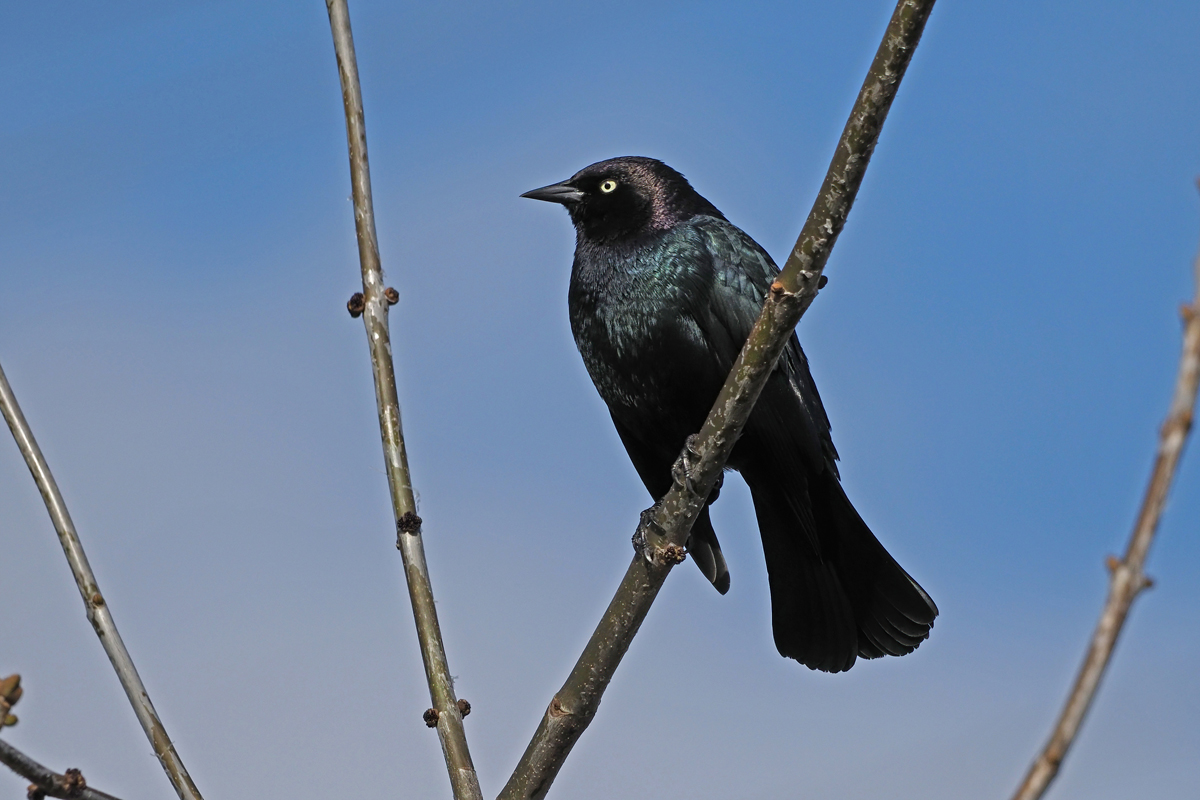
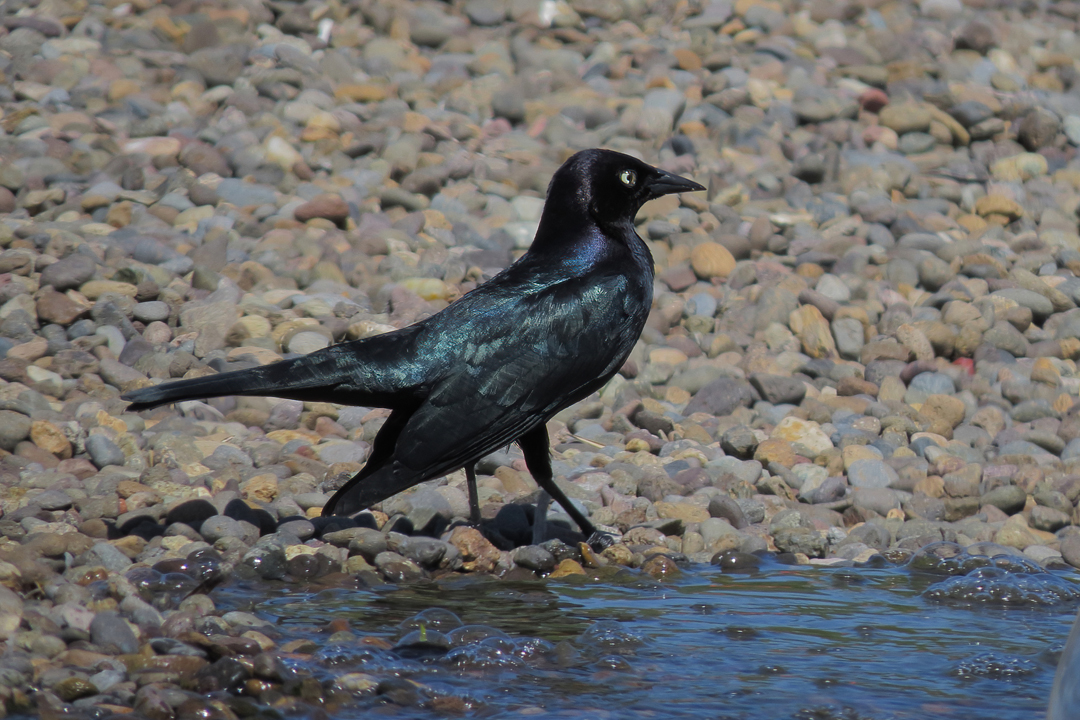 The male Brewer’s Blackbird was showing his colors in the bright sunlight. I caught him in the middle of a blink, so his eye looks weird.
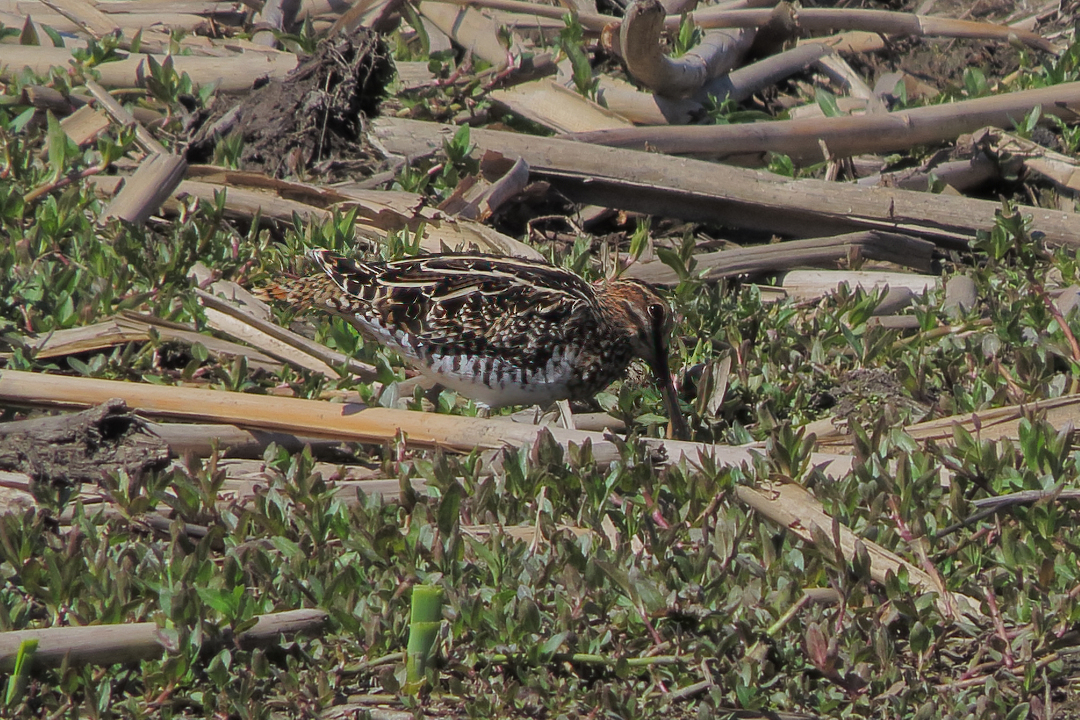 Wilson’s Snipe
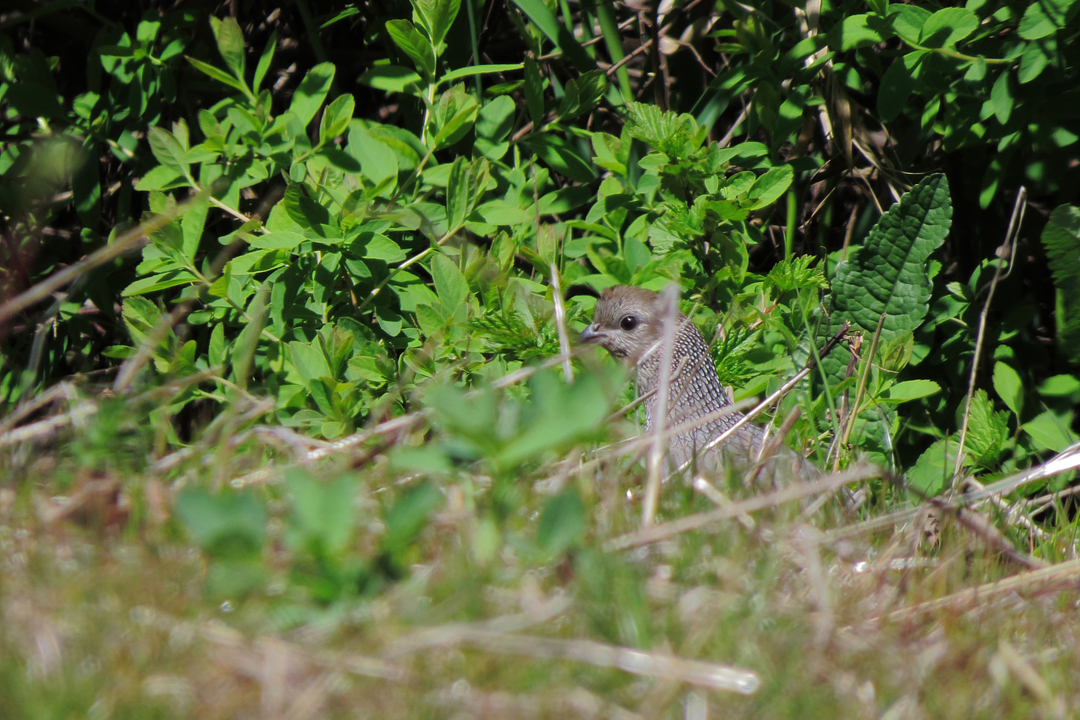 California Quail have become slightly more common at Fernhill in recent years.
 The Common Carp are spawning in Fernhill Lake.
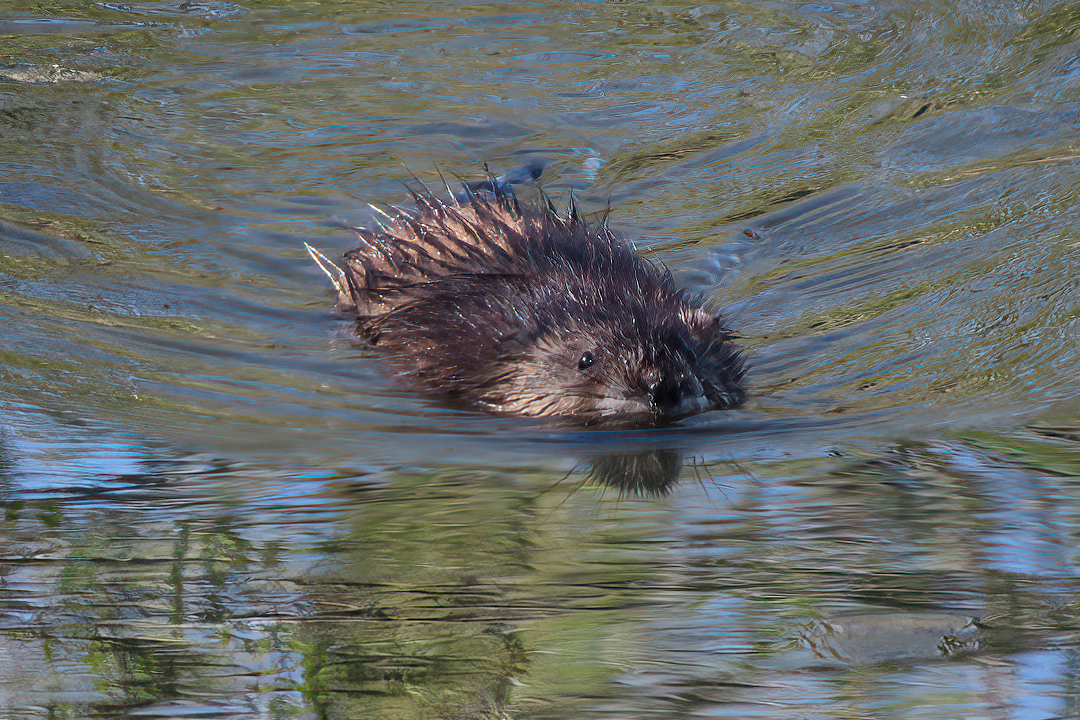 I was pleased to find this Muskrat. The non-native Nutria have become so common at this site I worry they might crowd out the native Muskrats and Beavers.
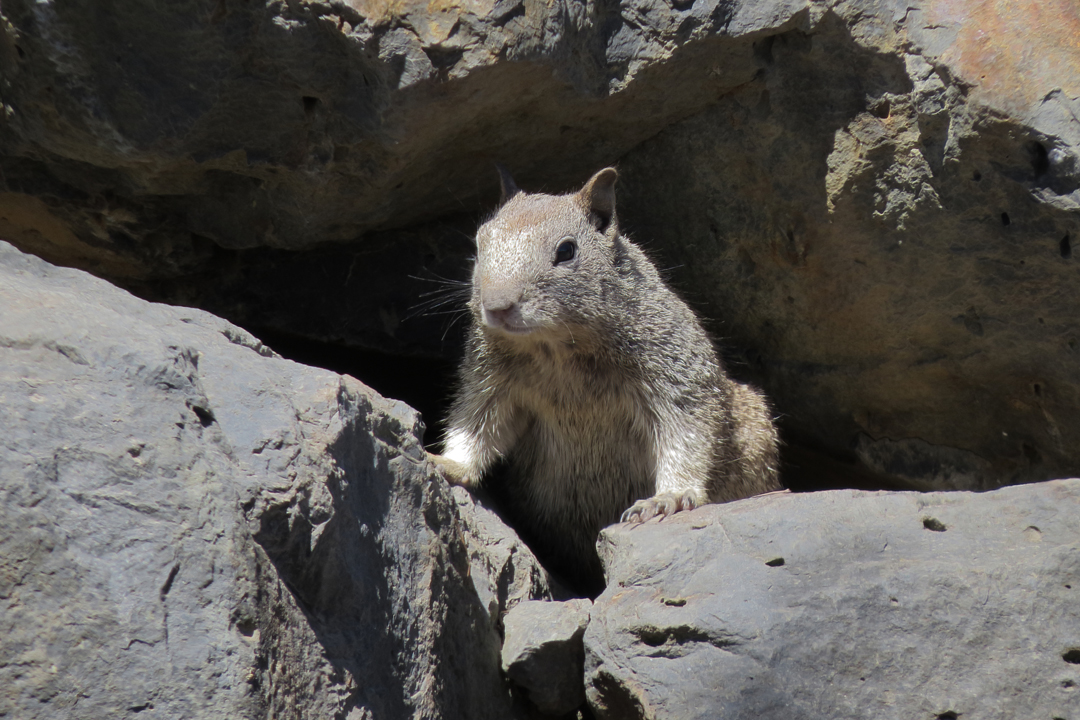 California Ground Squirrels have been taking advantage of the large rocks used in the landscaping at this site.
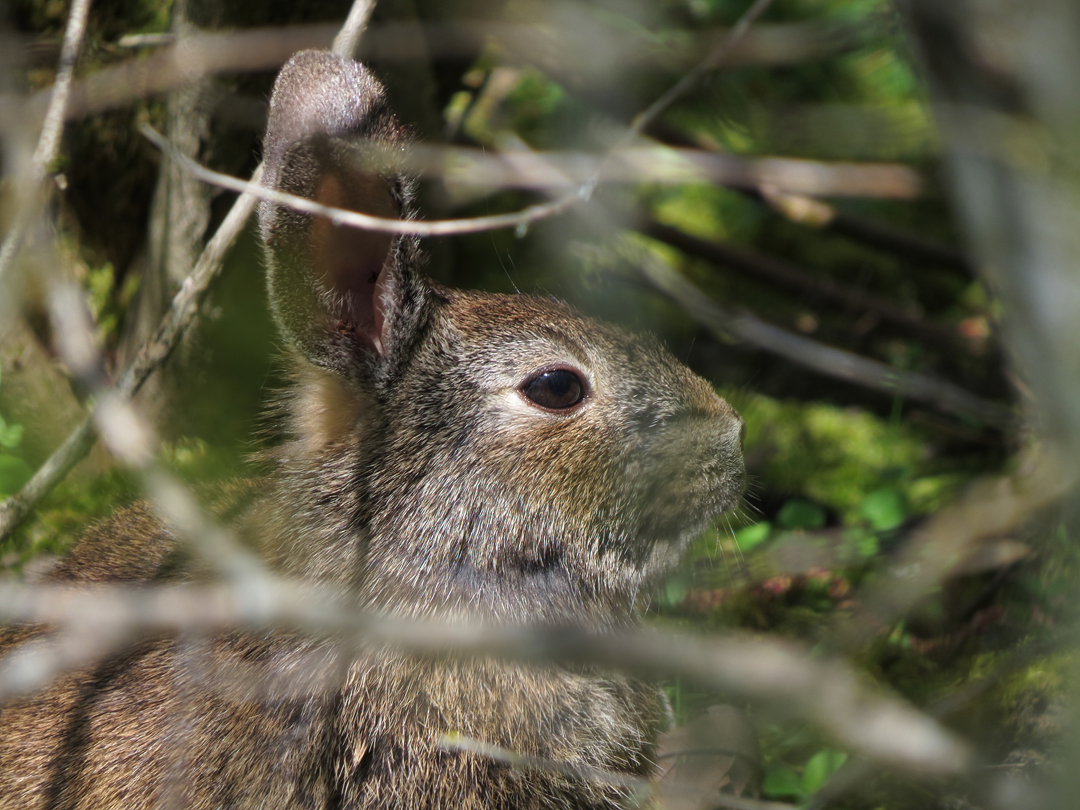 This Brush Rabbit was looking very regal in his thicket.


















 Ethical Birder