Sauvie Island

I spent a gorgeous day at Sauvie Island, northwest of Portland. There are still good numbers of waterfowl and Sandhill Cranes, but the sparrows have started to thin out.

sandhills.jpg
Sandhill Cranes (and Mallards)

dusky-sandhills.jpg
Dusky Canada Geese, Sandhill Cranes (and Mallards)

lesser.jpg
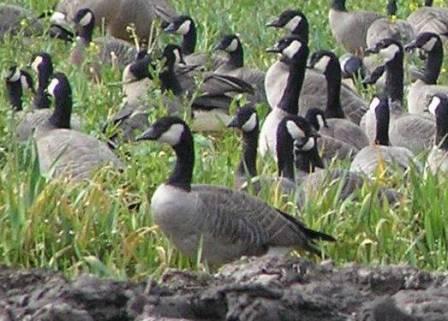
I believe the front bird is a Lesser Canada Goose. The bill is long and slopes gently into the forehead, unlike the stubby bills and rounded foreheads seen on Cackling and Taverner’s Cackling Geese.

garter.jpg
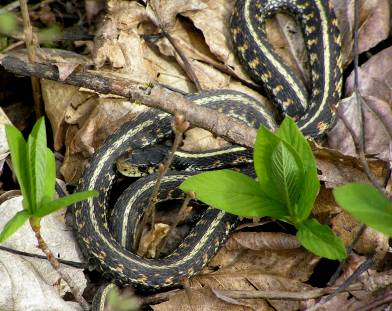
I saw at least a dozen Garter Snakes around Wapato Access Greenway. This was one of two that sat still long enough for photos.

Cackling and Canada Geese

My current birding project is studying the various races of Cackling and Canada Geese (Branta hutchinsii and Branta canadensis). Canada Goose was split into these two species in 2004. There are multiple races of each, so it is a good idea to become familiar with all the different forms in case more splits occur. If nothing else, it adds a bit of a challenge when confronted with a large congregation of geese.

In the Pacific Northwest, there are four races of Canada Goose (Western, Vancouver, Dusky, and Lesser) and three races of Cackling Goose (Taverner’s, Aleutian, and Cackling). The greatest identification challenge seems to be differentiating between Lesser Canada Goose and Taverner’s Cackling Goose. The two overlap in size and color, and different sources give conflicting information about their characteristics. The best field mark on close birds seems to be the shape and relative length of the bills; short and steep on Taverner’s, longer and more sloping on Lesser Canada.

Here are a few websites that you may find helpful in learning the various races of white-cheeked geese.
http://sibleyguides.com/canada_cackling.htm David Sibley’s notes that were written just after the species were split. Good information, but not complete, especially regarding the Lesser Canada/Taverner’s Cackling issue.

http://www.idahobirds.net/identification/white-cheeked/subspecies.htm Harry Krueger’s site. This is a work in progress, but it offers great information on several subspecies.

http://www.dfw.state.or.us/resources/hunting/waterfowl/goose-permits/Goosefieldguide_2ndEdition_final.pdf This 83-page publication from the Oregon Department of Fish and Wildlife is a wealth of information and photographs. Be warned; this publication is intended for hunter education, so some of the photos are of “harvested” birds.

geese.jpg
Cackling Cackling Goose (top) and possible Lesser Canada Goose
Pacific City

I spoke at the annual Birds and Blues Festival last Saturday in Pacific City, OR. Our hotel room had a lovely view of Haystack Rock. (There is another Haystack Rock at Cannon Beach, but the residents of Pacific City refer to that one as “the small one.”)
haystack-rock.jpg

The area around Pacific City is the only winter home of the Semidi Islands Aleutian Cackling Goose. The birds spend the day grazing in short pastures, and at night roost on the ocean near Haystack Rock. In the morning, you can watch the birds take off in small flocks as they head out to feed. There is something special about being able to sit on your balcony and see every member of a distinct population of bird. But it is also very frightening to realize that one storm or one oil spill could wipe out the entire population.
geeserock.jpg

This Thayer’s Gull chose to nap in the middle of a parking lot.
sleepy-thayers.jpg

Winter is setting in.

With the onset of cooler temperatures and short days, a birder’s attentions are drawn to the avian stars of the Willamette Valley in winter, waterfowl and gulls. Yes, there are sparrows about, and the American Goldfinches are emptying my feeders on a daily basis. But I really enjoy the cacophony of a few thousand Cackling Geese and the challenging genetic soup that makes up the gulls of the West Coast.

wigeons.jpg
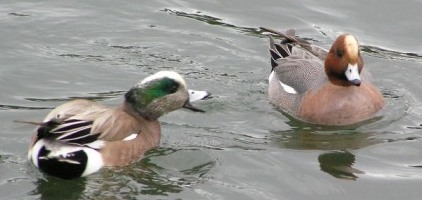
American and Eurasian Wigeons

cackling-geese.jpg
Cackling Geese

thayers-wing.jpg
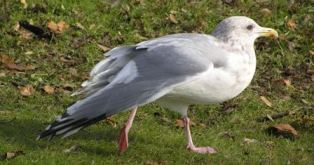
Thayer’s Gull