Fernhill Wetlands 11/1/12

Things are hopping at Fernhill Wetlands, with rising water levels, an influx of several thousand geese and other waterfowl, and a few other goodies.
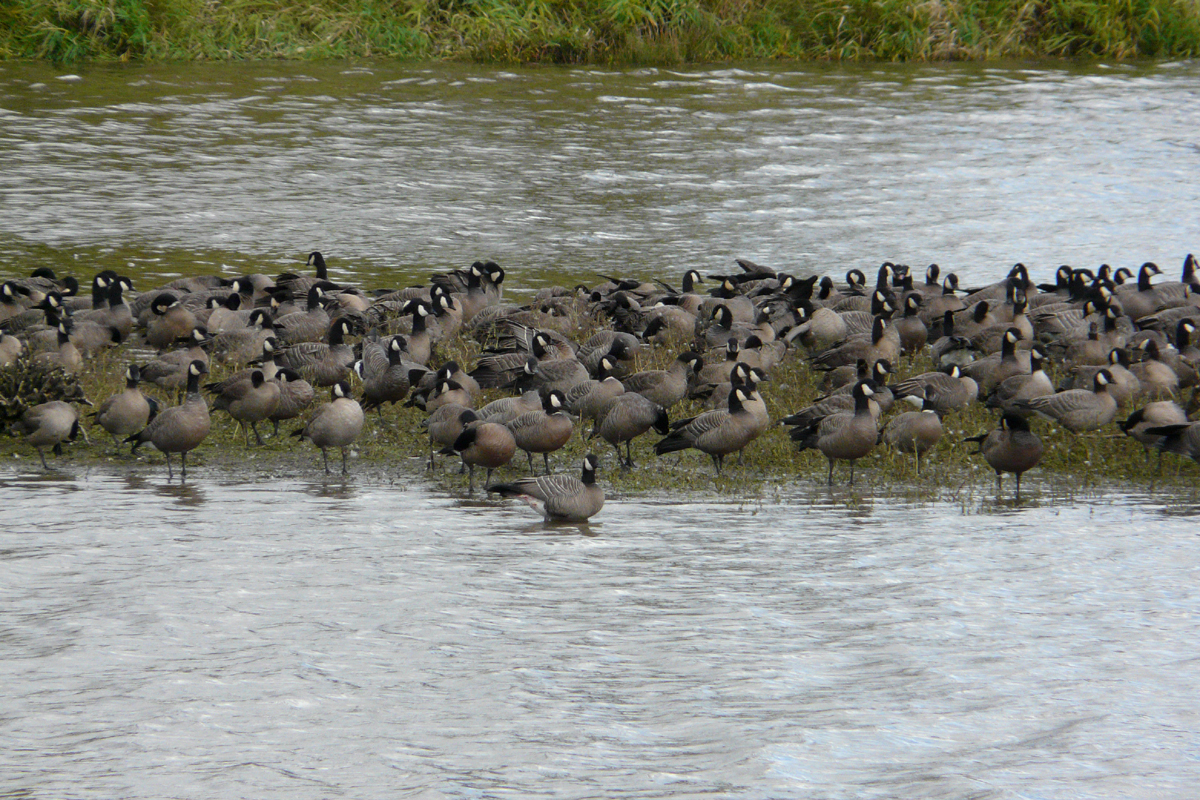
Cackling Geese have been arriving for weeks now, and the skies and fields around Fernhill are covered with these little guys.

A small flock of Greater White-fronted Geese were hanging out with the Mallards in Dabblers Marsh.

This interesting beast is a hybrid, a product of one of the local Canada Geese and a domestic Greylag Goose.

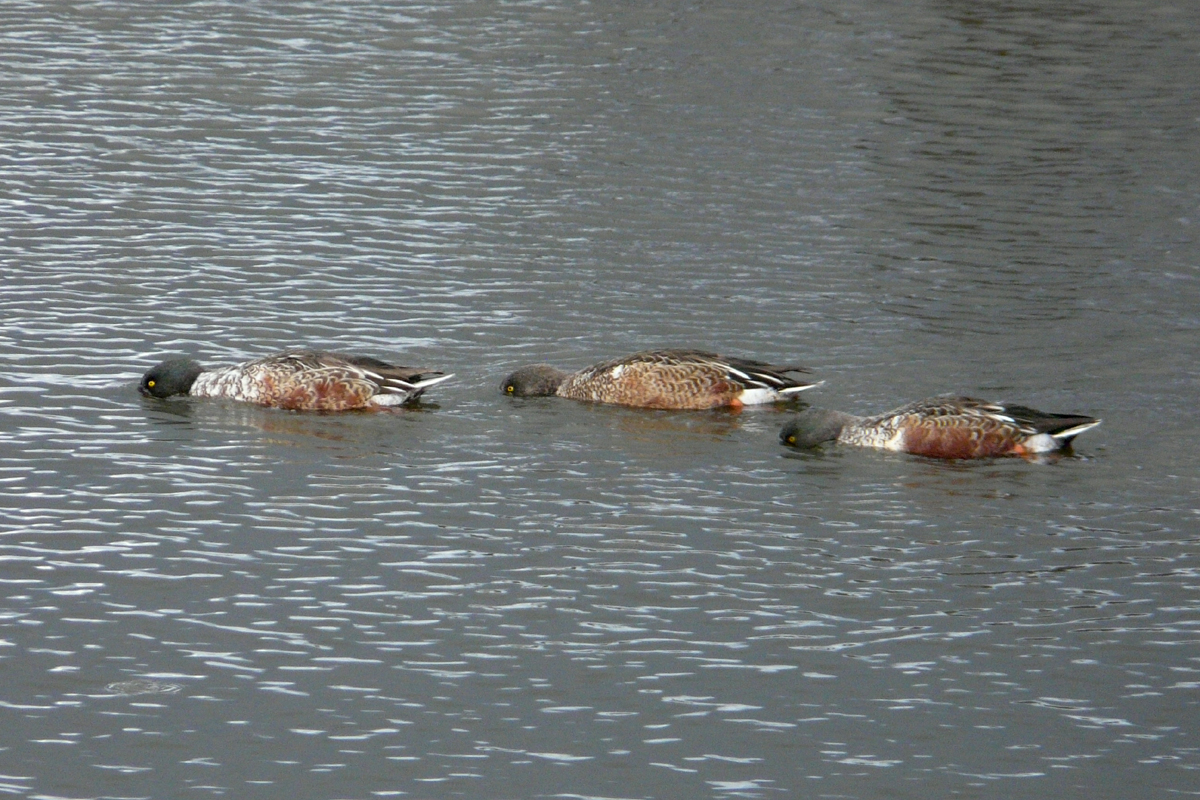
Here are some of the many Northern Shovelers feeding in their typical manner, swimming along with their faces in the water, as if their enormous bills are too heavy to hold up.
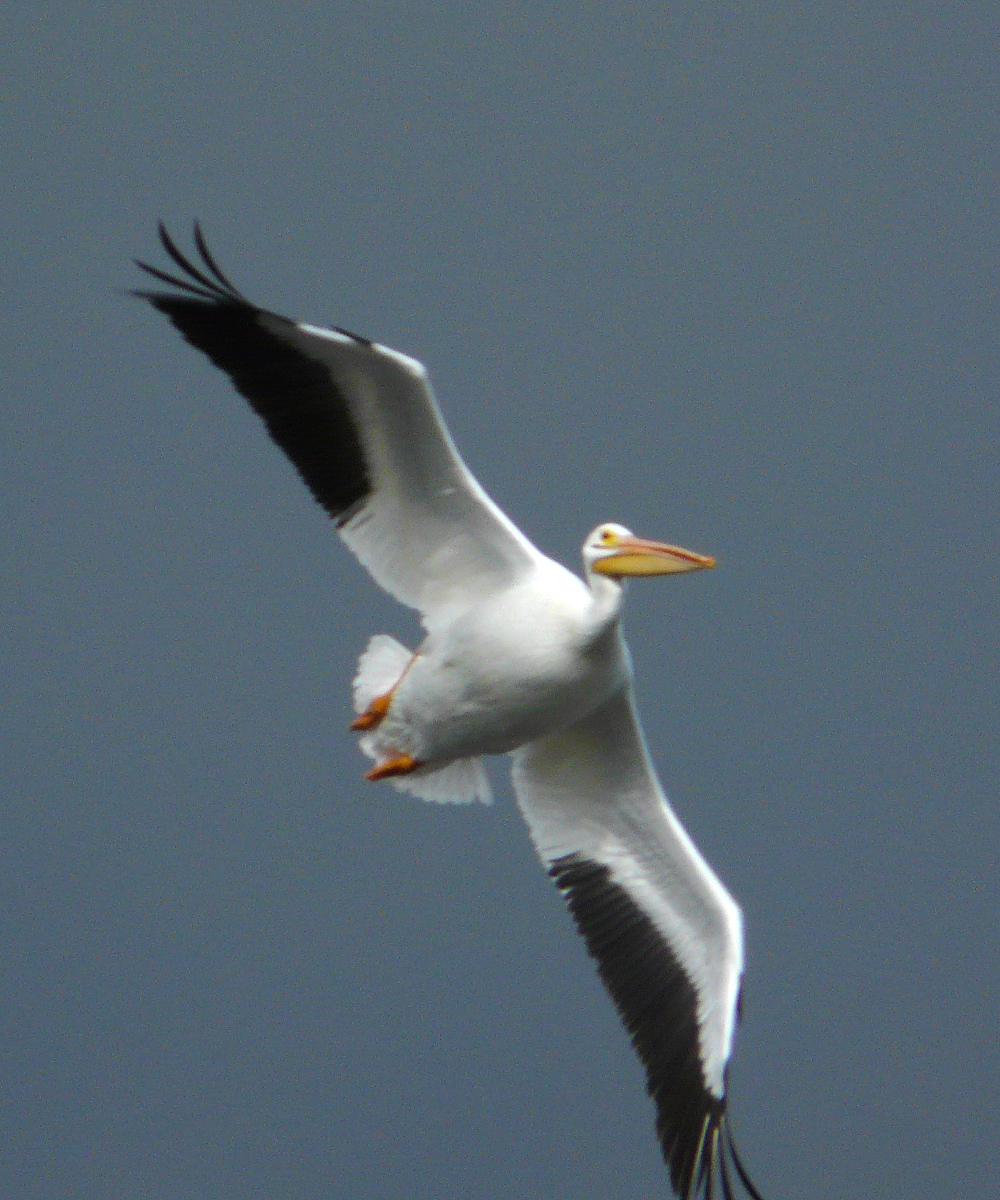
Two American White Pelicans have been hanging out at Fernhill for a couple of months now.
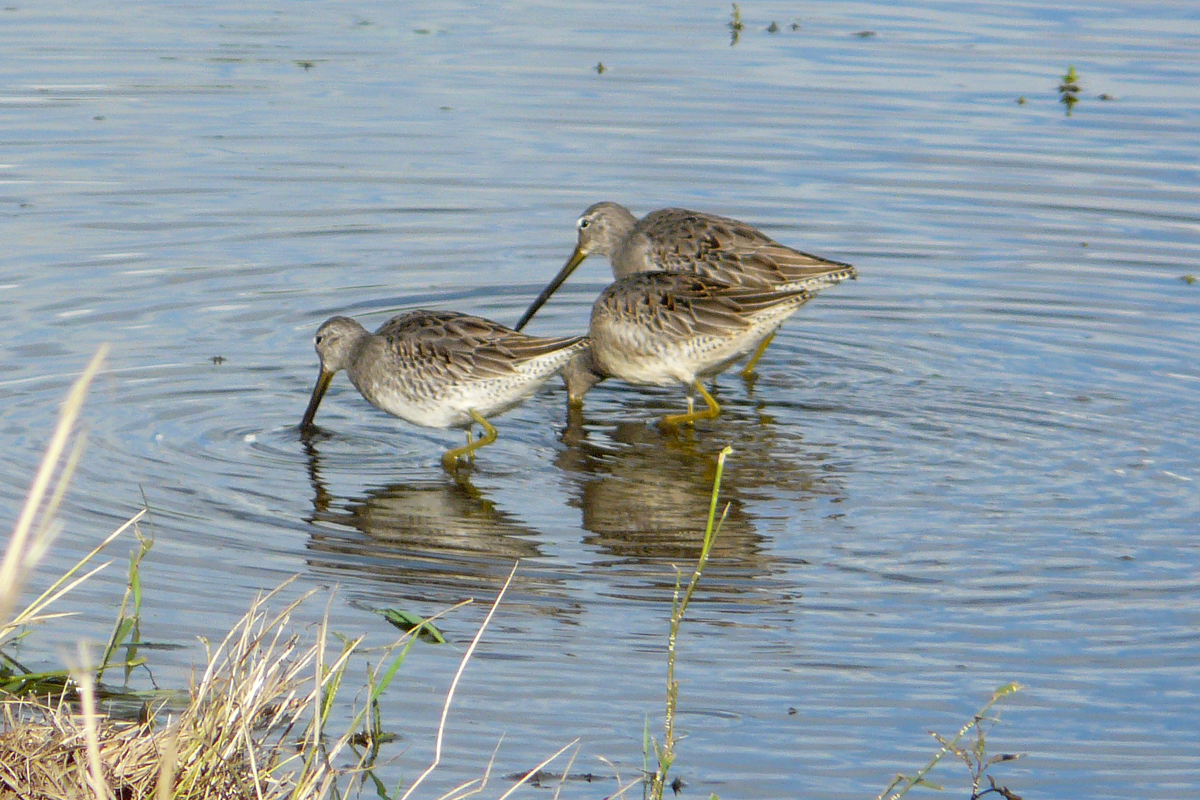
Shorebird numbers and diversity have dwindled. Here are a few Long-billed Dowitchers.

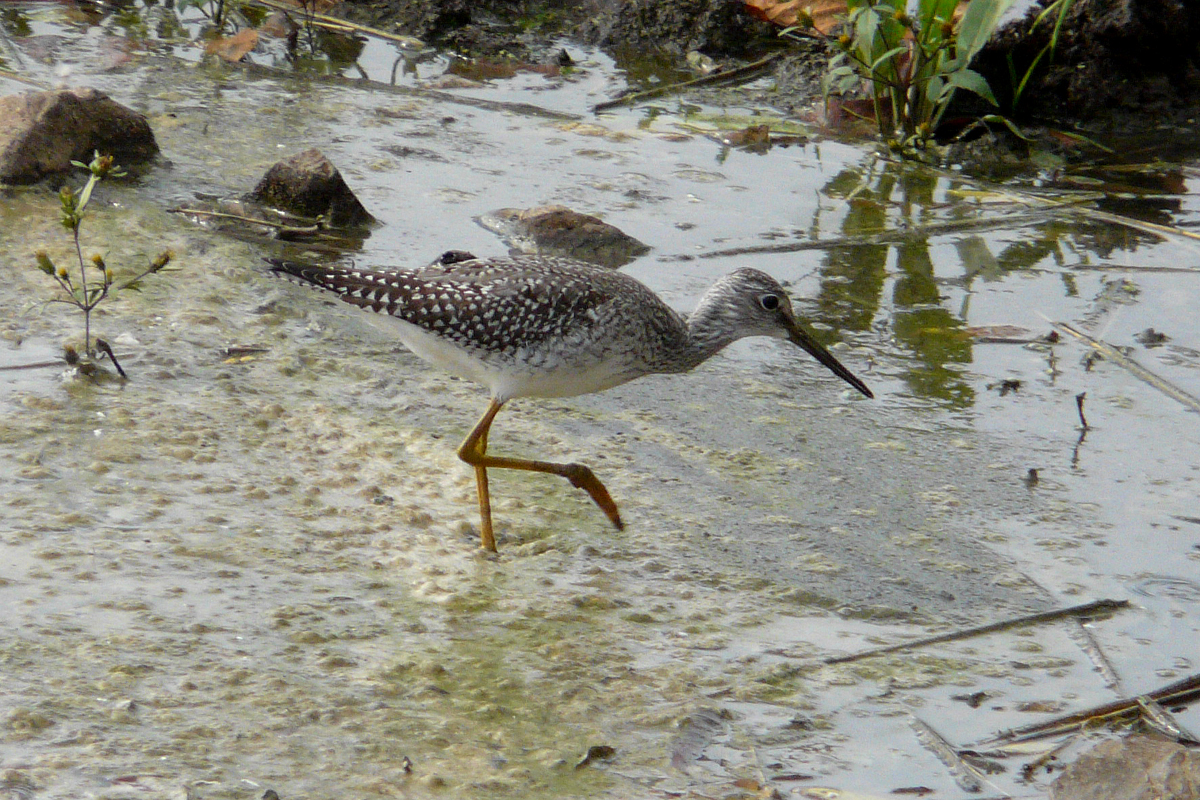
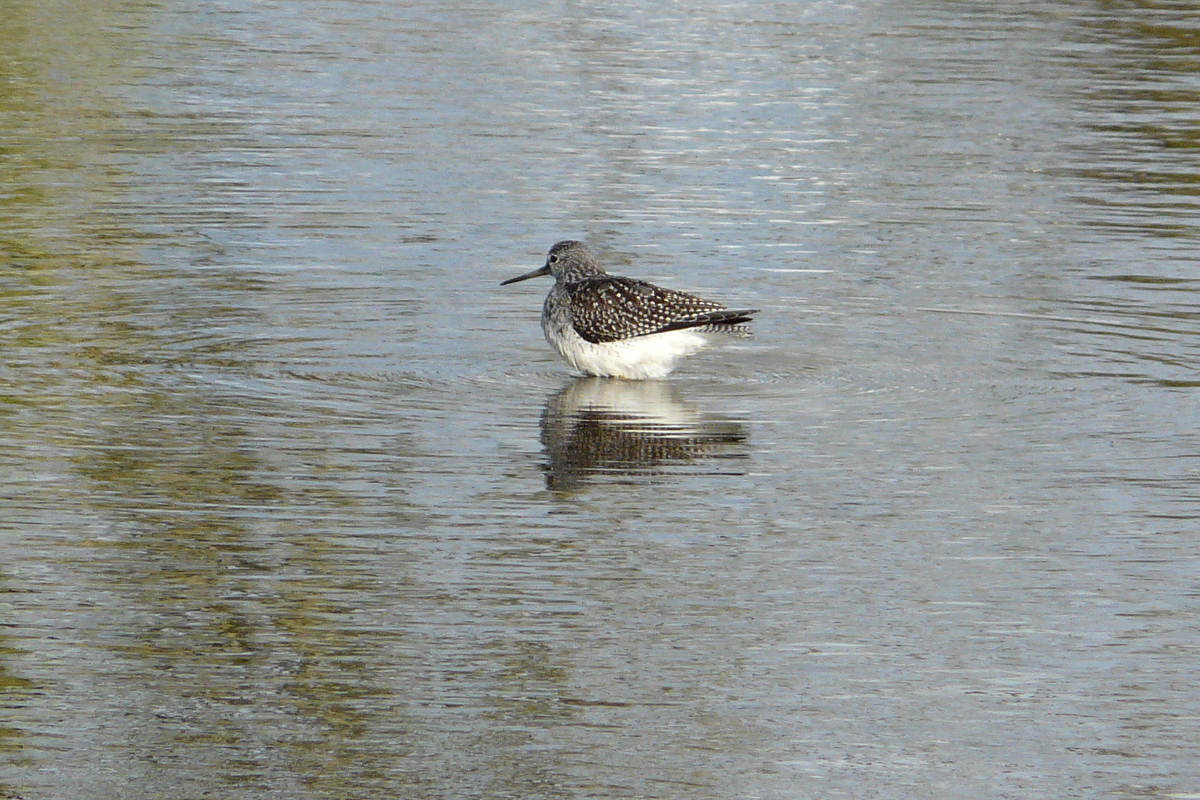
Greater Yellowlegs

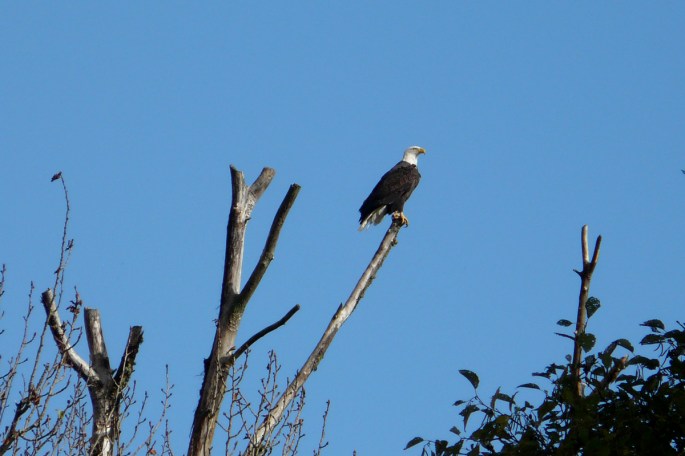
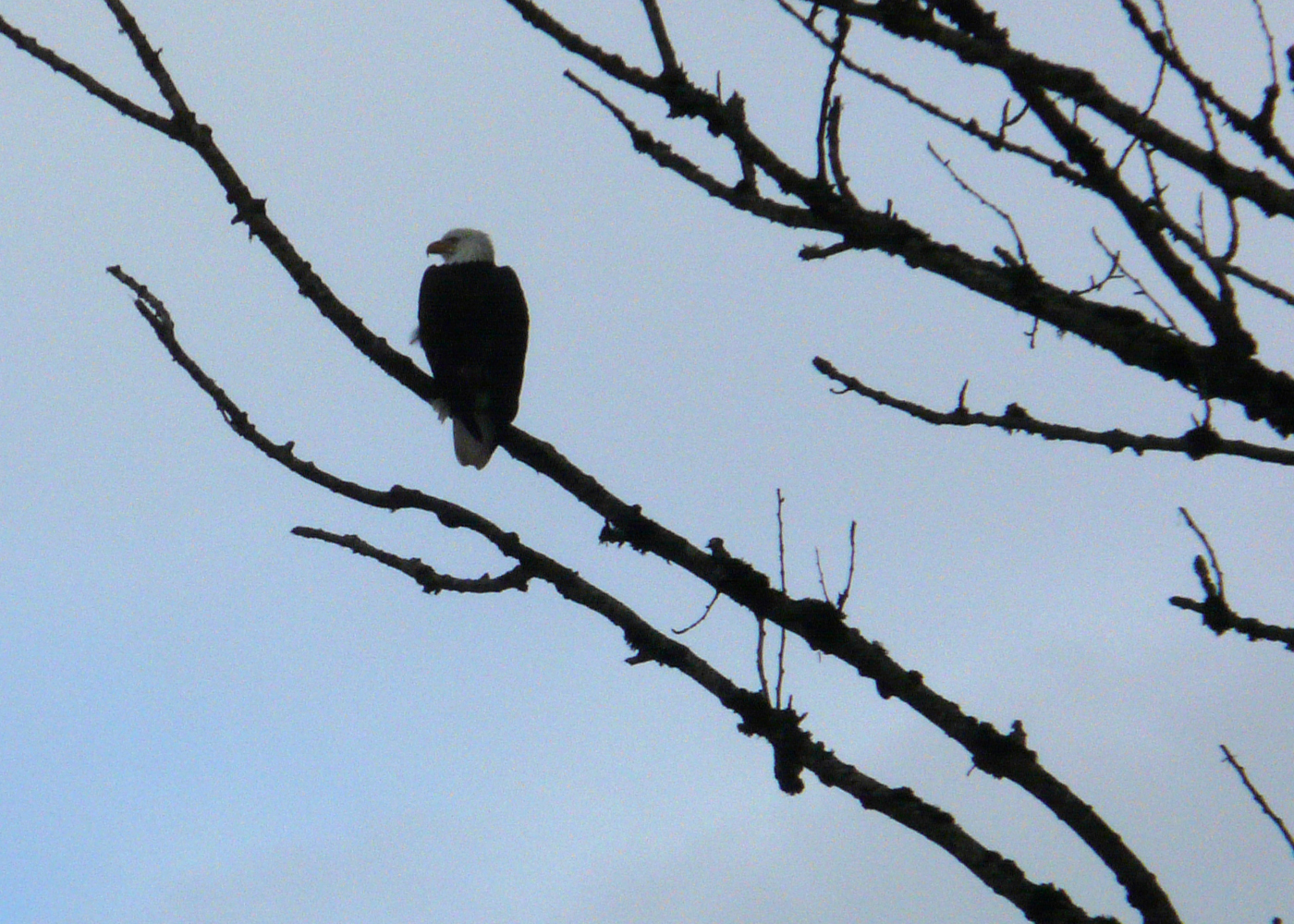
The resident Bald Eagles were sitting around looking majestic. I watched one carrying a stick to add to their nest.

Great Egret

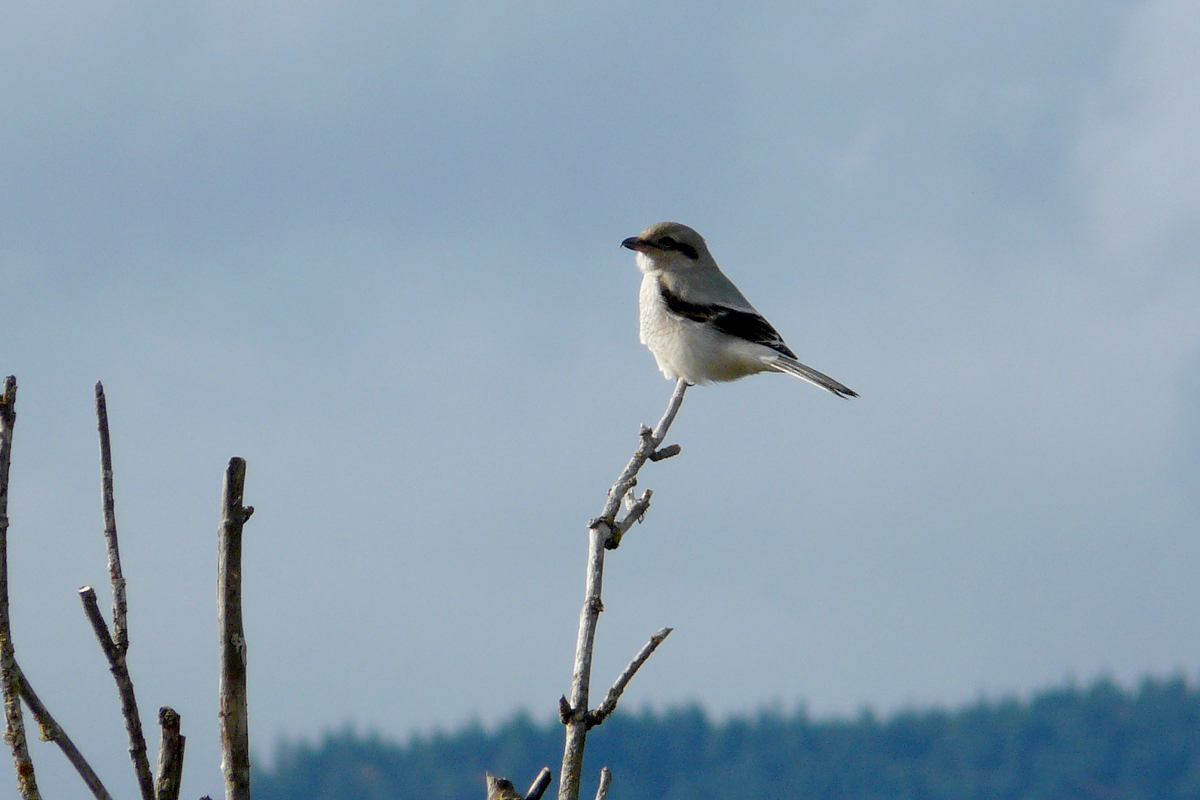
Several Northern Shrikes have been reported around the Portland area in recent days. This one is snacking on a large insect.
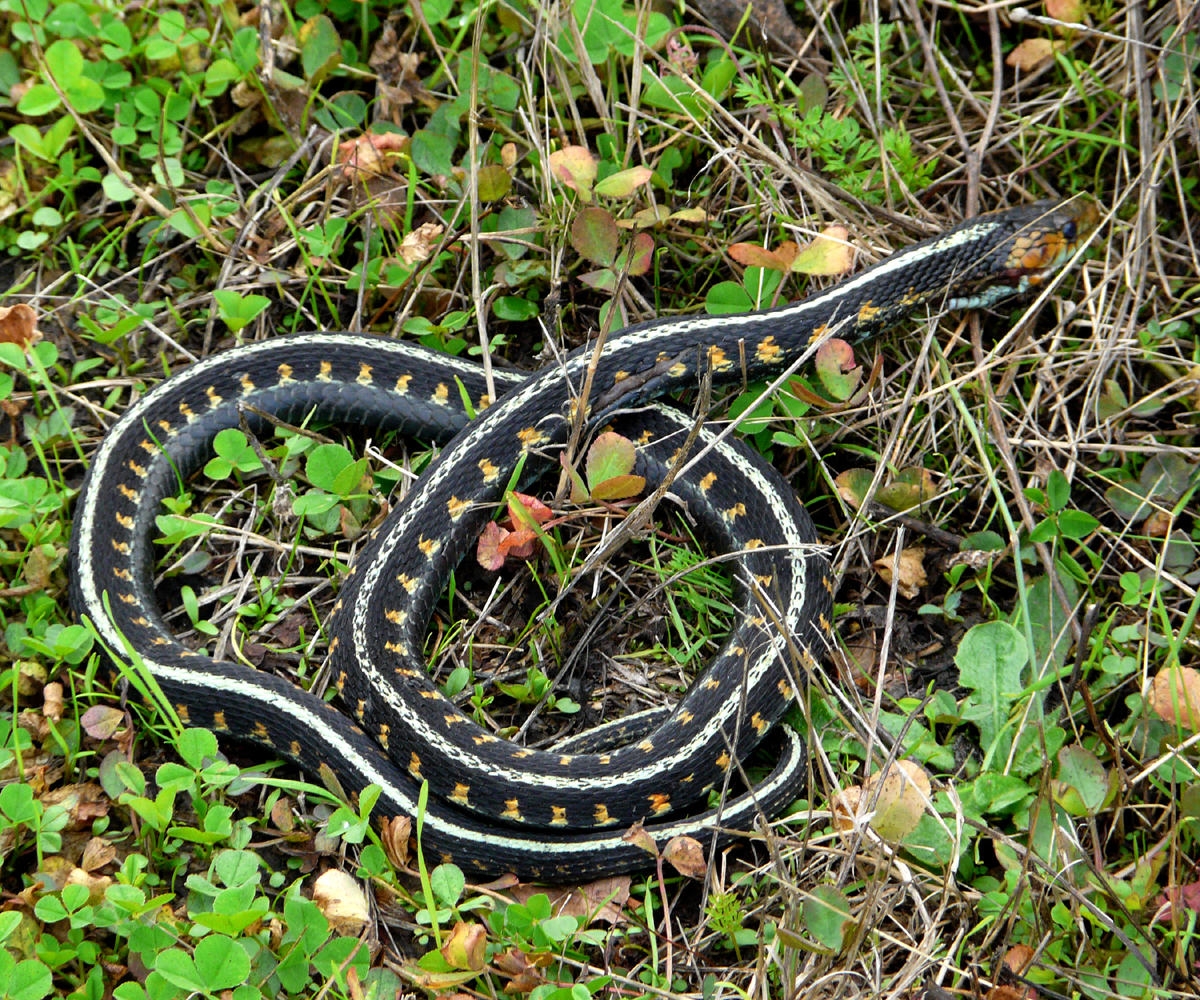
I saw three Common Garter Snakes on this trip, including one very young newborn about the width of a linguine. The colorful individual in this photo was about 20 inches long. Note the large laceration on his neck, presumably from a predator. Despite the severity of the wound, the snake was not bleeding and he crawled away after this photo was taken, so I am hopeful he will recover.
Autumn Arrivals

The weather is cooling and rain is in the forecast, as our long dry summer is finally letting go.

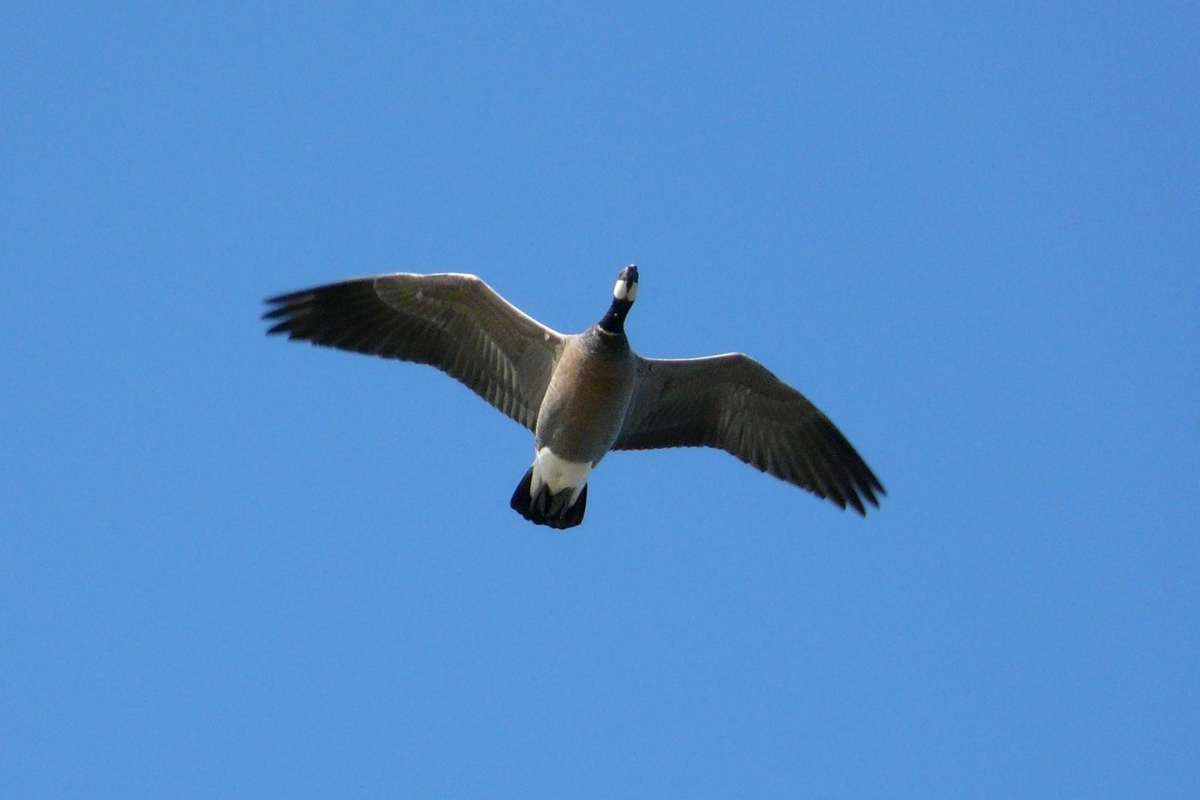
Cackling Geese have arrived by the thousands in recent days. This Ridgeway’s Cackling Goose is sporting a black chin stripe and a white collar.

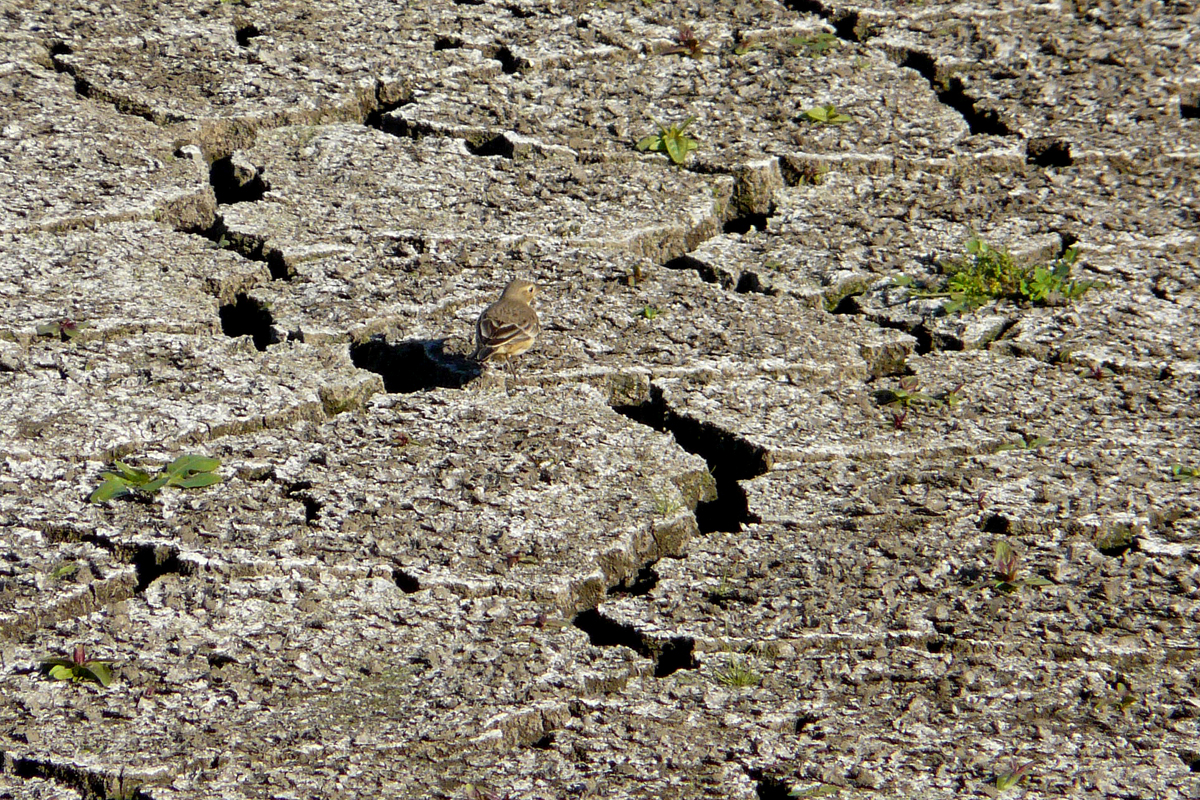
An American Pipit, blending in with the dry cracked lake bed at Fernhill Wetlands

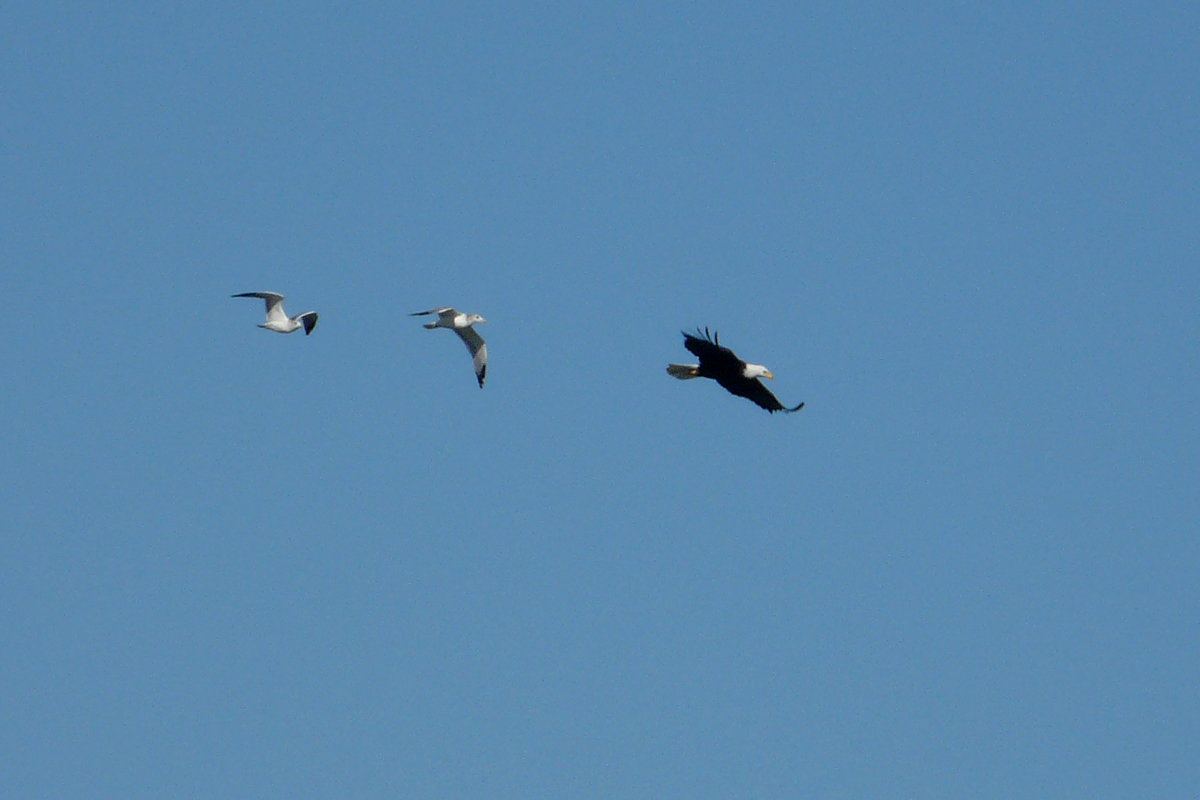
Two California Gulls harassing a Bald Eagle. It is probably much safer being behind the eagle than in front.

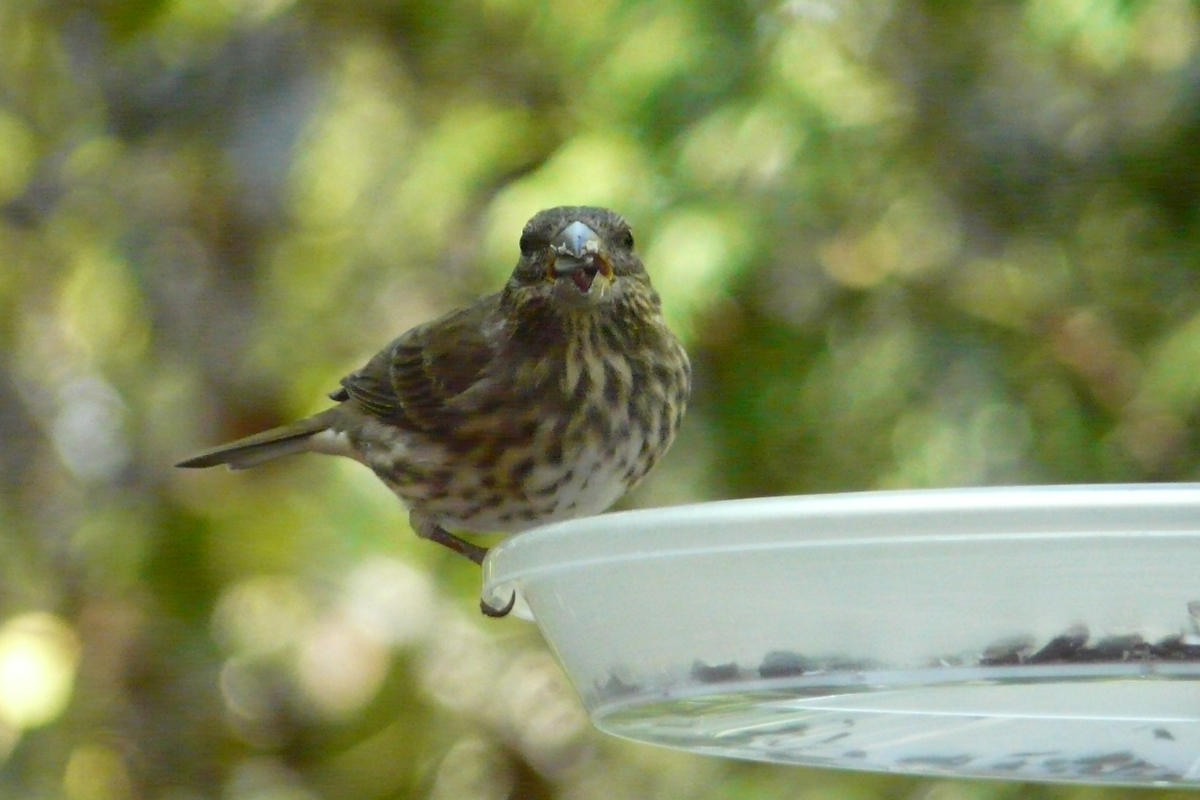
Closer to home, this Purple Finch visited the feeder. If you look closely you can see her tongue positioning the sunflower seed.
Mimi, one of my neighbor cats, is enjoying the birdbath and keeping those pesky hummingbirds out of my garden. I have two words for you, Mimi; Urban Coyotes.

April Teasers

After the wettest March on record, April has  provided a few sunny days to help awaken us from our rain-induced torpor.


I made a quick trip out to Fernhill Wetlands to look for the Swamp Sparrow that has been reported there. Between the sunbreaks, I still had to dodge a few passing squalls.

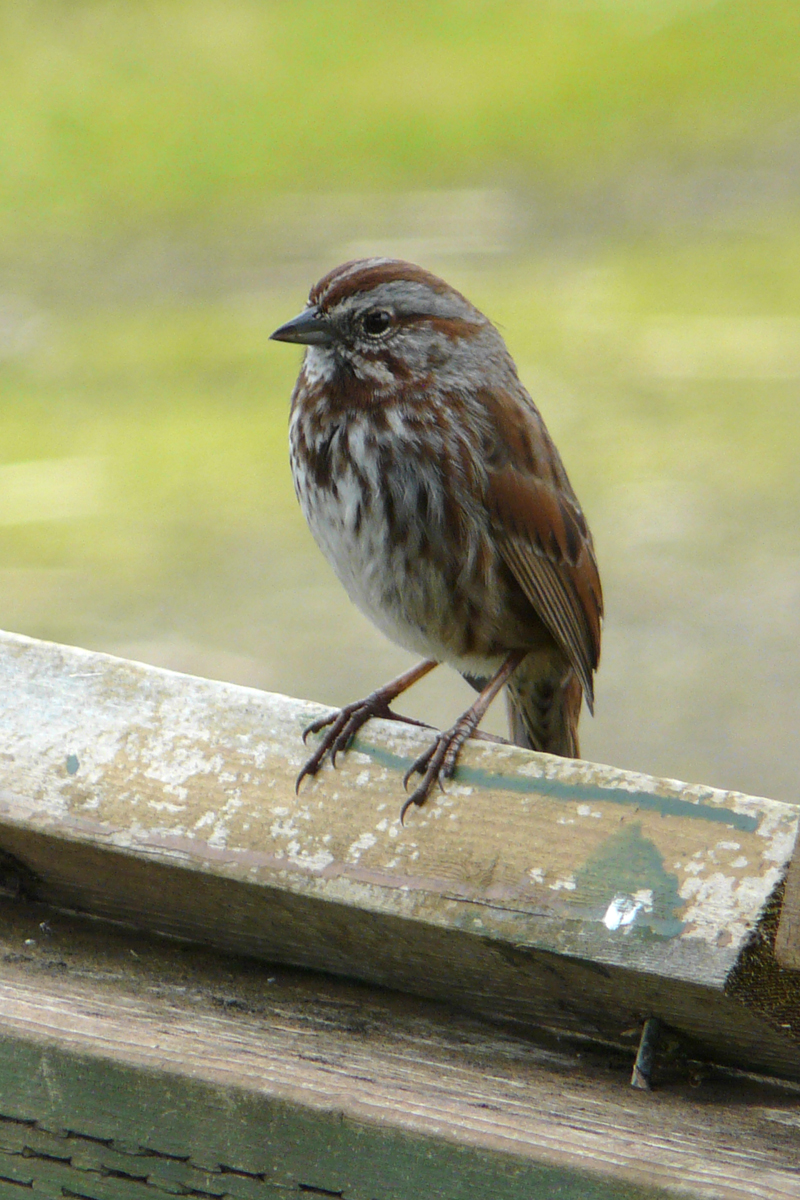
I missed the Swamp Sparrow, but this Song Sparrow was very cooperative.


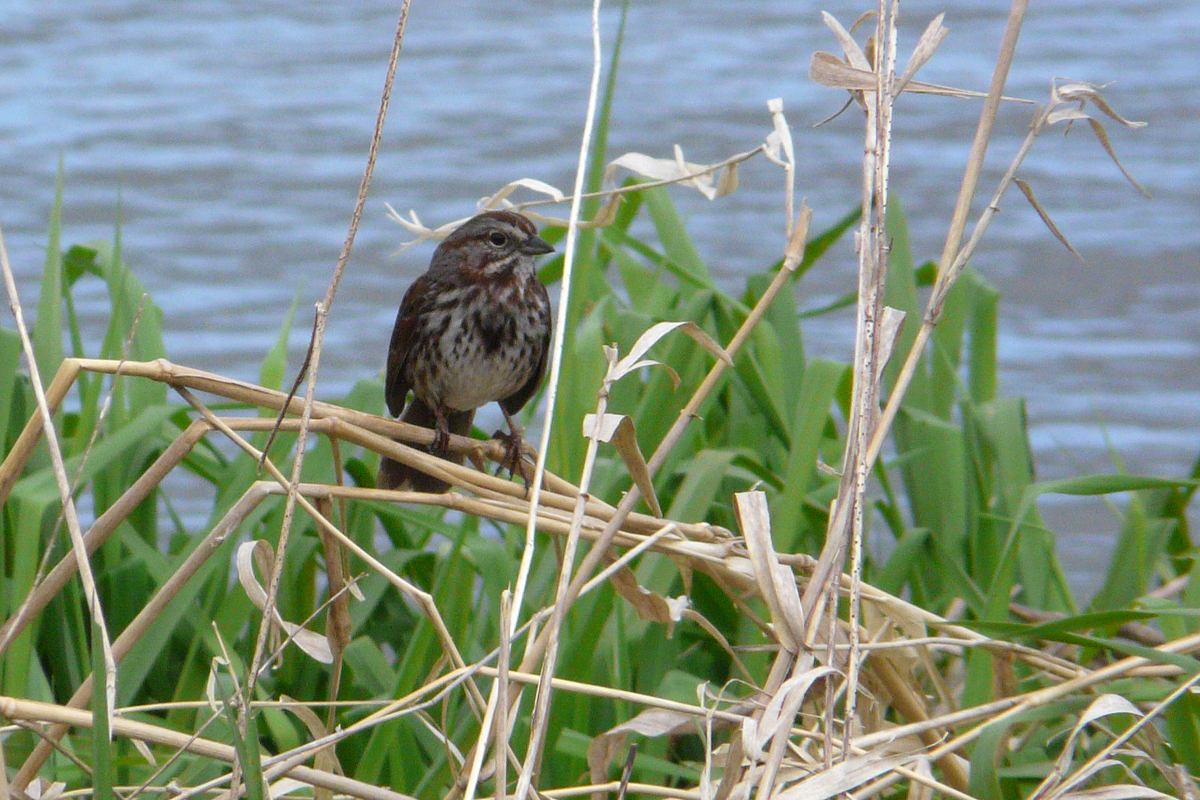
Here is the same Song Sparrow in a little more natural setting, if you consider invasive Reed Canary Grass to be natural.


Much of the loop around Fernhill Wetlands has been blocked off, supposedly to reduce disturbance to the new Bald Eagle nest.

A pair of eagles has been hanging out in this little grove of cottonwoods for years, so I would imagine they are used to birders and joggers going by, but better safe than sorry.


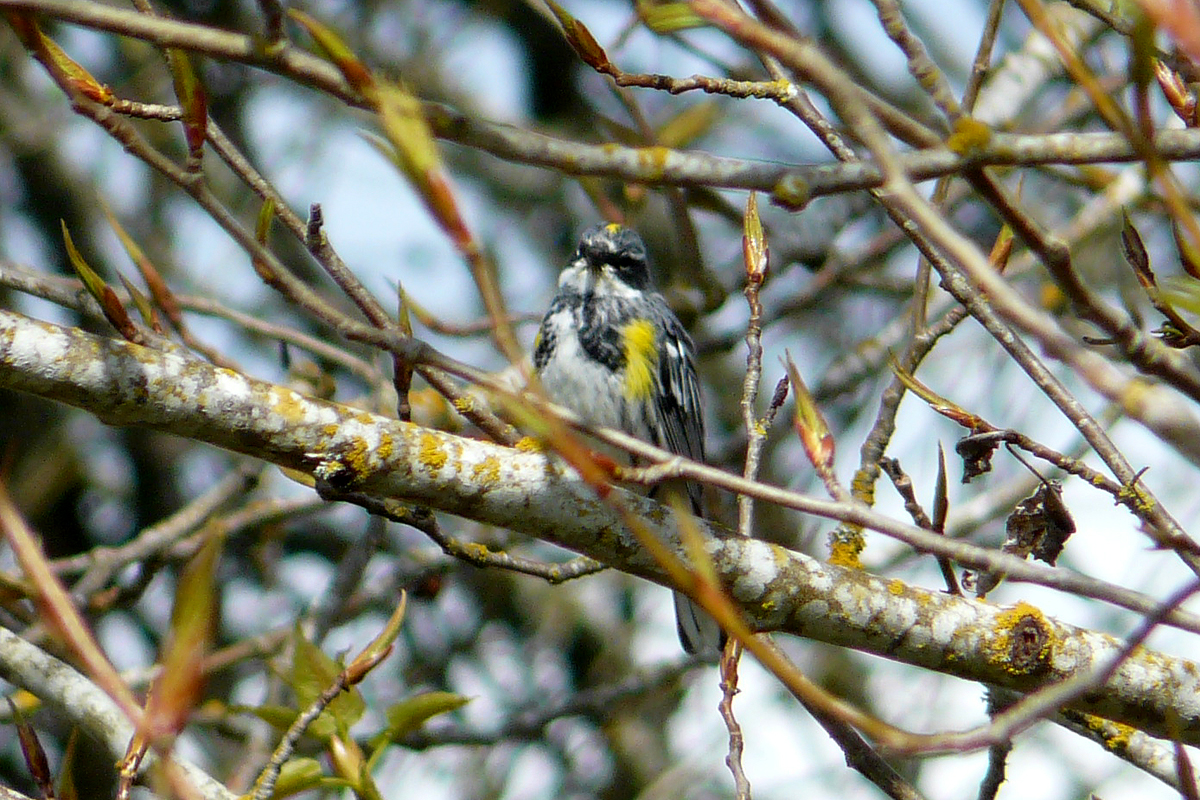
The Yellow-rumped Warblers have molted into their flashy breeding plumage. This one is an example of the “myrtle” race.


On Saturday I took some clients out to Sauvie Island for a morning of birding. This view of Mt. St. Helens is from the west end of Rentenaar Road.


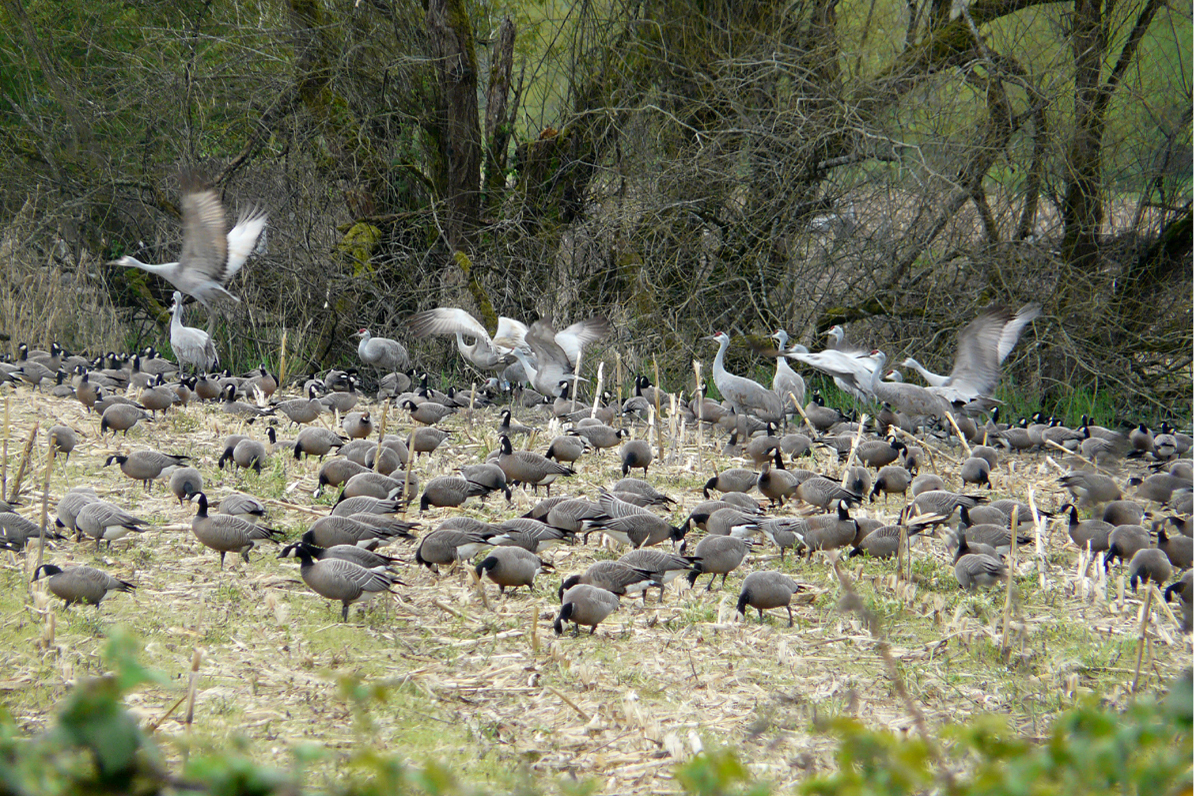
Sandhill Cranes, seen here with a flock of Cackling Geese, were common in the morning.  But as the day progressed, many birds circled up on thermals and then headed north. By noon, most of the cranes were gone.


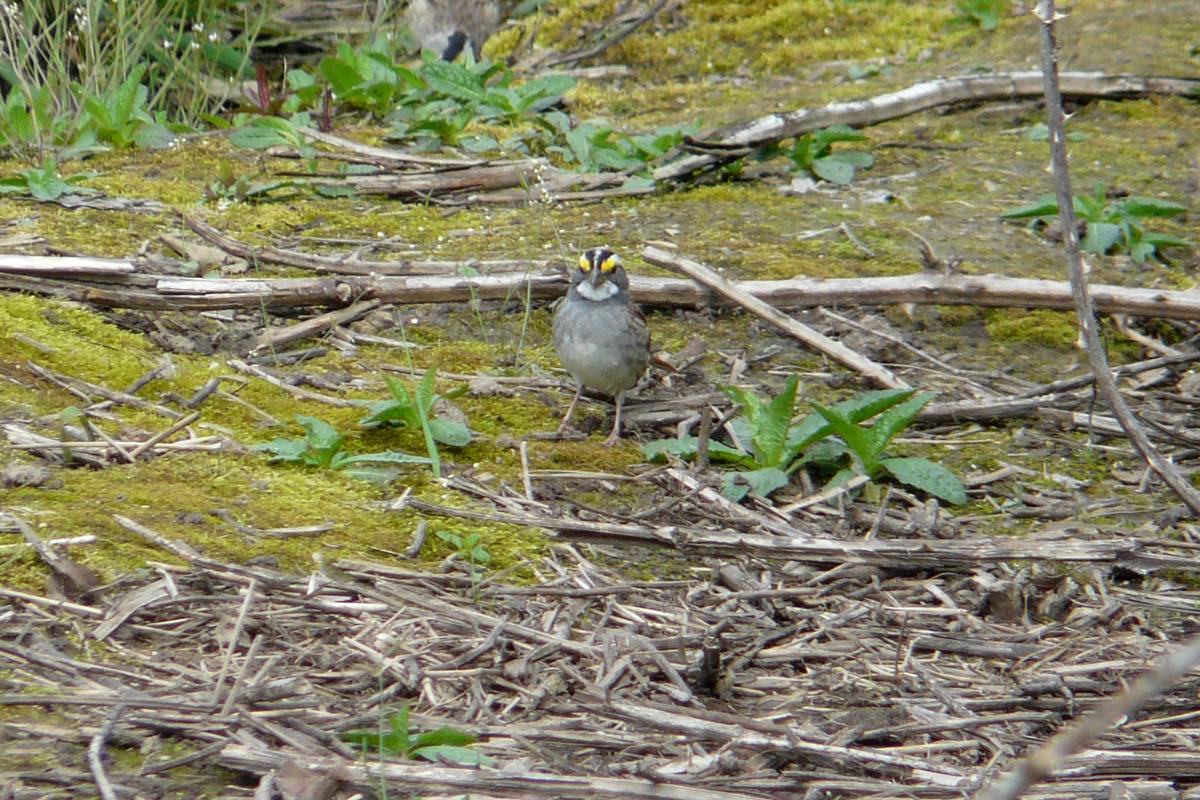
Most of the sparrows seen just a week earlier had moved on. Two White-throated Sparrows were a treat. Singing Orange-crowned Warblers and five species of swallows were other good signs that migration is stepping up. I’m looking forward to the next sunny day.

Tillamook

I took advantage of the glorious spring weather recently to visit Tillamook (Birding Oregon p. 125). Nala and I completed the Tillamook Death March, walking all the way around Bayocean Spit. This is the only spot I have visited on the Oregon coast where you can walk for several miles along the beach and not see another person. You can barely discern the south jetty on the horizon.


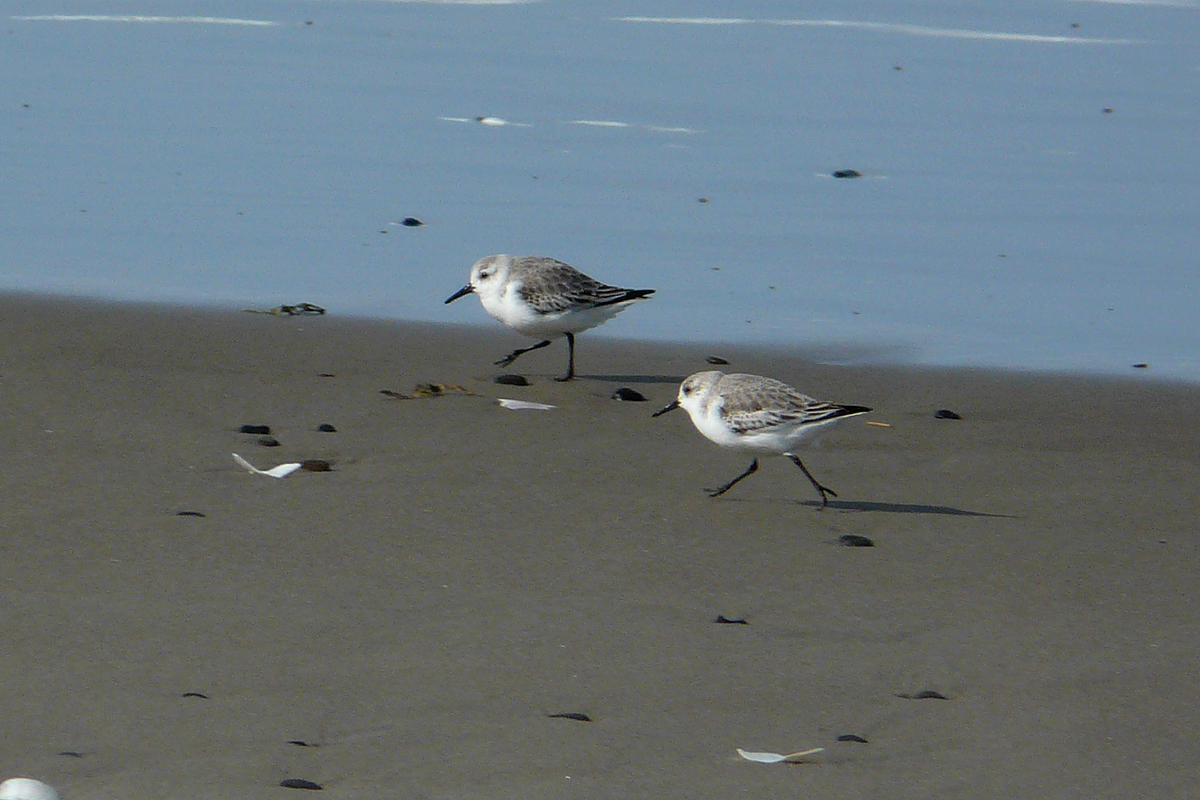
As expected, there weren’t a lot of birds on the ocean side of Bayocean. It is still too early for spring migrants and too late for winter specialties. Aside from one Black-bellied Plover, the only shorebirds were Sanderlings, shown here doing their typical running along the water’s edge.


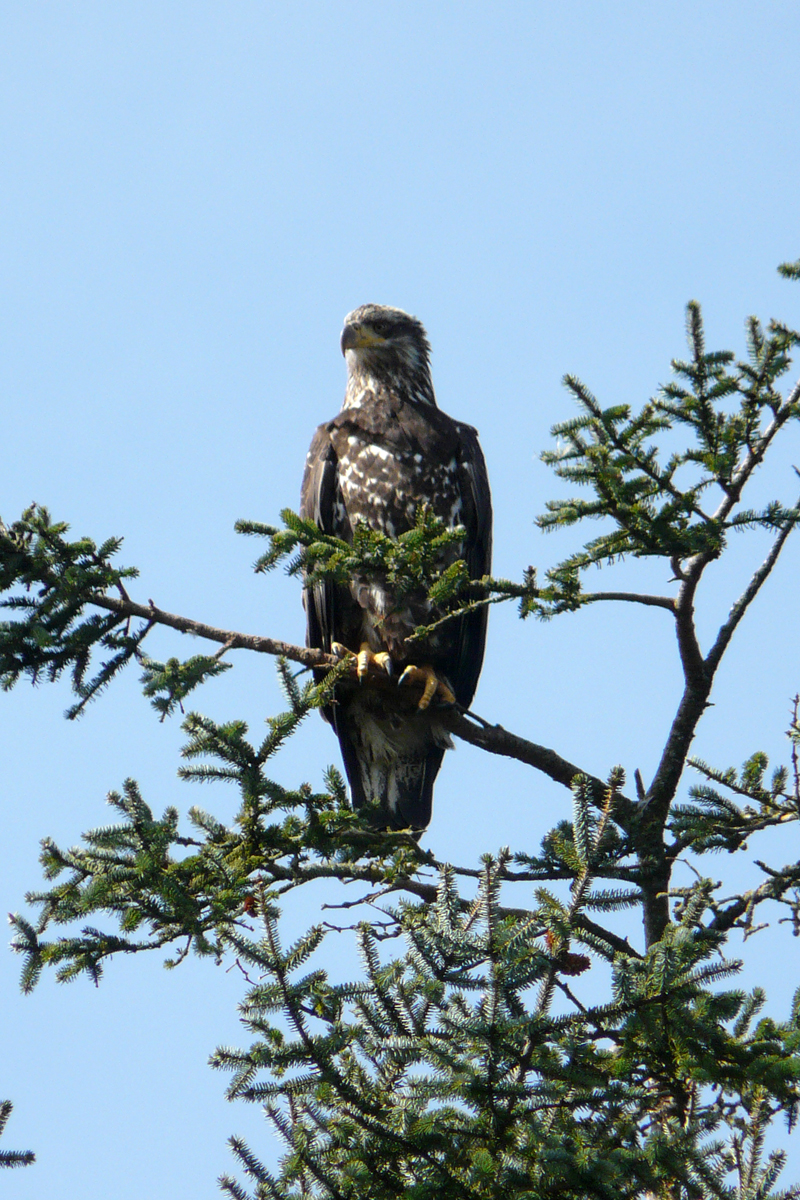
There wasn’t much going on, birdwise, on the bay side of the spit either. The tide was high and there were a lot of boats on the water. This was one of several Bald Eagles seen on our walk.


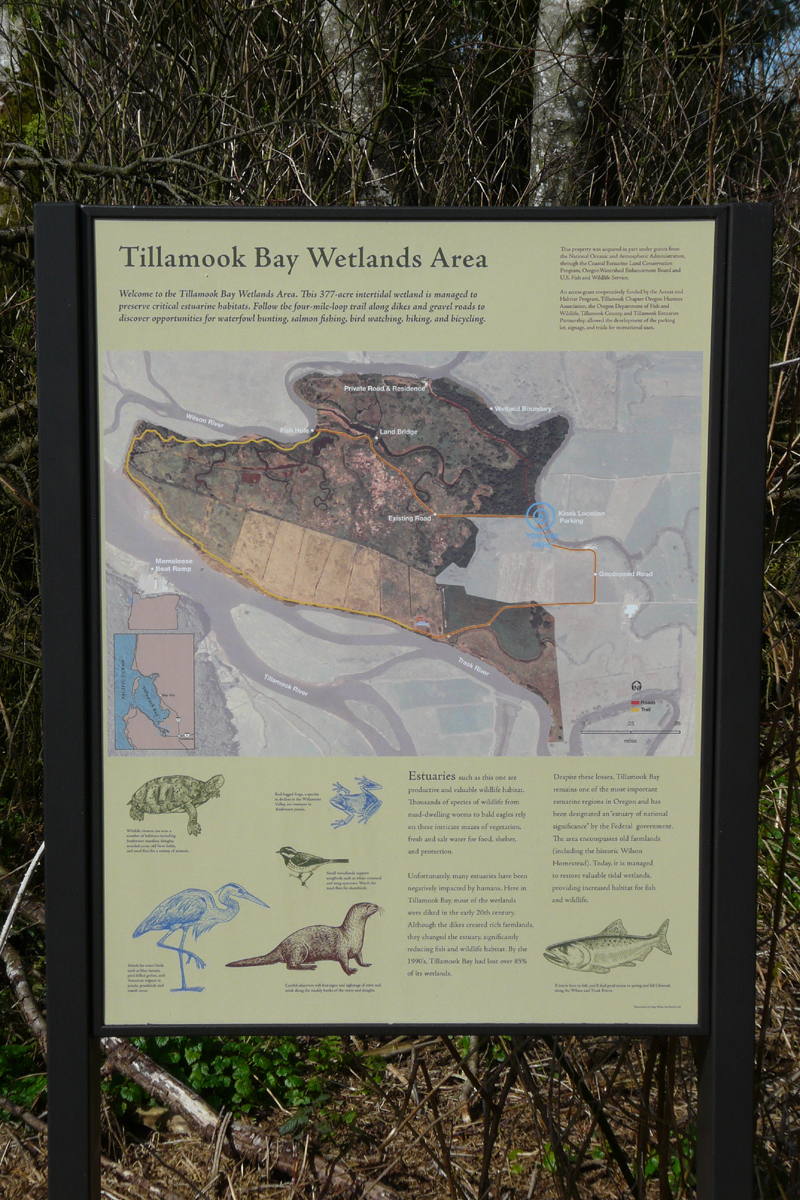
The main reason for my trip that day was to explore the Tillamook Bay Wetlands Area. While this isn’t the most scenic of sites, it provides wonderful access to wetland and meadow habitats along Tillamook Bay. From US 101 on the north edge of the city of Tillamook, turn west onto Goodspeed Road. Follow this very rough paved/gravel road for one mile, bear right, then left, then right again to end at a small parking area with this sign.


Wilson River


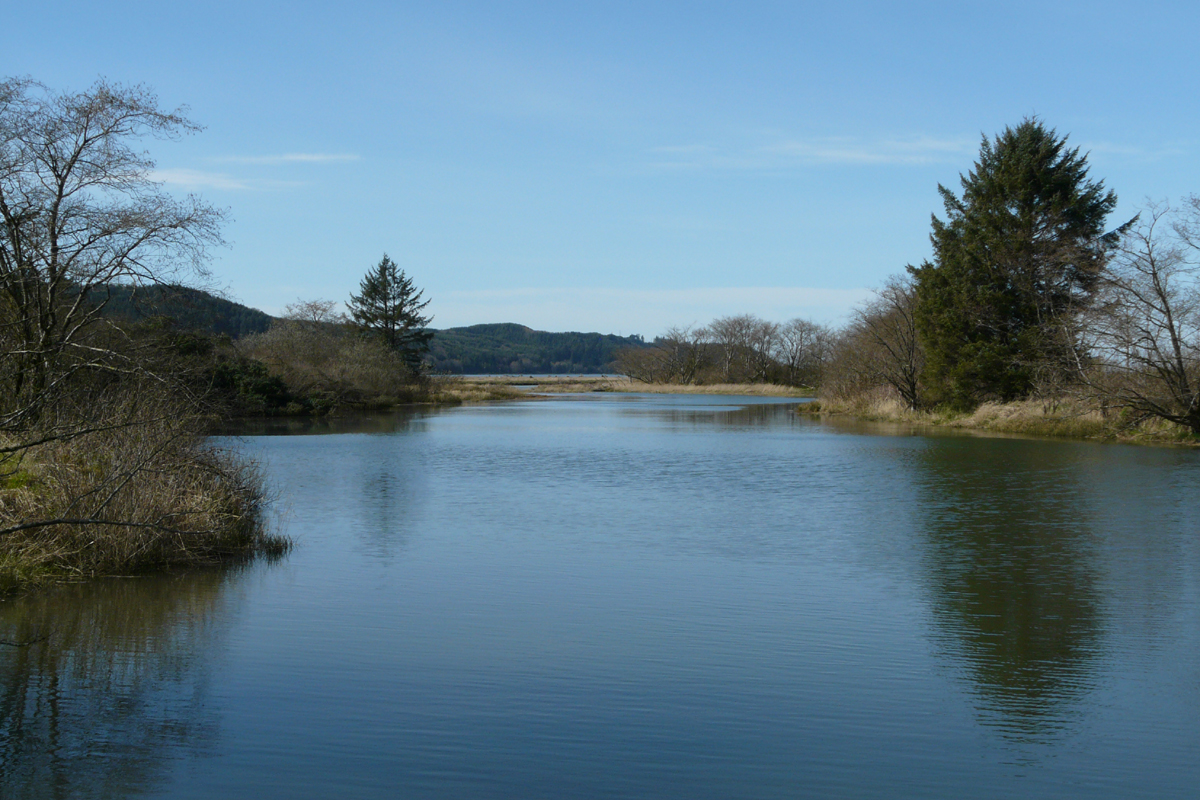
Wilson River, near where it empties into Tillamook Bay. The patch of trees in the distance is the wooded area of Bayocean Spit across the bay.


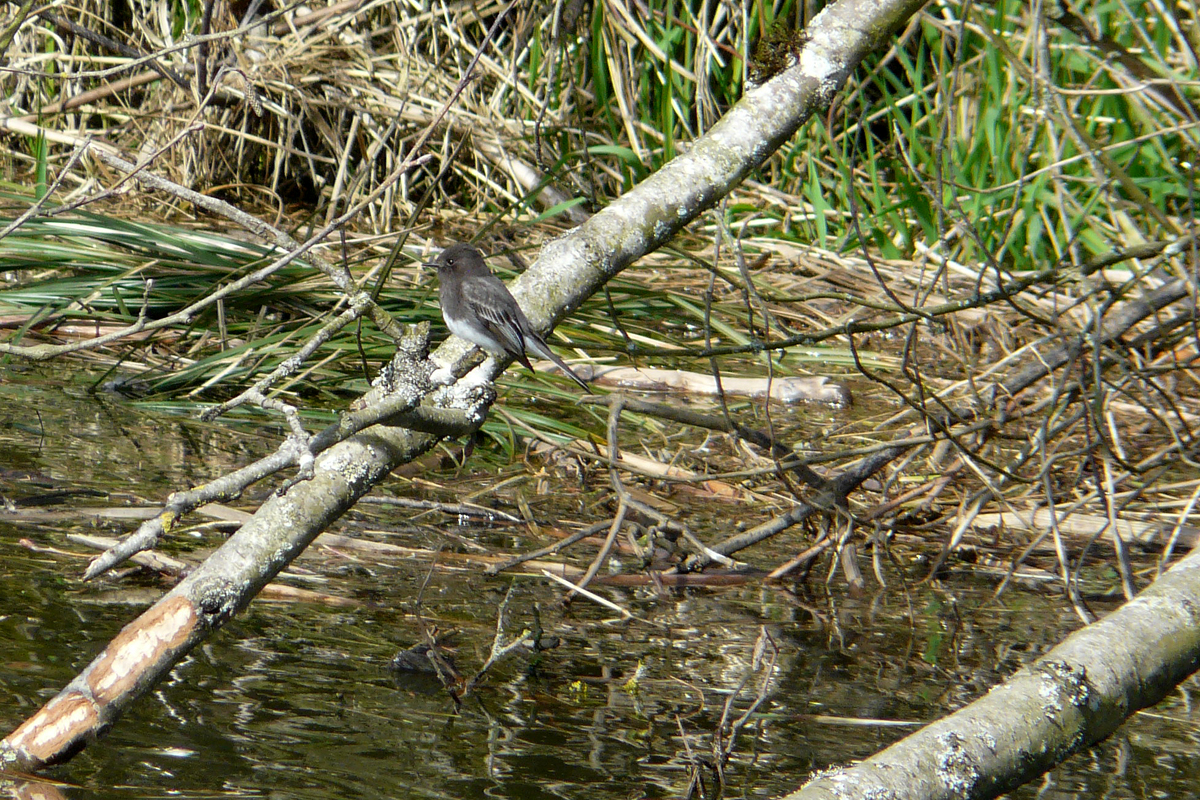
Black Phoebes were actively hunting from perches along the water’s edge.


Marshy habitat with the Coast Range in the distance. Snow is visible on the clear-cuts.

Fernhill Wetlands, 2-15-12

I walked around Fernhill Wetlands (Birding Oregon, p. 61) in the mid afternoon. Most of the waterfowl that roost here on winter evenings were still off feeding in the area fields, but there is always something to see.


A flock of Brewer’s Blackbirds were hanging out in a tree by the parking lot.


This American Kestrel was in the same tree as the blackbirds, but the two didn’t seem to pay any attention to each other.


A pair of Bald Eagles is usually visible in the grove of large cottonwoods on the southeast corner of the property.


The eagles have started a new nest this year.


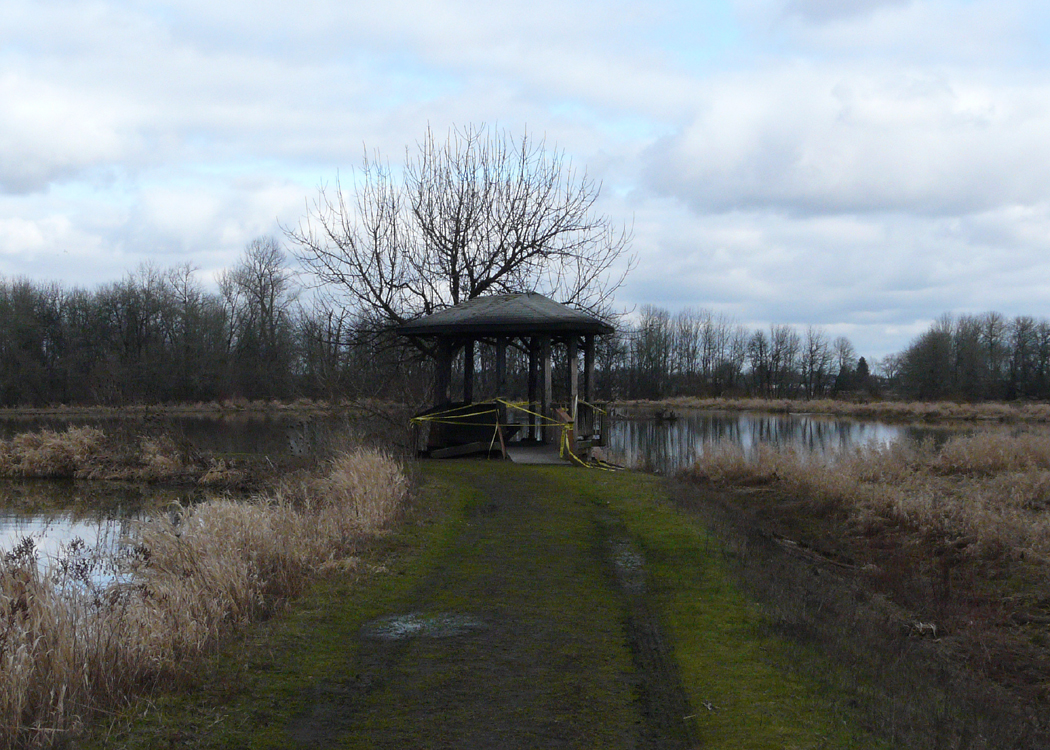
This observation platform was destroyed by arsonists. Fernhill Wetlands is not a park, but is owned by the area waste water department. As a result, there are few resources for facilities or habitat management.


Tundra Swans were flying in to roost. They tend to stay in the more distant parts of Mitigation Marsh.


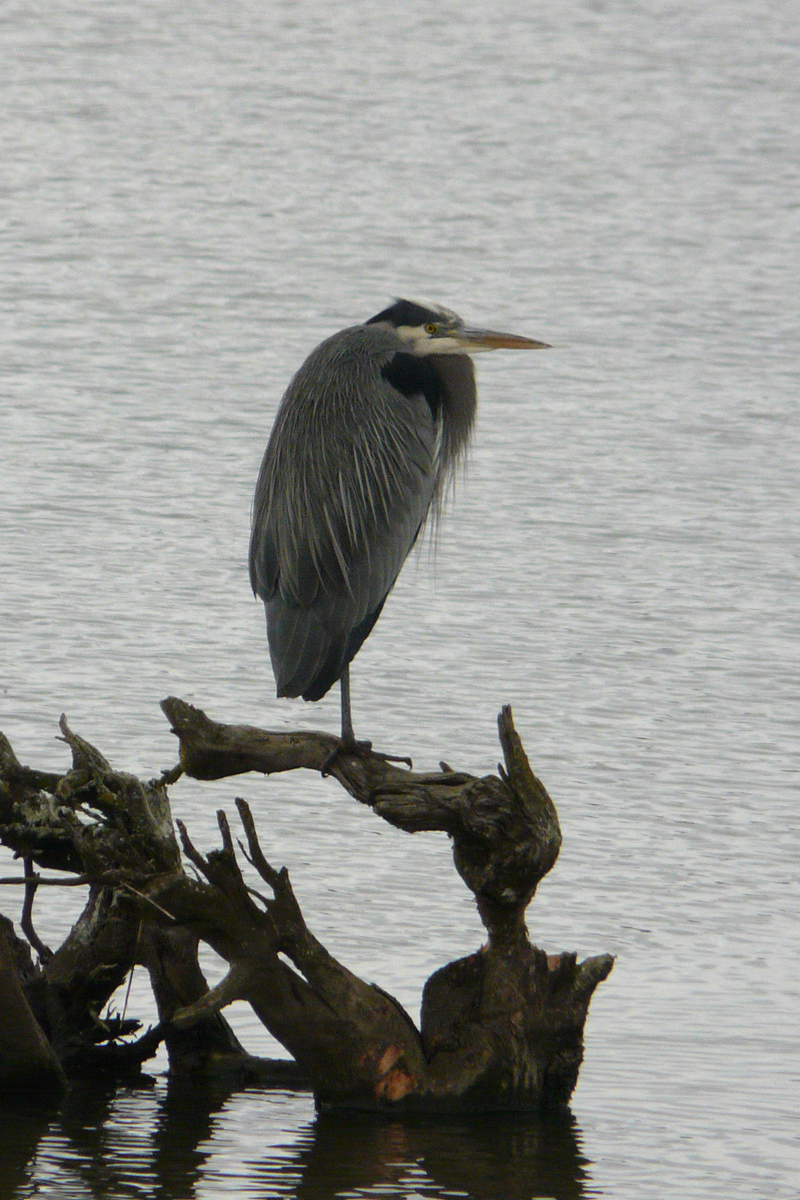
Great Blue Herons are nesting in the trees to the east of the wetlands. This individual was resting on a snag in Cattail Marsh.


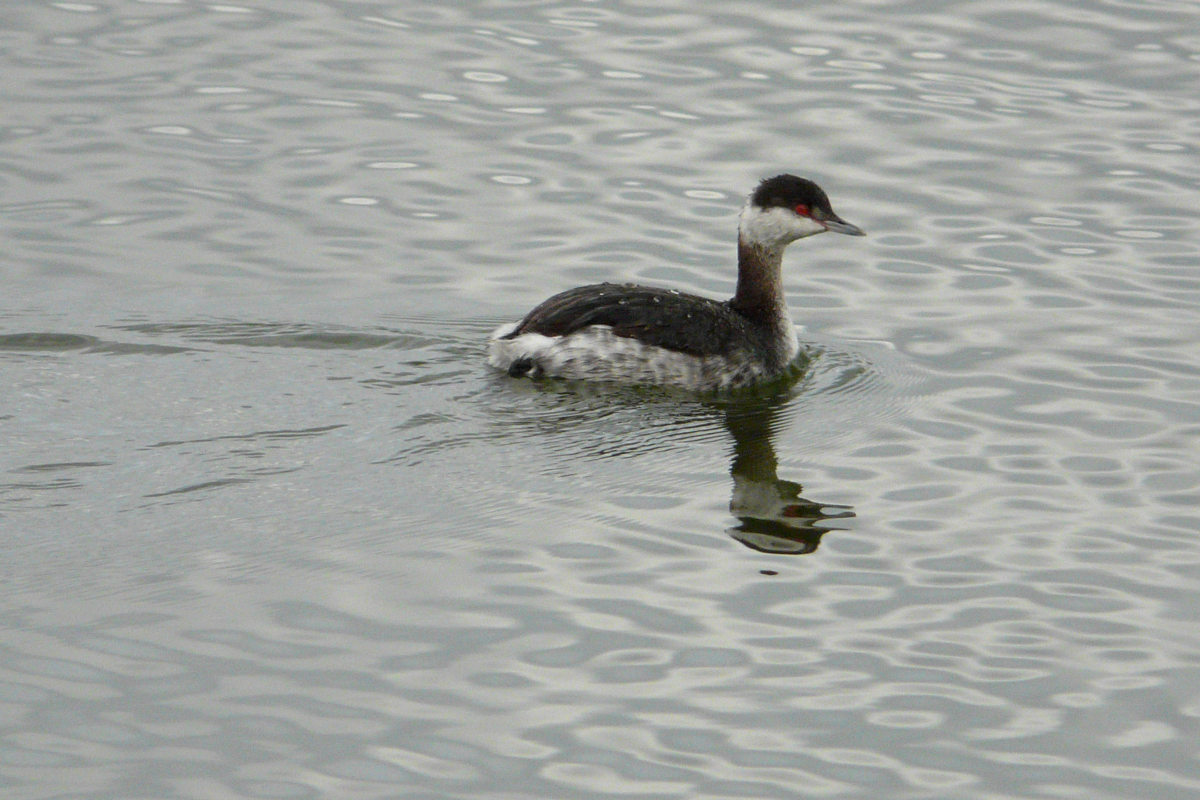
The deeper water of Fernhill Lake attracts divers like this Horned Grebe.

Frozen Fernhill

An arctic air mass brought cold temperatures and ice to Fernhill Wetlands (Birding Oregon p. 61), but there was no shortage of birds. Here are some grainy gray photos from a lap around the ponds.


Horned Grebe


Tundra Swans and California Gull


Taverner’s Cackling Goose and Northern Shovelers


Cackling Geese and Northern Pintails


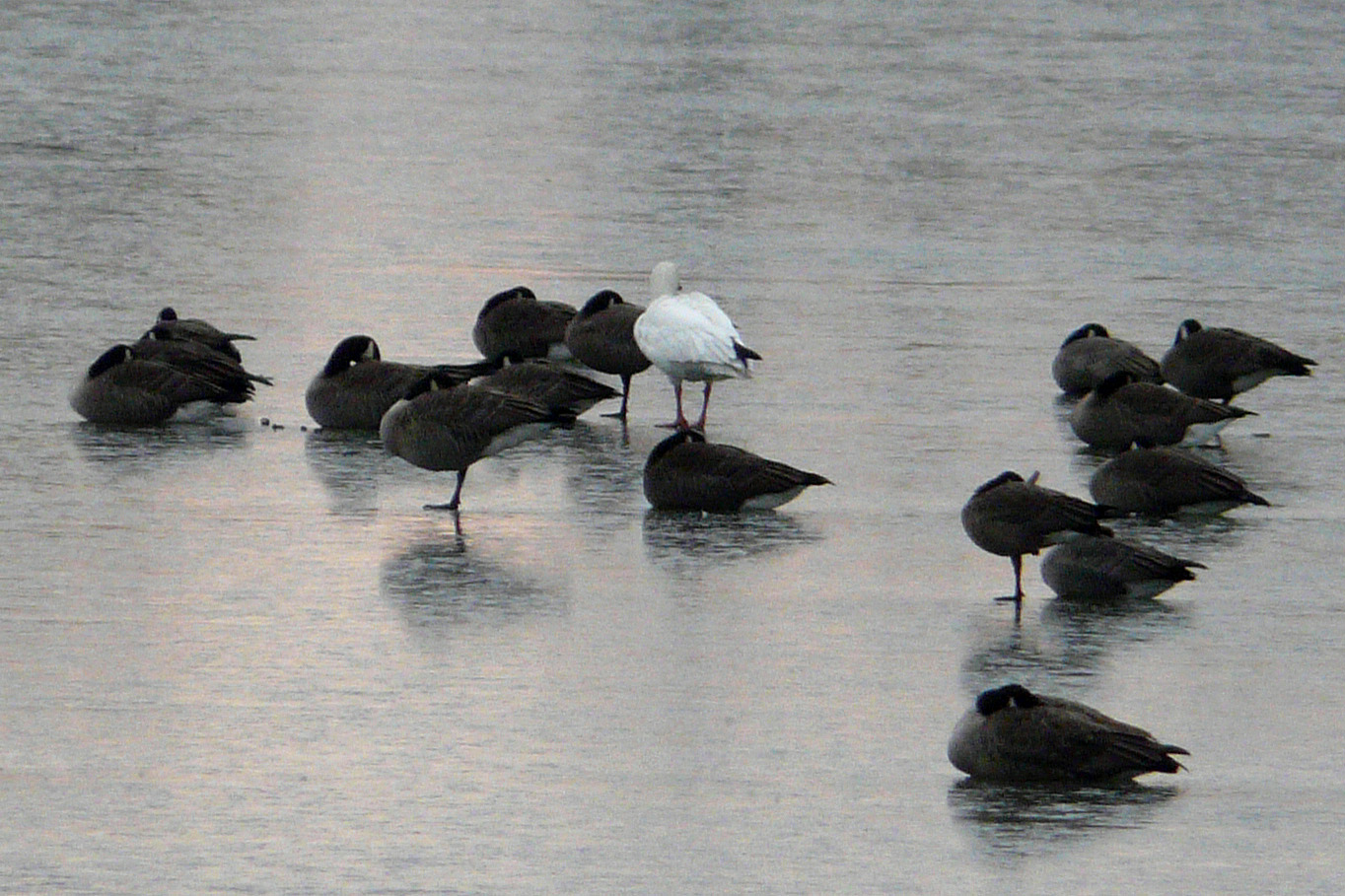
Snow Goose and Cackling Geese


American Kestrel


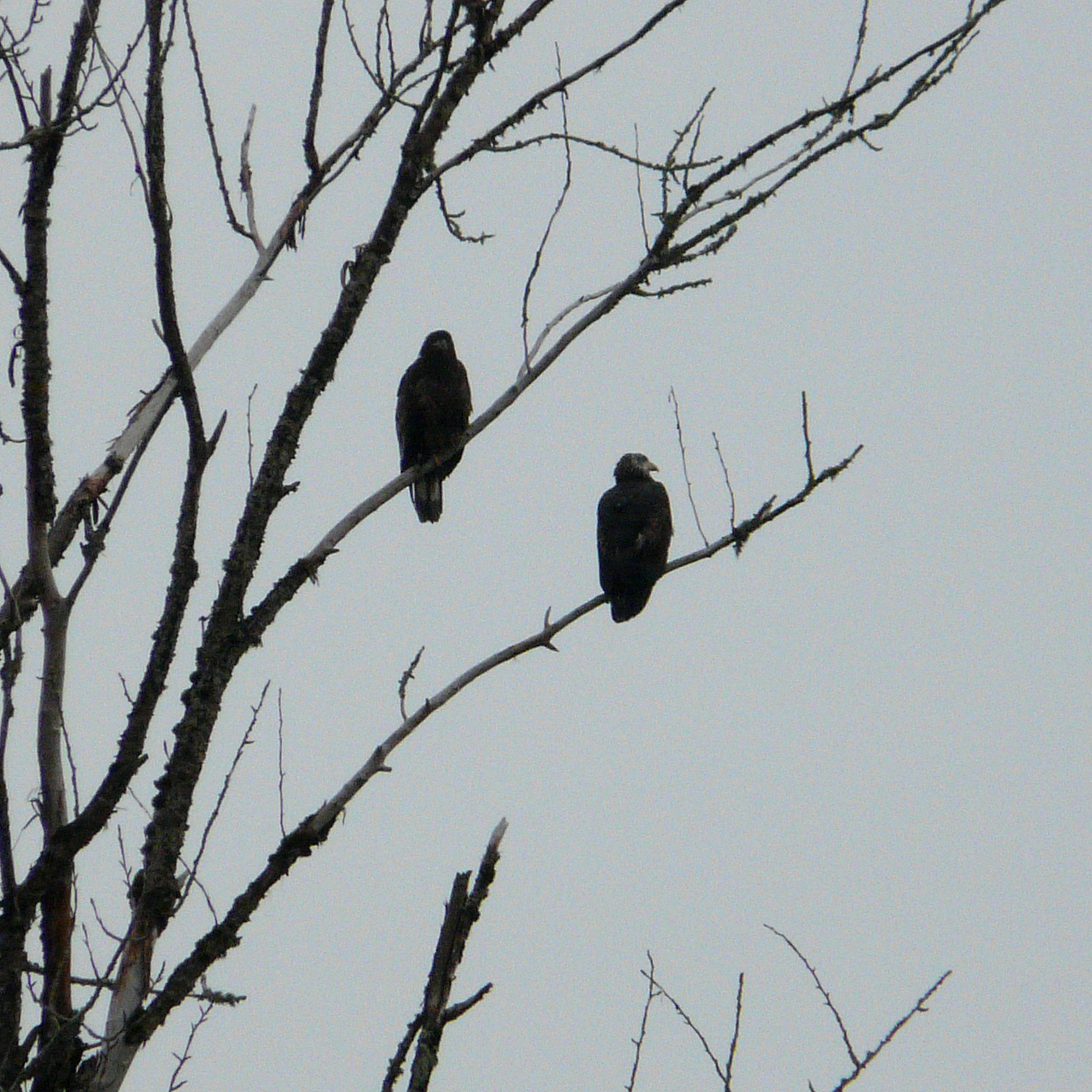
immature Bald Eagles


This American White Pelican, a very late straggler, was circling high overhead, trying to find a thermal on this cold cloudy morning.


Cackling Cackling Geese


Great Blue Heron standing on a Beaver dam. Note the frost on the bird’s back.

Klamath Basin

Here are some photos from a recent trip to the Klamath Basin.


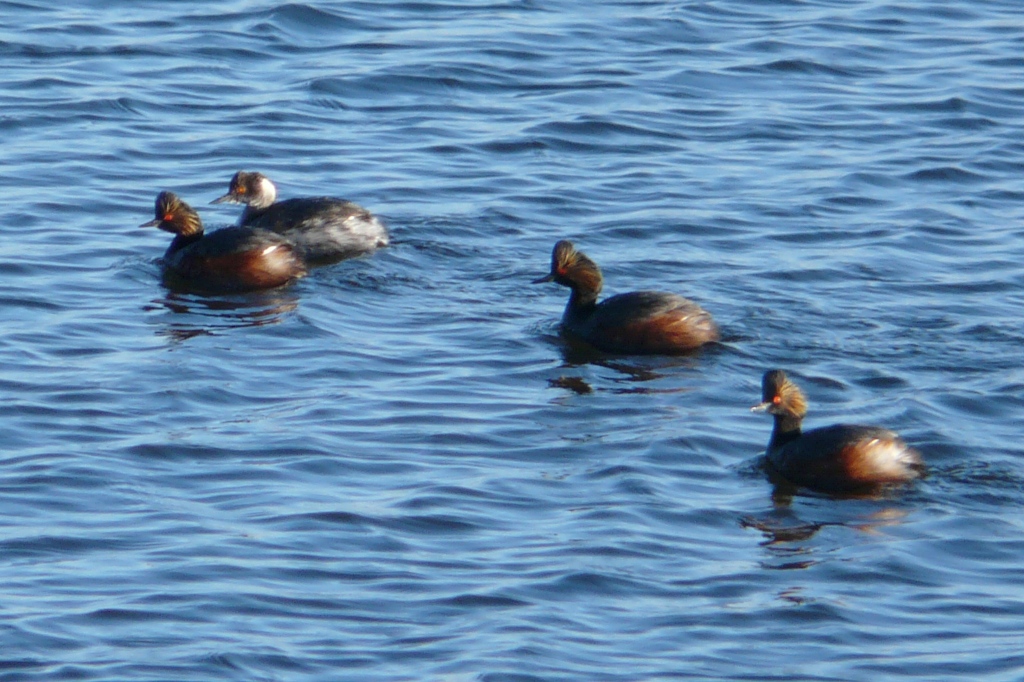
Eared Grebes are common  in the wetlands along State Line Road (Birding Oregon p. 116). The second bird from the left is still in basic plumage, while all the other birds seen that day had already molted into alternate plumage.


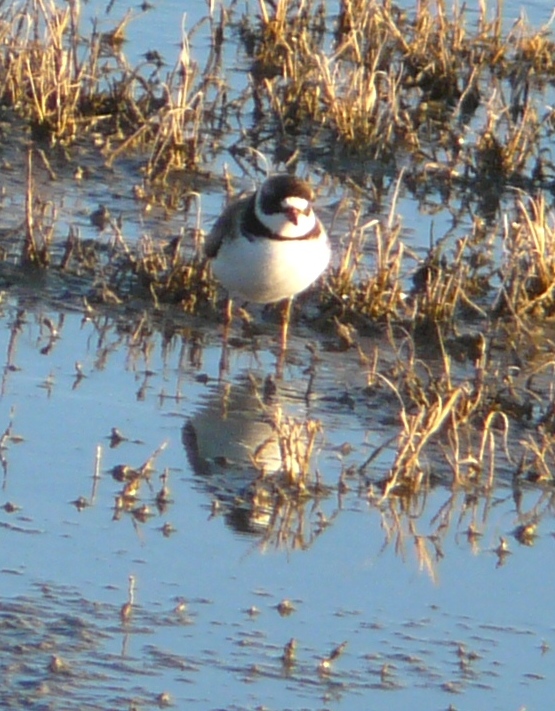
Shorebirds, such as this Semipalmated Plover, can be found on the mudflats along State Line Road.


This Pied-billed Grebe was nesting at Wood River Wetlands (Birding Oregon p.111).

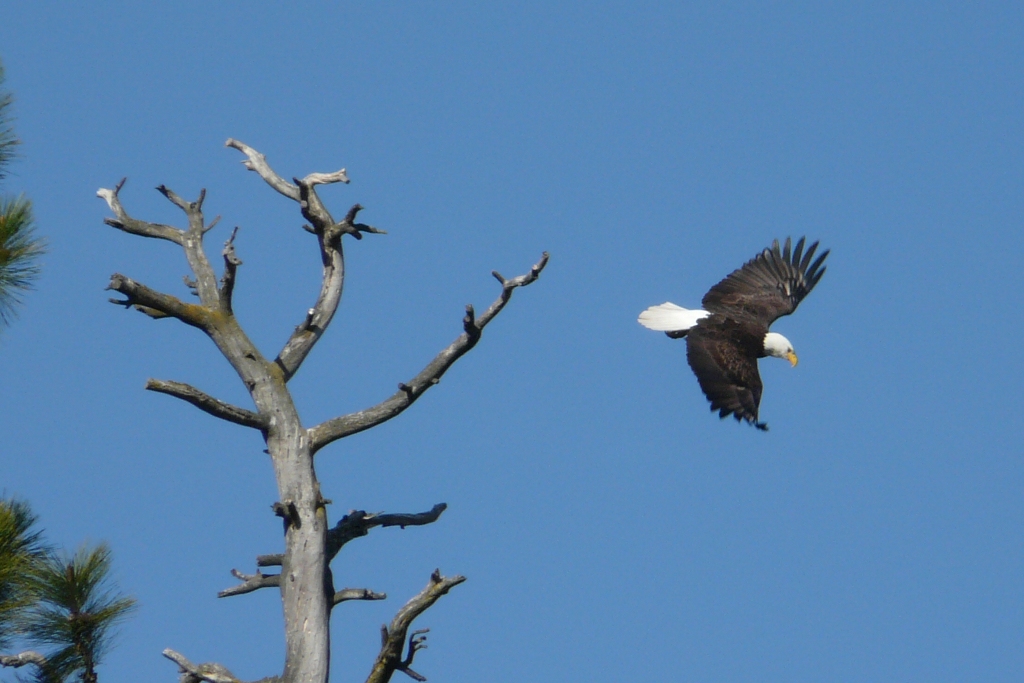
The Klamath Basin is famous for its large wintering population of Bald Eagles, but a few pairs  stay to nest. This bird was found in Moore Park in Klamath Falls.


Moore Park is also home to Mule Deer. Note the fuzzy antlers starting to grow on the deer in the center of the photo.

Sauvie Island

Migration has wound down by now, and the summer breeders are out in force. Here are a few birds I found on Sauvie Island this morning.


Savannah Sparrows can be heard at the edges of all the pastures.


Rufous Hummingbird


This Bald Eagle hovered over me, scolding the whole time. That behavior is more typical of Red-winged Blackbirds. I thought the eagles would be done nesting by now, but apparently they still have young in the nest.


Blue-winged Teal, uncommon in the Willamette Valley


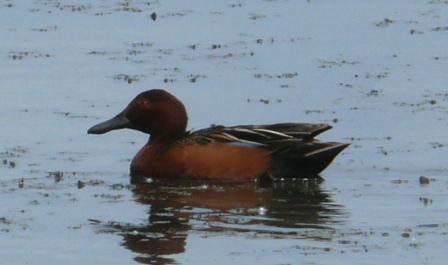
Cinnamon Teal, common, but always a delight


hungry Barn Swallow chicks


Tree Swallow