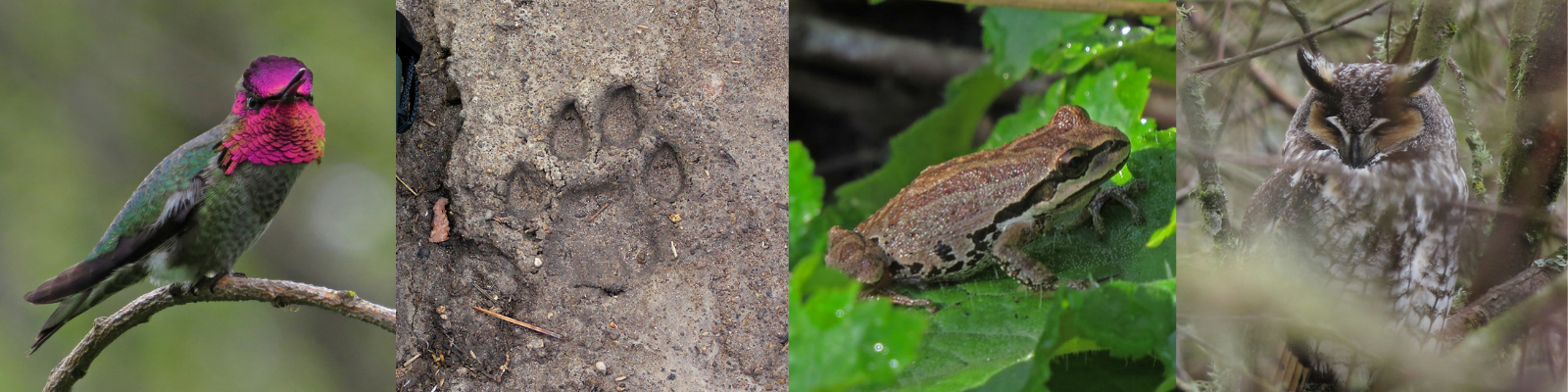
Mount Hood

I drove up to Timberline Lodge on Mount Hood today. This is a great area to search for alpine species, and the paved road makes it easy to access. Autumn has settled in already, with a fresh dusting of snow on the mountain. The ground had frozen overnight, and the thawing this morning released a near constant stream of falling rocks on the gravel slopes. (While it looks very dramatic when covered in snow, Mount Hood is actually a big pile of gravel and fine volcanic ash.) Most of the birds seem to have left the area around the lodge for lower elevations. I found a couple of Golden-crowned Sparrows, Robins, and Red-breasted Nuthatches. A flock of ten Common Ravens rode an updraft around the summit.
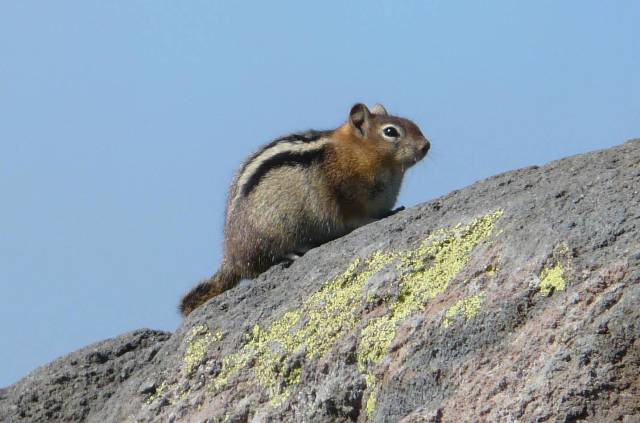

Golden-mantled Ground Squirrels are common on Mount Hood.

After descending the mountain, I visited the meadows and forest around Little Crater Lake (Birding Oregon p. 75). Gray Jays and a Pileated Woodpecker were the bird highlights. The color of this little lake is an eerie turquoise. Despite the near 40′ depth, you can see the bottom in great detail.

Shorebirds

The big news in Oregon birding this week is the Wood Sandpiper found at Fern Ridge Reservoir west of Eugene (Birding Oregon p. 90). This is the first record for Oregon, and one of only a few records for North America south of Alaska. Of regional interest was a Buff-breasted Sandpiper at Tualatin River NWR, just west of Tigard. I wasn’t able to chase either of these birds, so I had to settle for a few more common species at Fernhill Wetlands (Birding Oregon p. 61).


While we can’t see the bill on this individual, the bold stripes and orange tail identify this bird as a Wilson’s Snipe.


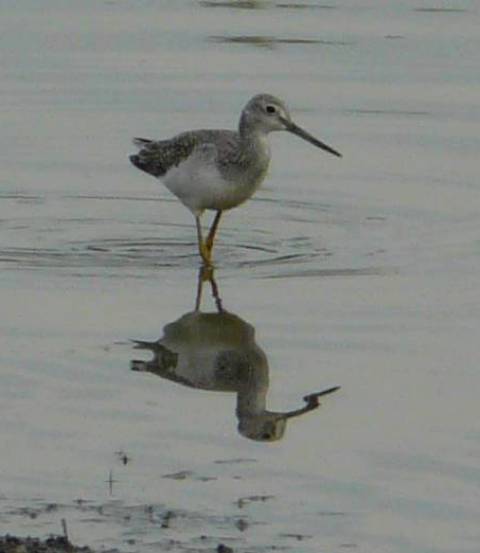
Here is a Greater Yellowlegs. The bill is more than half the total length of the head. On a Lesser Yellowlegs, the bill is about half the total head length, and the bird is considerably smaller overall.

Autumn Movements

With the autumnal equinox this week, we are seeing migrants returning to the Willamette Valley. The first flocks of Cackling Geese have arrived along with good numbers of Greater White-fronted Geese. The brambles are once again hosting Golden-crowned Sparrows.


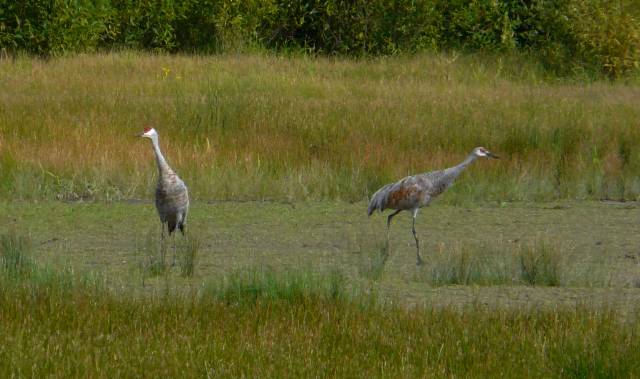
Sandhill Cranes are gathering on Sauvie Island (Birding Oregon p. 55). These birds were seen along Sturgeon Lake on Oak Island.


Flocks of Yellow-rumped Warblers were moving through the woods and brushy areas of Oak Island today. This individual is a female of the Myrtle race. Notice how the white throat is cleanly separated from the gray cheek, with the white starting to wrap around the ear coverts. Audubon’s race does not show this clear demarcation.

The best laid plans

It is sometimes the case, when I plan to look for a certain type of bird, that my target species are nowhere to be found. On those days we have to let go of our expectations and open ourselves to whatever treasures the birding fates have for us. I helped with a field trip today that was supposed to visit a hawk watch site. The ridge was completely socked in by low clouds, so we had to scrap our plans and instead birded open range and farm land.

Likewise, I recently visited Fernhill Wetlands (Birding Oregon p. 61) to look for shorebirds. Despite the decent amount of mudflat habitat available, shorebirds were almost non-existent. While I was disappointed in the lack of waders, there is always something interesting to watch.


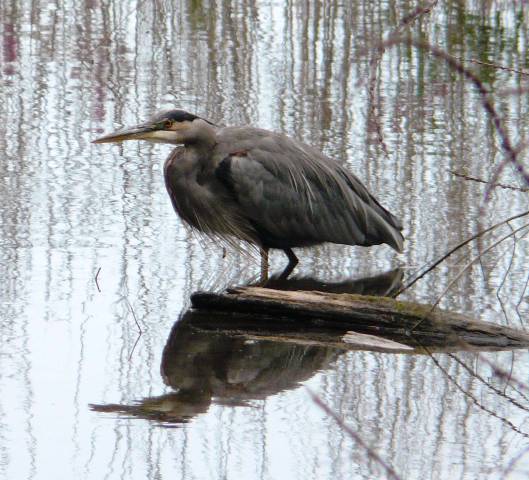
Always common, but always worth a look, Great Blue Herons will often surprise you with the interesting creatures they are attempting to swallow. On this day I watched one bird swallow a large catfish.


Great Egrets congregate this time of year to fish in the receding waters.


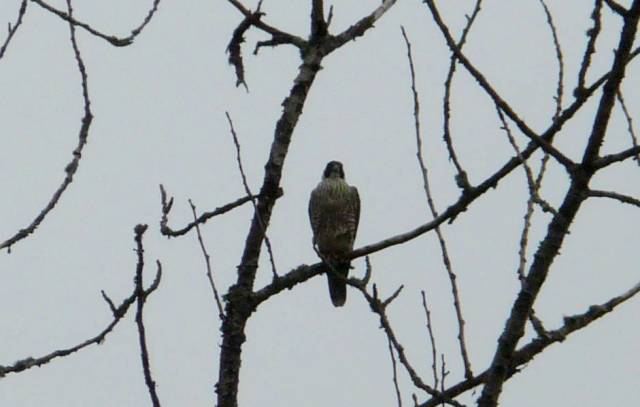
This Peregrine Falcon was keeping watch over the wetlands. This might explain the lack of shorebirds.


We are still in the “ugly brown duck season,” when many birds are still in eclipse plumage. Despite the lack of characteristic colors, most birds can be identified by shape or by tell-tale field marks. This picture shows two Northern Pintails on either side of a Green-winged Teal. The pintails are identified by their pointy backsides and their blue sloping bills. The tiny teal is displaying the green speculum on the wing that give the species its name.

Along the Columbia River

I walked for several hours at the Sandy River Delta this afternoon (Birding Oregon p. 63). Aside from two American Pipits and a Peregrine Falcon, birding was pretty slow, which was not too surprising given the heat and time of day. Even when there aren’t a lot of birds around, there is always something to see.


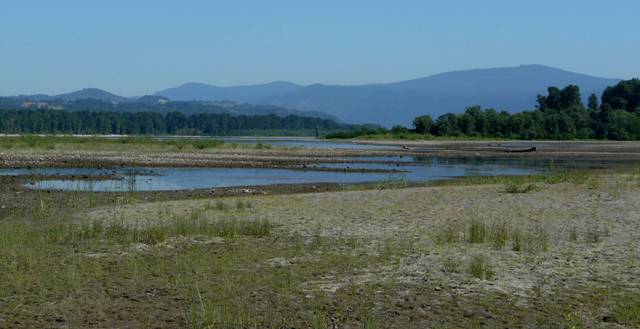
I spent a lot of time exploring the tidal ponds along the Columbia River. The river level is affected daily by tides and by releases from dams upstream. The water was low today, so lots of wildlife was crowded into the shrinking pools.


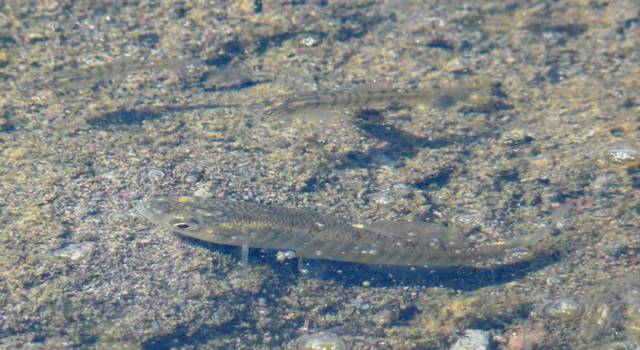
The little pools were filled with Banded Killifish. This species has been introduced to Oregon.


Along the with many non-native Bullfrogs was this Pacific Treefrog in a brilliant green.


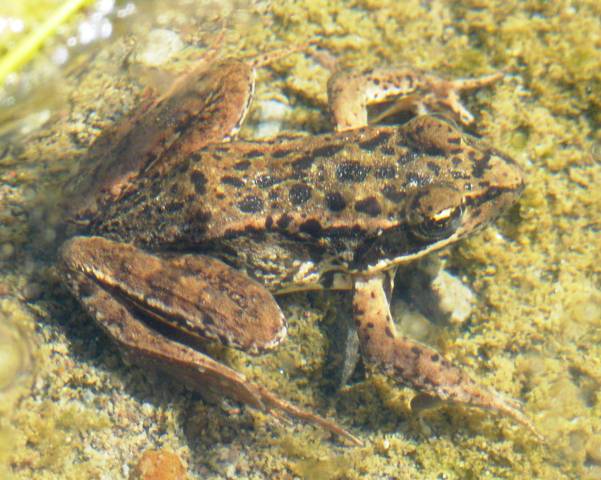
Here’s another Pacific Treefrog in brown. He was “hiding” under water.


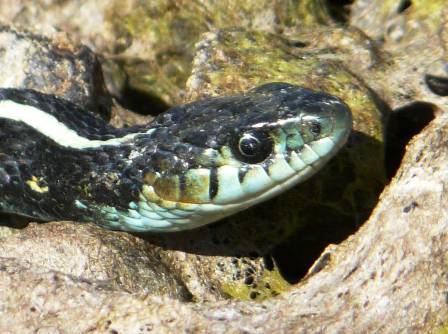
Of course, where you have fish and frogs in shallow pools, you will have garter snakes. I believe this is a Northwestern Garter.

Northwestern Garter Snakes are supposed to have seven scales on their upper lips, but this guy has eight.


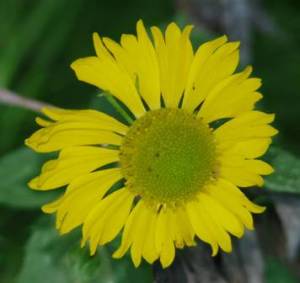
And for those of you who don’t appreciate fish and herps, enjoy these lovely flowers (and tell me what they are if you know).

Urban Otters (and birds)

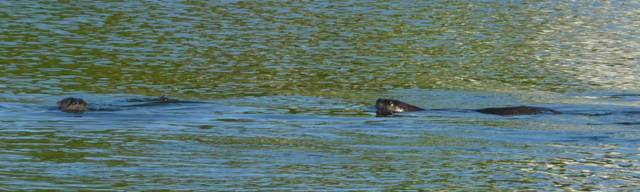
Two Northern River Otters have been hanging out at Koll Center Wetlands in Beaverton, so I went out this morning to see them. Otters are always a treat, but it is especially nice to see them thriving in such an urban setting.


Here is one of the two otters munching on a fish. Check out those teeth.


After breakfast, it is time to wrestle,

and then wrestle some more.


Then they were off to find something else to do.


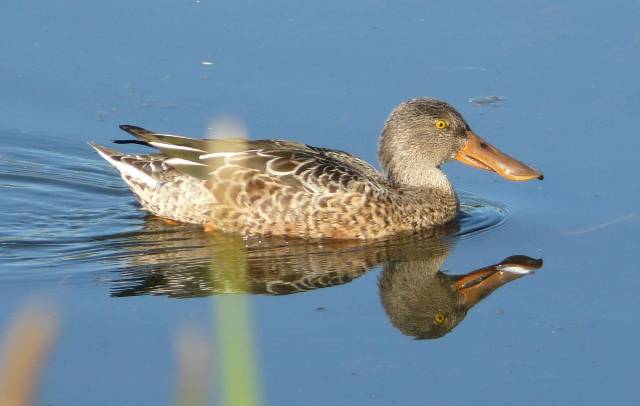
Good numbers of birds use this little wetland, as well. Here is a Northern Shoveler. How do they hold those massive bills up?


Two Killdeer feed within a flock of Long-billed Dowitchers. This flock flew off when a Cooper’s Hawk flew by.

Seaside Gulls

The town of Seaside (Birding Oregon p. 121) is an interesting sandwich, great birding spots on the edges and touristy stuff in the middle. On the south side of town is The Cove, a pebble beached cove teaming with gulls, seabirds, rock-loving shorebirds, and marine mammals. To the north is the Necanicum River Esturary, a feeding and resting area for gulls, terns, and sand and mud-loving shorebirds. The Seaside area is a great spot to study gulls, with a diversity of species and age groups.


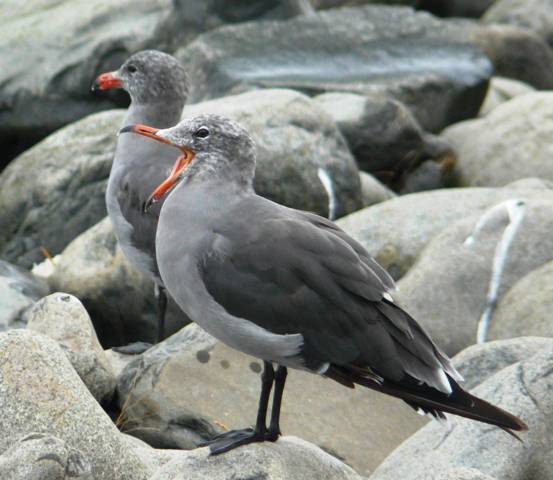
In mid to late summer, large numbers of Heeman’s Gulls hang out at The Cove. These birds are stunning, even in their winter plumage. Even the most devout Laridaephobe must appreciate these gray velvet beauties with the crimson bills.


“It’s exhausting being this beautiful!”


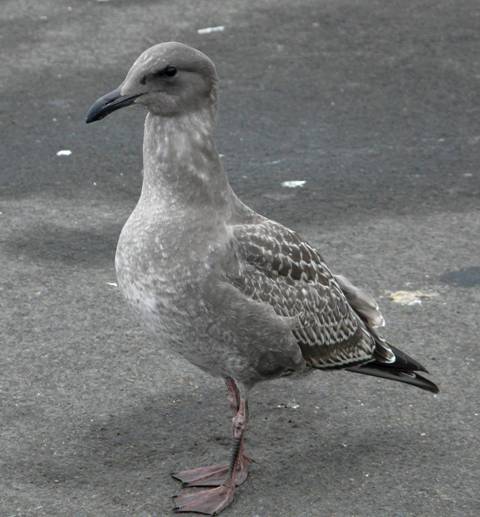
This gull is also primarily gray, but doesn’t quite have the rich color saturation of a Heerman’s. This is a first cycle Western Gull.


Here is a distant shot of an adult Western Gull tackling a very large crab. The gull is either very ambitious or very hungry.

Sauvie Island

I did a point count at Oak Island on Sauvie Island today, then birded several other areas. Migration is starting to pick up with large numbers of Purple Martins and several warblers and shorebirds on the move. I also saw four Sanhill Cranes, which seemed a bit early.


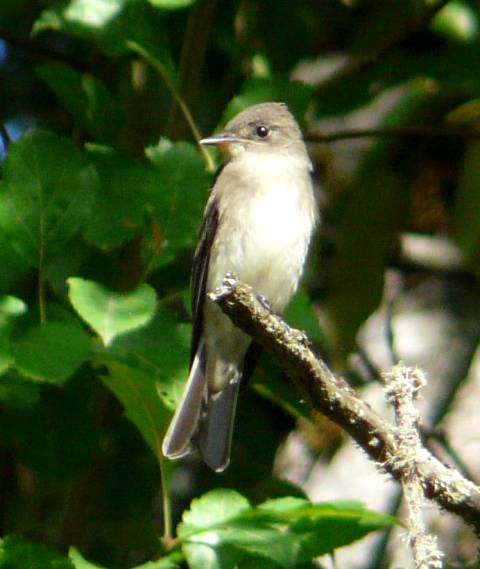
Western Wood-Pewees are everywhere, and still very vocal.


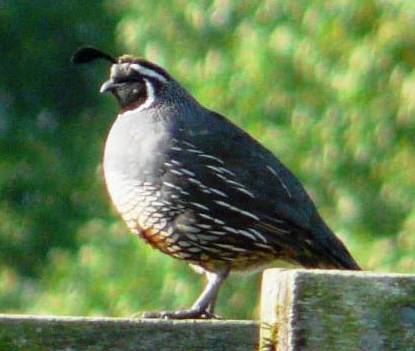
This California Quail spent some time on top of a corral fence, before disappearing into the blackberry brambles.


Here is a very distant shot of two Red-necked Phalaropes in front of a Cinnamon Teal. Notice the big blue patch on the extended wing of the teal.


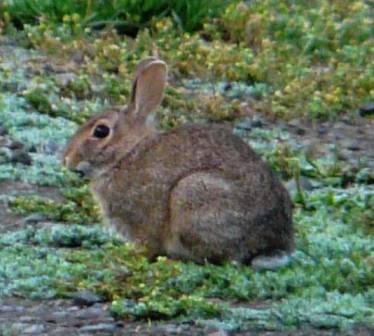
A Brush Rabbit, not a bird, nor uncommon, but still cute.


Pacific Treefrog. It is amazing how such a tiny animal (about 1 inch from snout to vent) can have such a loud call.

Hart Mountain

The Sept./Oct. issue of Bird Watcher’s Digest has my piece on Hart Mountain National Antelope Refuge (Birding Oregon p.20). This is a great area to explore for birds, other wildlife, scenery, and native petroglyphs. The article didn’t use any of the photos I sent with it, opting instead for a rather dreary view of the mountain. So here are a few photos from the refuge. For more information, check the refuge website.


Most of the refuge consists of a quarter of a million acres of sage steppe. While I appreciate trees and water as much as the next person, I really love the vastness of this habitat (one of the most threatened in North America).


Sunrise over Hart Mountain, viewed from the Warner Valley


Blue Sky is an island of Ponderosa Pine surrounded by sage steppe. These trees attract migrant and nesting species not found elsewhere on the refuge.


Hart Mountain refuge was originally established to protect the dwindling population of Pronghorns.


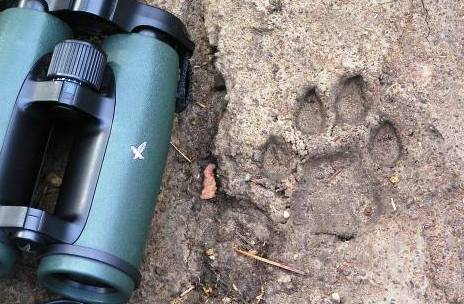
Mountain Lions are another mammal species that live on the refuge.


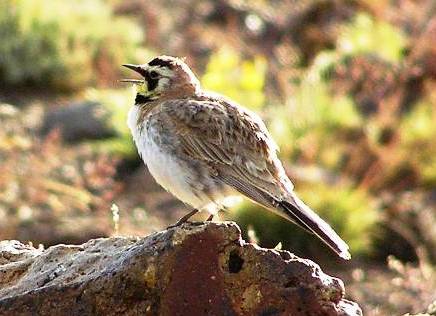
Horned Lark singing from atop a small rock


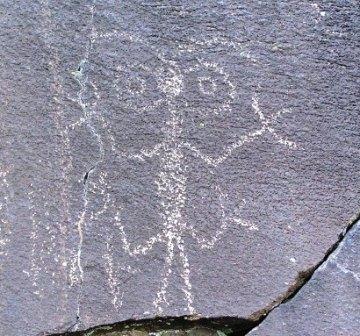
Many of the rocky outcroppings on the refuge contain native petroglyphs. Were these images drawn by shamans, artists, or just kids who liked to doodle?

Washington County

I checked some of the birding sites in Washington County recently. The first stop was Rogers Park in Forest Grove (Birding Oregon p. 62). This is the home of one of the northernmost colonies of Acorn Woodpeckers. These are fascinating woodpeckers, both for their habit of storing acorns in tree bark, utility poles, wooden siding, etc., and for their interesting pattern. One this particular day, a young Cooper’s Hawk was hanging out in the park, driving the woodpeckers and most other species into hiding.

The next stop was Fernhill Wetlands (Birding Oregon p. 61). While this is one of the best birding spots in Oregon, it is currently in the summer doldrums. The breeding season has about wrapped up, and the fall migrants haven’t begun in earnest. Shorebirds are starting to come through. There isn’t a lot of mudflat habitat available yet, but as water levels continue to drop conditions should improve.


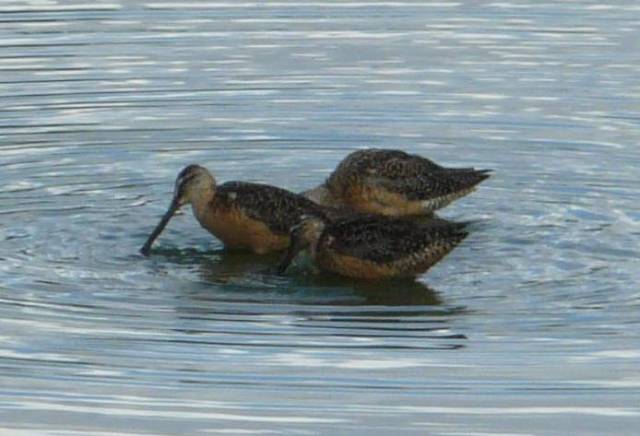
Long-billed Dowitchers


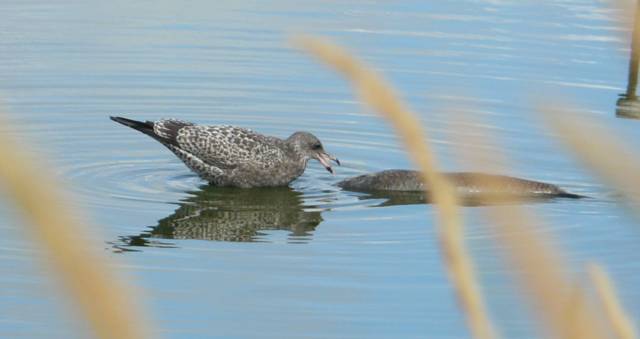
Here is a first cycle California Gull munching on a dead carp. (who says birding isn’t glamorous?) I know what you’re thinking. “It’s only August. Is he going to start with the gulls already?” You betcha! We know this is a young California Gull by the long thin bill with the clearly demarcated dark tip, and by the long dark wingtips that extend well beyond the tail. My friend, the Northwest Nature Nut, has not yet developed a love of gull ID, but I hope to gradually chip away her resistance.
An exploration of Haag Lake in Scoggins Valley Park didn’t reveal a lot of birds, but a Beaver lounging in one of the quiet arms of the reservoir was a nice treat. I don’t get to see Beaver out in the daylight very often.