Wild Turkey

Unique to the Americas, the two species of turkey are beautiful, huge birds.  Wild Turkeys are native to North America, while Oscillated Turkeys can be found in Central America. Close to extinction in the early part of the 20th Century, Wild Turkeys have made a tremendous comeback in their original range, and have been widely introduced elsewhere. While not native to Oregon, the Rio Grande race of Wild Turkey was introduced in 1975 and is faring well in much of the state.

Turkeys are known to most people not as a wild creature, or even so much as a food, but as a centerpiece on the table at Thanksgiving. It is tradition to serve these birds on that day. But when does a tradition become a ritual? It seems a bit creepy to me to sacrificially kill and eat a particular species on a particular day, just because we have always done so. Most people have never seen a Wild Turkey, or even a living domesticated one, and yet they perpetuate this rite without considering it.

I think turkeys can be far better appreciated in the field than on the table.  On a day set aside to acknowledge the abundance of life, we should celebrate living beings, not sacrificial ones.
turkey
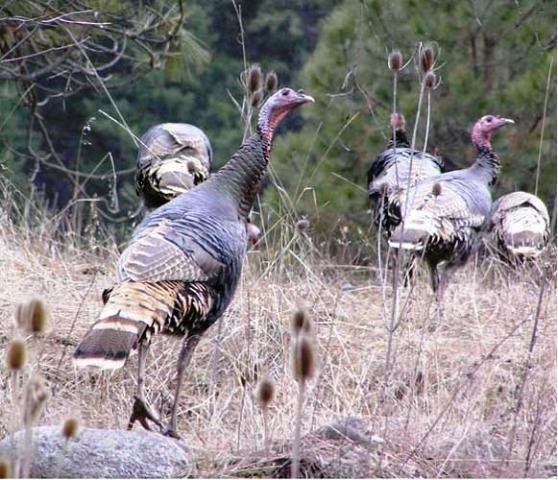
These are free-ranging Wild Turkeys in northeastern Oregon.
freerangeturkeys
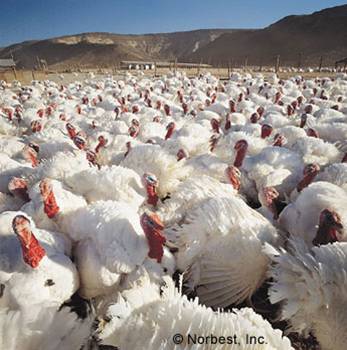
These are “free range” domestic turkeys. Selective breeding has made them into obese, pale shadows of their wild ancestors.
The best laid plans

It is sometimes the case, when I plan to look for a certain type of bird, that my target species are nowhere to be found. On those days we have to let go of our expectations and open ourselves to whatever treasures the birding fates have for us. I helped with a field trip today that was supposed to visit a hawk watch site. The ridge was completely socked in by low clouds, so we had to scrap our plans and instead birded open range and farm land.

Likewise, I recently visited Fernhill Wetlands (Birding Oregon p. 61) to look for shorebirds. Despite the decent amount of mudflat habitat available, shorebirds were almost non-existent. While I was disappointed in the lack of waders, there is always something interesting to watch.


Always common, but always worth a look, Great Blue Herons will often surprise you with the interesting creatures they are attempting to swallow. On this day I watched one bird swallow a large catfish.


Great Egrets congregate this time of year to fish in the receding waters.


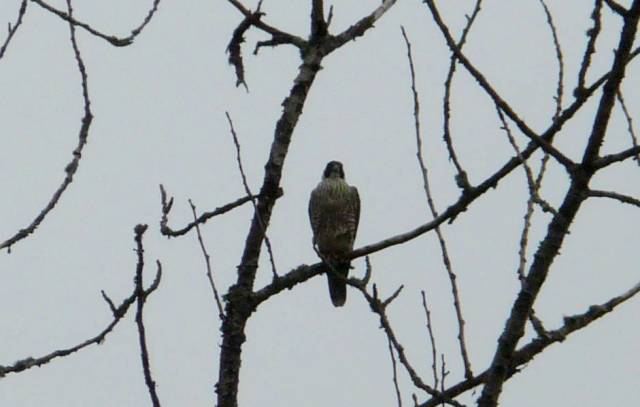
This Peregrine Falcon was keeping watch over the wetlands. This might explain the lack of shorebirds.


We are still in the “ugly brown duck season,” when many birds are still in eclipse plumage. Despite the lack of characteristic colors, most birds can be identified by shape or by tell-tale field marks. This picture shows two Northern Pintails on either side of a Green-winged Teal. The pintails are identified by their pointy backsides and their blue sloping bills. The tiny teal is displaying the green speculum on the wing that give the species its name.

A Sense of Entitlement

There was an interesting thread on the Oregon Birders On Line (OBOL) email list this week. It started with two birders reporting an Eastern Yellow Wagtail on the north shore of the Necanicum Estuary in Gearhart (Birding Oregon p. 122). Eastern Yellow Wagtail is extremely rare in Oregon, and this individual will be the first verified by a photograph. So this was a great find.
The birders posted the find on OBOL that evening, once they got to a location with an internet connection. What followed was a pathetic tantrum from several birders who felt cheated. Some wanted to know why these birders hadn’t reported the sighting earlier. (The bird had been seen in the mid-afternoon.) Some accused the birders of being selfish. Some suggested that these birders, both being members of the Oregon Bird Records Committee, had an obligation to share the sighting immediately and then accused the entire committee of being elitist and secretive.

When did we get to this point where we feel entitled to know about everyone else’s birding results? It wasn’t that long ago that rare bird reports only appeared in print several months after the fact. Just because current technology makes it POSSIBLE to report rarities instantly, birders are certainly not under any obligation to do so. I do not have the RIGHT to know what birds you saw today, no matter how rare they are.

I have certainly benefited from other birders’ sightings. Many of the rarer species on my Oregon list (Lesser Sand-Plover, Northern Hawk Owl, Ruff, Sharp-tailed Sandpiper, Vermilion Flycatcher, Cassin’s Kingbird) are the result of chasing birds reported on OBOL. Rare bird alerts are tools that we can use, but they are not the only way to find birds, and they are not a God-given right.

The people who find the most rarities are the people who go birding a lot and look at a lot of common species. It is a combination of persistence (the more you bird, the more you will see) and dumb luck. So if you hear about a great bird that someone else has found, and it is too late or too far to chase, turn off your computer and go birding. Find your own birds and enjoy every one of them.


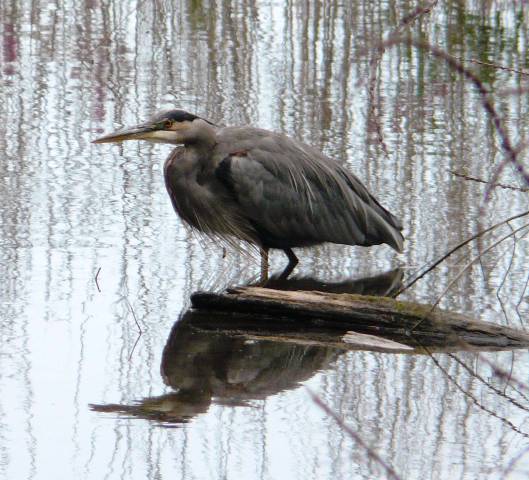
Great Blue Heron, a very common bird in this area, but always worth a look


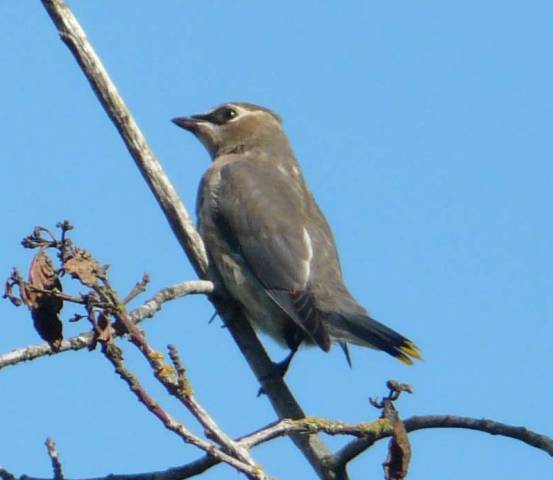
a young Cedar Waxwing

Of Dog Days and Guilt

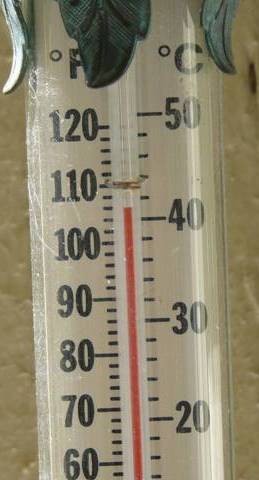
It’s hot. There is nothing unusual about this, being mid-August and all. And in a few days it will be cool and cloudy, if you can believe the forecast. But for now, it is hot and I am inside, where the temperature is a tolerable 77 degrees F.

I have felt a little anxious about not going birding this weekend. If I don’t get out at least once a week, I feel restless and a bit cranky. Oddly enough, I have also felt a little guilty. I am a birder. There are several species I have not seen. There are many species I would enjoy seeing again. I should go look for them.

It’s not like I haven’t been busy. I have hauled gravel for the parking lot, bought groceries, sang with the Oregon Chorale, had a dinner meeting, watched four episodes of Battlestar Galactica, and made a mean batch of aloo matter. And if I had had a client this weekend, I would be out there sweating away and finding lots of neat birds. But I choose to stay at home and forgo my birding needs.

And that’s OK. We need to remind ourselves that our pastimes are not all that we are. Sometimes life presents other opportunities or just gets in the way. We need to allow this. Occasionally, just every now and then, we need to remind ourselves that it is just a ball game, or just a science fiction series, or (dare I say it?) just a bird.

So I will venture forth again next week, when the weather is cooler and the birds are challenging me to find the vagrant among them. In the meantime, I will enjoy the Lesser Goldfinches at the feeders and the Rufous Hummingbird in the garden.

Of Birding, Computer Pinball, and Insanity

Before shutting down my computer for the night, I sometimes play the video pinball game that came with the machine. Typically, I score about 400,000 points. On rare occasions, I have scored around 4 million points, through no skill or knowledge of my own. Last night, I scored 8,166,000 points, again, through no control on my part.

And what does this have to do with birding? The experience was actually amazingly similar. How many times have you walked through the same patch of woods looking for a bird you haven’t seen before? Experience tells you what species are likely to be at that location, just as experience tells me what my pinball score will likely be. But you keep hoping for something different, and sometimes, you get lucky.

Einstein defined insanity as doing the same thing over and over again and expecting different results. But that is exactly what birders do. We cover the same birding sites over and over, year after year, hoping for something different. It is that hope that keeps us going. If we accepted the likelihood that each trip to a given site will produce the same species, we would be less likely to go into the field. It is the insanity of expecting something different that makes birding such a joy.


I approached this nest box at Hart Mountain with the expectation, or at least hope, of finding a Flamulated Owl. Instead, this large nest box was occupied by a pair of Mountain Chickadees.


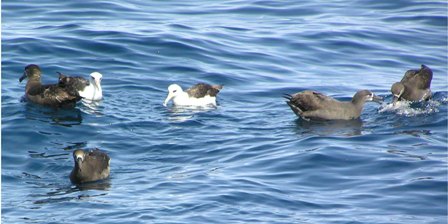
Pelagic birding is the epitome of insanity. You cover hundreds of square miles of open ocean, hoping to run across a rare bird that just happens to be at the same spot you are. Here are two Laysan Albatrosses swimming with the abundant Black-footed Albatrosses off the Oregon coast.

Am I insane for engaging in this hobby/sport/avocation/obsession that we know as birding? Heck yes, and loving it.

Of birds and aesthetics

Several people have asked me why Birding Oregon doesn’t include any sites in the Columbia River Gorge. One reviewer recently bemoaned the fact that I did not include the Painted Hills. (Actually, I list several sites in the Painted Hills on page 34. I did not include any sites in the Gorge because the birding there is not any different from several other sites described in the Cascades.)


People tend to assume that beautiful scenery automatically produces great birding. But as Gershwin put it,”It ain’t necessarily so.” When I snapped this lovely picture of Crater Lake, there were about three species of birds present. I can usually find far more species at a little city park. In the winter, a certain urban duck pond in Portland often hosts six species of gull and a dozen waterfowl.

The truth is, birds, like all other organisms, require food, water, shelter and space. Some species can only find these in old-growth forests or pristine alpine meadows. But some find all they need in parking lots, city parks, dumps, and sewage treatment plants.

Birds do not share our aesthetic values. Do not assume where birds will be based on the view. It is nice when the two come together. But quite often, birds will lead us to ugly places. And that’s OK. What could be better at adding beauty to an ugly place than a bird? So celebrate that White-crowned Sparrow singing in the parking lot of the local shopping center. Find comfort in the Ring-billed Gull perched on the dumpster behind a restaurant. These are gifts that sustain us until we can make our way back to the beautiful places.

Credibility, Skepticism, and Chasing

A recent report on Oregon Birders Online of a Magnificent Frigatebird along the Columbia River set off a series of messages questioning the accuracy of the identification. This, in turn, triggered even more messages, some highlighting the birding credentials of the person who made the initial report, some criticizing those birders who simply dismiss reports of rarities from birders they don’t know, and some describing how objective skepticism of birding reports is a good thing.

It all boils down to this: How do you know if a report is credible? How skeptical should you be? How convincing does a report have to be before you will chase the bird being reported? Each birder will answer these questions differently. Some require irrefutable evidence, such as a clear photo or multiple expert witnesses, before accepting a report of a rarity. Others will assume the report is accurate until it is proven otherwise. Wherever you lie on this continuum, here are some things to consider.

1. Rare birds are attracted to inexperienced birders. Newbies find a lot of great birds, partly because they look at every bird carefully, and partly because of dumb luck. Just because a birder has not established a reputation, don’t assume they haven’t found what they say they found. Of course, a lot of new birders make mistakes, but why risk letting a rarity go unconfirmed? That Hoary Redpoll your neighbor reports from their feeder may turn out to be a House Finch, but maybe it’s actually a Hoary Redpoll.

2. Even experienced birders make mistakes on occasion. Experience can lend credibility to a report, but it is not a guarantee.

As far as chasing goes, that is also a personal call. Some people will fly across the continent for a good bird. I generally don’t travel more than 90 minutes from home to chase an individual bird, and I usually like verification of the report before traveling that far. But if you are able, why not check it out? You may get to see a great bird, find a different rarity in the process, or at the very least enjoy a day in the field.

As for reporting a rarity, do it. Don’t be afraid of being wrong or embarrassed. You will either provide an important record of a rare bird for your area, or someone will explain your error and you will learn something.


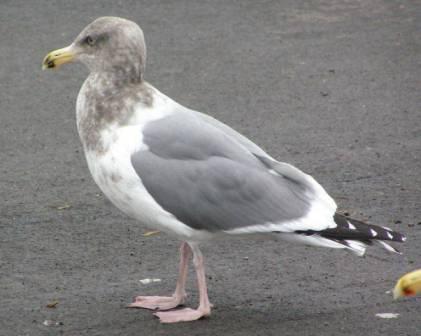
This beast led to an embarrassing mis-identification on my part. But it also led to discussion, and greatly advanced my study of gull identification.